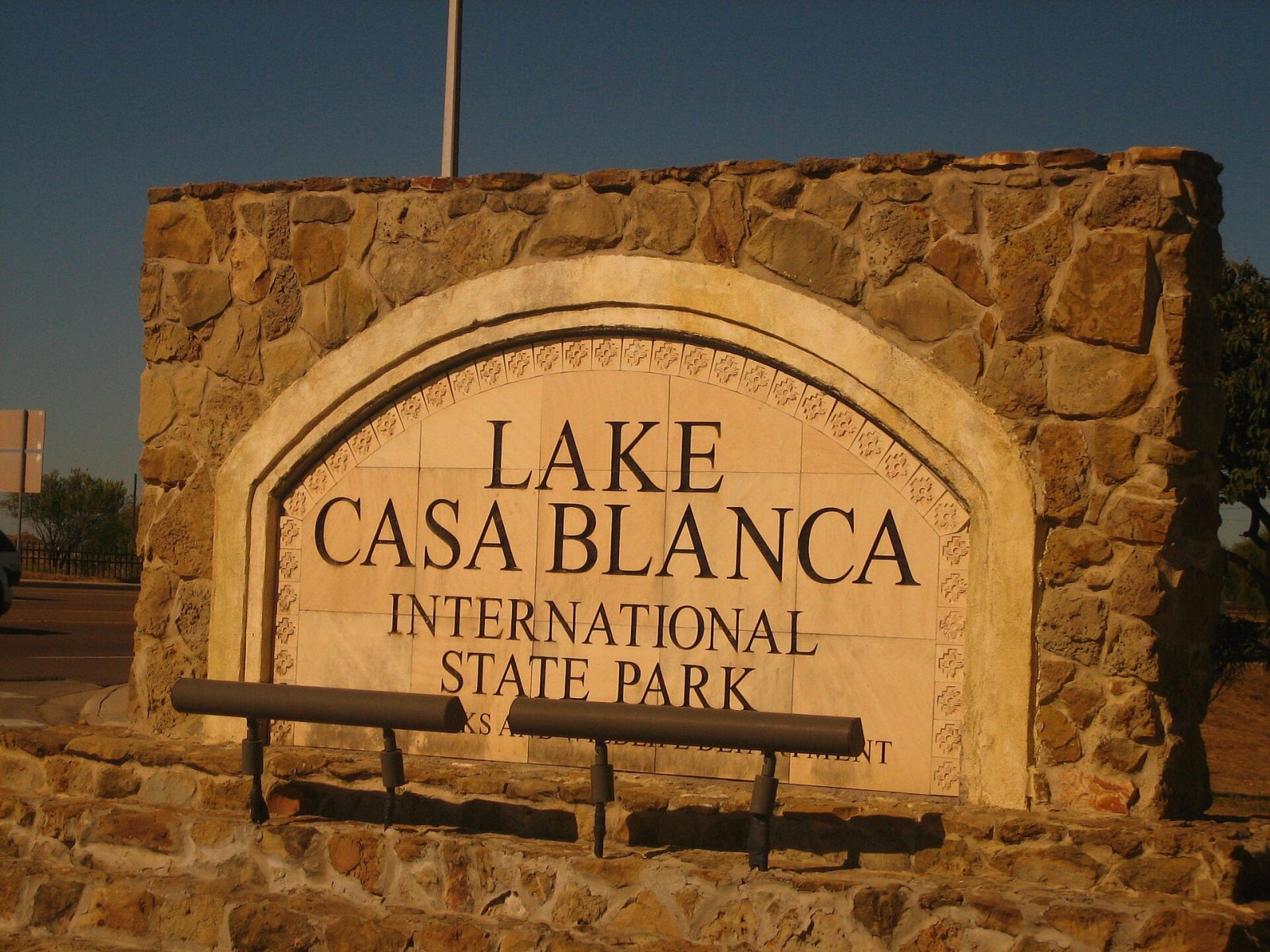
 Billy Hathorn / CC BY-SA 2.5 via Wikimedia Commons
The Story
People have used this stretch of Chacón Creek for about 3,000 years, according to archeological sites in the park, and for far longer across South Texas. Cabeza de Vaca passed through in 1535 and found small, highly mobile bands of hunter-gatherers. In the 1600s Lipan Apache, Tonkawa and later Comanche riders came through on horseback and upset that way of life, and disease took its toll. Once Spanish missions were established in the early 1700s, the native bands were absorbed quickly, and much of their culture and language was lost.
Laredo was founded nearby in 1755, and ranching became the main industry because the rainfall could not support farming. The lake itself is an impoundment of Chacón Creek, a tributary of the Rio Grande, covering 1,680 surface acres. Webb County and the city of Laredo first ran the park. Texas Parks and Wildlife took it over under a 50-year lease and opened it as Lake Casa Blanca International State Park in 1991. It occupies 525 acres on Laredo's eastern city limit.
Visitors come to fish for largemouth or hybrid striped bass, crappie and catfish from the pier or the boat ramp, with loaner rods at the headquarters. There are campsites with water and electricity, trails for hiking and mountain biking, and a swim area. July highs average 99 degrees and the busy season runs from April through August, so reserve ahead.
Visitor Info
On the Map
Nearby
The closest stops worth working into your route
Historical markers nearby
Roadside plaques and monuments within a short detour