 Carol M. Highsmith / public domain via Wikimedia Commons
The Story
Kay and Velma Kimbell bought their first painting in 1935, a portrait of children by William Beechey, after seeing it in a show at the Carnegie Library in Fort Worth. They formed the Kimbell Art Foundation the next year. When Kay Kimbell died in 1964 he left his estate to the foundation and asked that it build a museum "of the first class." The city of Fort Worth gave a nine-and-a-half-acre site beside the Amon Carter Museum, in what is now the Cultural District.
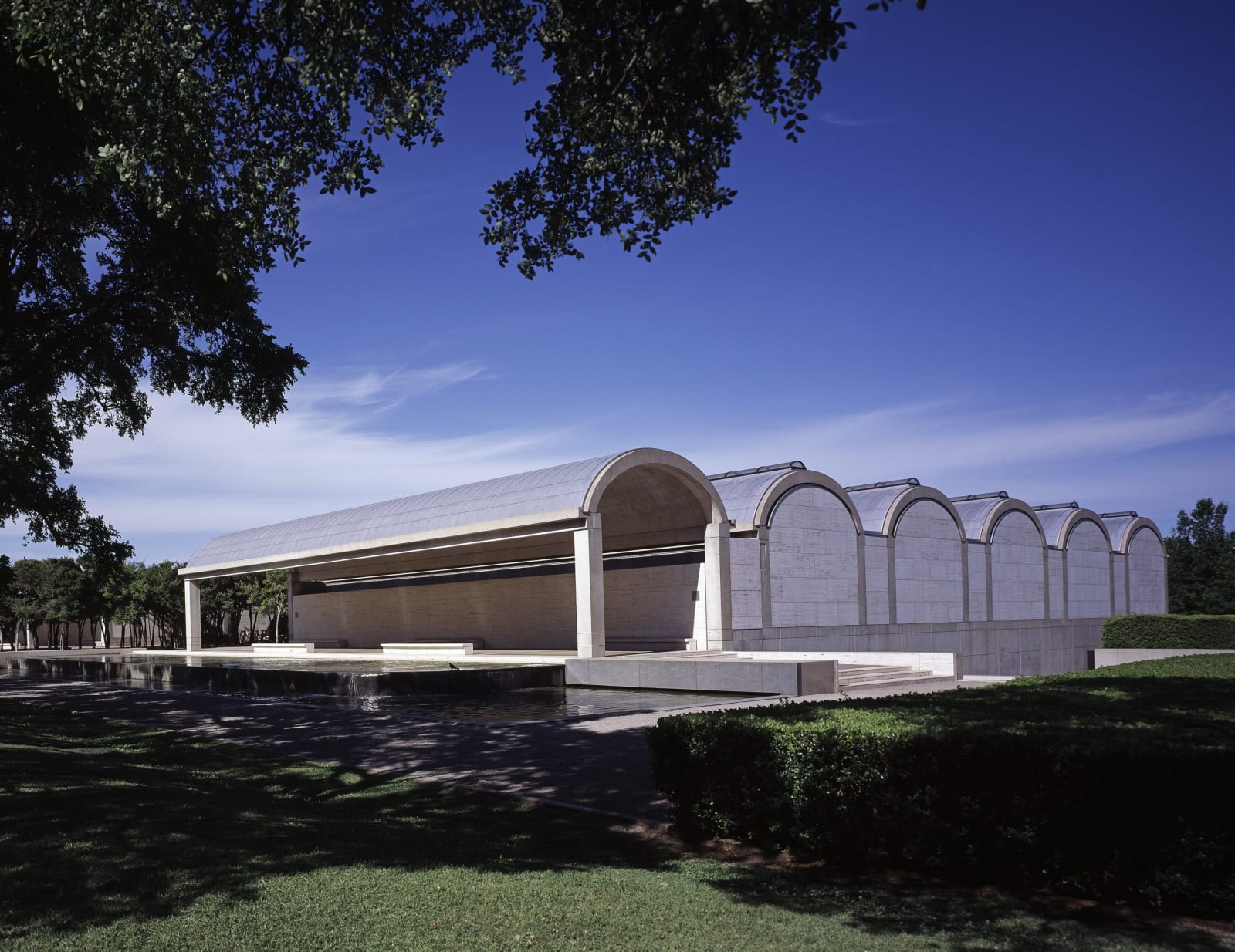
Richard F. Brown, the first director, hired Louis I. Kahn, and the contract was signed on October 5, 1966. The building opened on October 4, 1972, and was the last Kahn lived to see finished; he died in 1974. Narrow skylights run along the tops of cycloid vaults, and pierced aluminum reflectors spread the daylight over concrete, travertine and white oak. The museum says Brown and the foundation bought more than a hundred works before the doors opened.
The museum's own account says Caravaggio's The Cardsharps vanished after an 1895 sale and resurfaced in Zurich in 1987. Doubters took it for a copy until the wax seal of Cardinal del Monte, Caravaggio's patron, turned up on the back of the canvas. Renzo Piano's Pavilion, opened in 2013 sixty-five yards west, carries the special exhibitions so the Kahn galleries can keep the permanent collection on view. The museum says admission to the collection is free.
Visitor Info
On the Map
Nearby
The closest stops worth working into your route
Historical markers nearby
Roadside plaques and monuments within a short detour