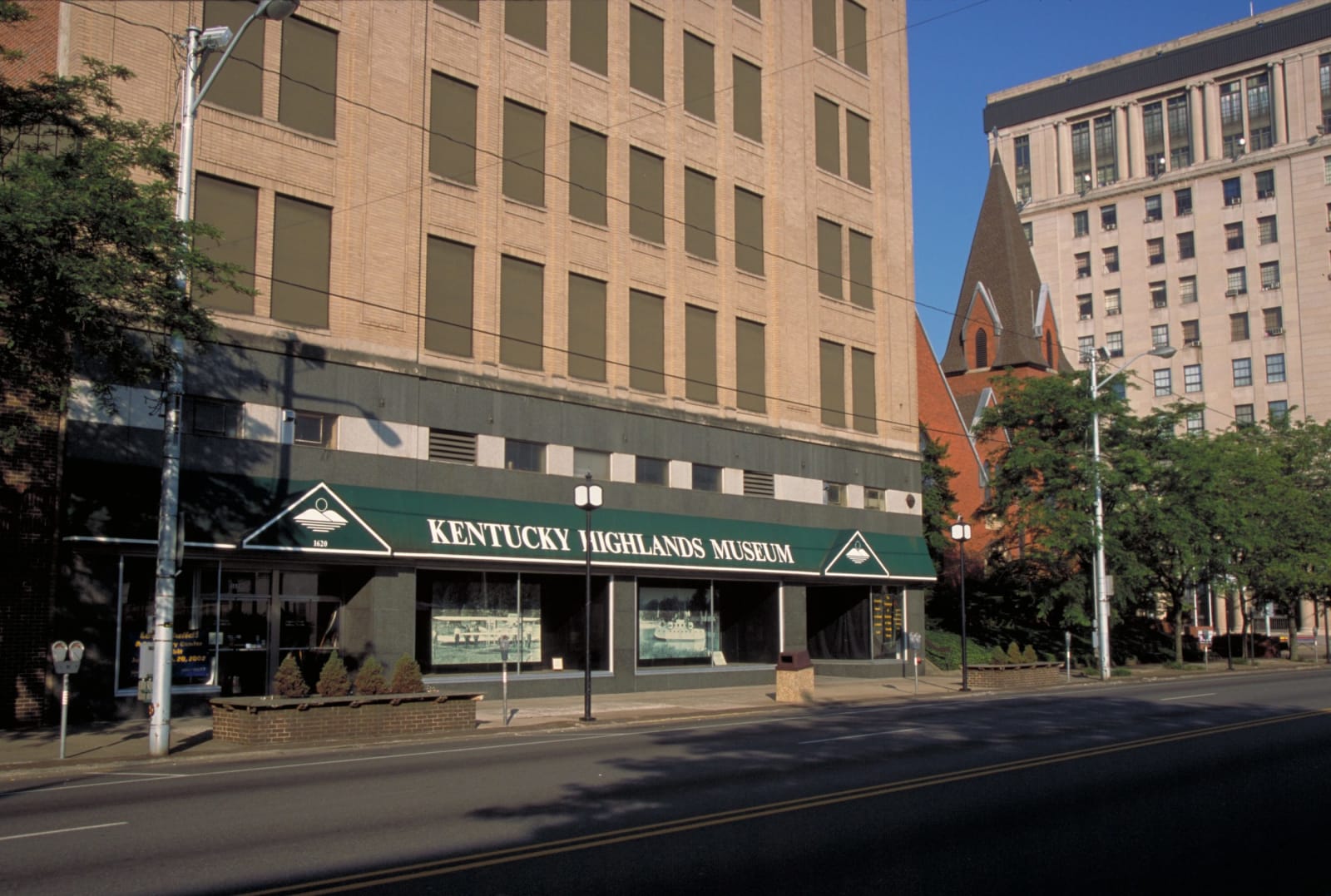
 Federal Highway Administration, National Scenic Byways Program / public domain via National Archives
The Story
Ashland began as Poage's Landing, the Ohio River homestead of a Poage family that came from Virginia's Shenandoah Valley in 1786. In 1854 the Kentucky Iron, Coal and Manufacturing Company, which owned the land, renamed it for Henry Clay's estate at Lexington, had M. T. Hilton lay out a town and auctioned the lots, and the legislature incorporated the city in 1856. Then came steel: the American Rolling Mill Company opened its Ashland Works in 1922, and the mill spread over 700 acres along the Ohio and employed about 7,000 people before AK Steel shut it in 2019.
The Highlands Museum, organized in 1984 and in the old C. H. Parsons department store on Winchester Avenue since 1994, tells that story for children and adults. Its Discovery Center rebuilds the river town of Poage's Landing as a streetscape, and visitors can take the wheel of Little Joe, an actual towboat. Other galleries cover the Ashland home front in World War II, a schoolroom of the 1870s and a country doctor's office from the days of house calls on horseback.
The museum keeps the music of U.S. 23, the Country Music Highway, which runs through town, with the Judd family of Ashland and the Cyrus family of nearby Flatwoods. Another exhibit is about Jean Thomas, an Ashland court reporter who traveled the hill courts early in the twentieth century and later founded the American Folk Song Festival, held for years each June in her own backyard. The Paramount Arts Center, a 1930 Art Deco movie house, is also on Winchester Avenue.
Visitor Info
On the Map
Nearby
The closest stops worth working into your route
Historical markers nearby
Roadside plaques and monuments within a short detour