 Carol M. Highsmith / public domain via Library of Congress
The Story
The mound in the pasture where Georgia 17 meets Georgia 75 is the Nacoochee Valley's best-known landmark, and it is a burial place. People of the Lamar period raised an earthen platform mound here in the late 1400s or early 1500s as a local center of government, on ground already lived on three centuries before. A 1915 museum expedition excavated it entirely and recorded seventy-five burials, a third with copper, shell and fine pottery marking people of standing. The village may be the Cherokee town of Nacoochee or Chota that Colonel George Chicken's expedition recorded in 1715. The mound seen today is a reconstruction with a gazebo on top. It is a grave, best seen from the road and the farm lane rather than climbed.
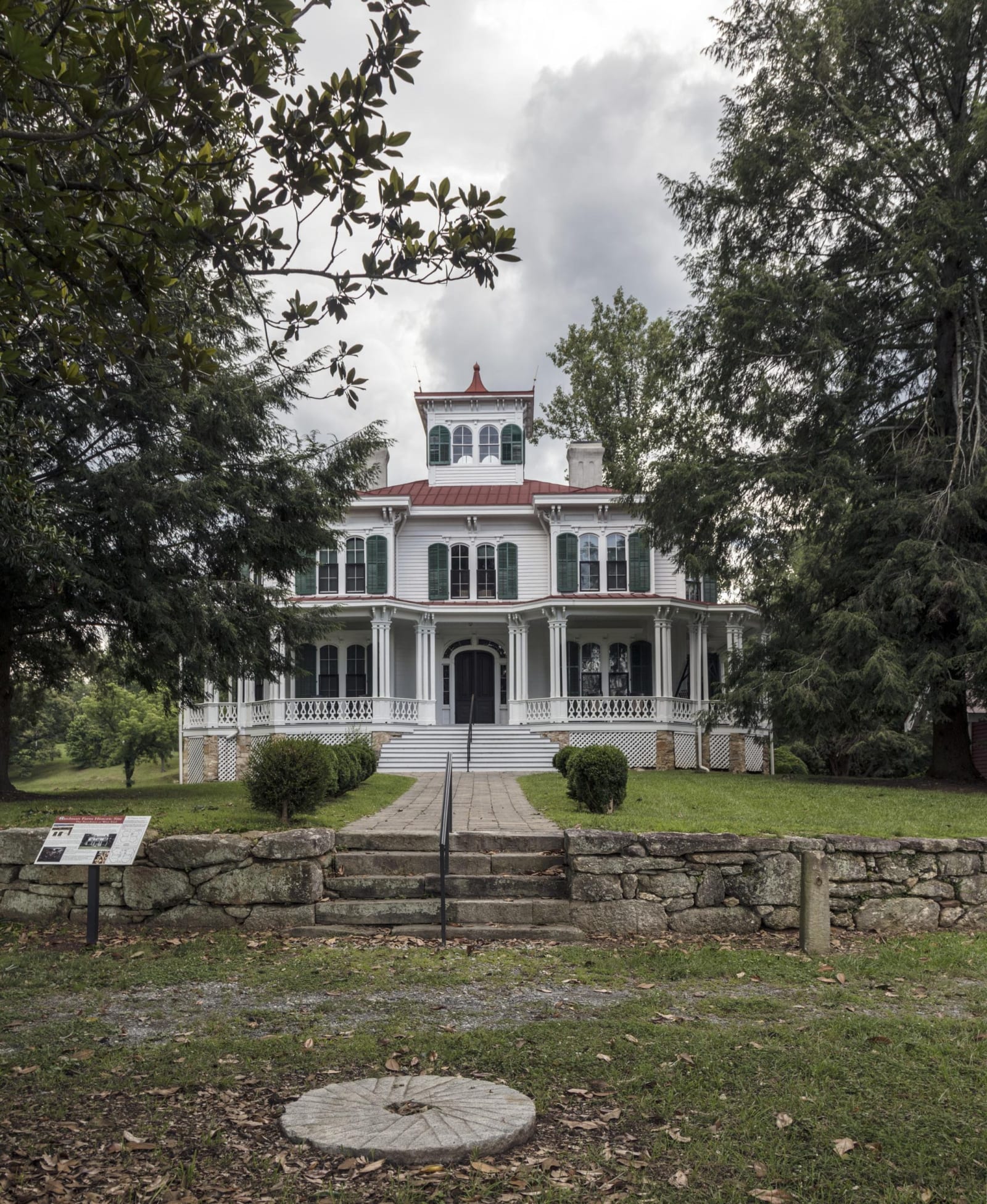
The lane from the visitor center to the house is a surviving stretch of the Unicoi Turnpike, a Native trading path made into a road under an 1813 agreement with the Cherokee and carried from Toccoa over the mountains into North Carolina and Tennessee. Captain James Nichols built the Italianate house, West End, in 1870; his daughter Anna Ruby gave her name to the falls above Helen.
Calvin Hunnicutt of Atlanta later kept it as a summer house, and much of his furniture is still inside. The last owners, the family of Lamartine Hardman, governor from 1927 to 1931, gave the farm to the state in 1999. Tours show the parlor and the house's early telephone and climate systems, and the barn of the Nacoochee Dairy, 1910 into the 1920s, stands on the grounds.
Visitor Info
On the Map
Nearby
The closest stops worth working into your route
Historical markers nearby
Roadside plaques and monuments within a short detour