 Mike Finn / CC BY 2.0 via Flickr
The Story
In 1829 this was the Cherokee Nation, and the gold found on its creeks that summer brought thousands of prospectors onto Cherokee land within months. The rush was known even then as the Great Intrusion, and a Cherokee writer in the Cherokee Phoenix put it plainly: "We are an abused people." Georgia answered with lotteries. In 1832 it gave away Cherokee land here and sold forty-acre gold lots for $10 each, and gold was a main reason for the removal of 1838, when soldiers drove the Cherokee west on the Trail of Tears.
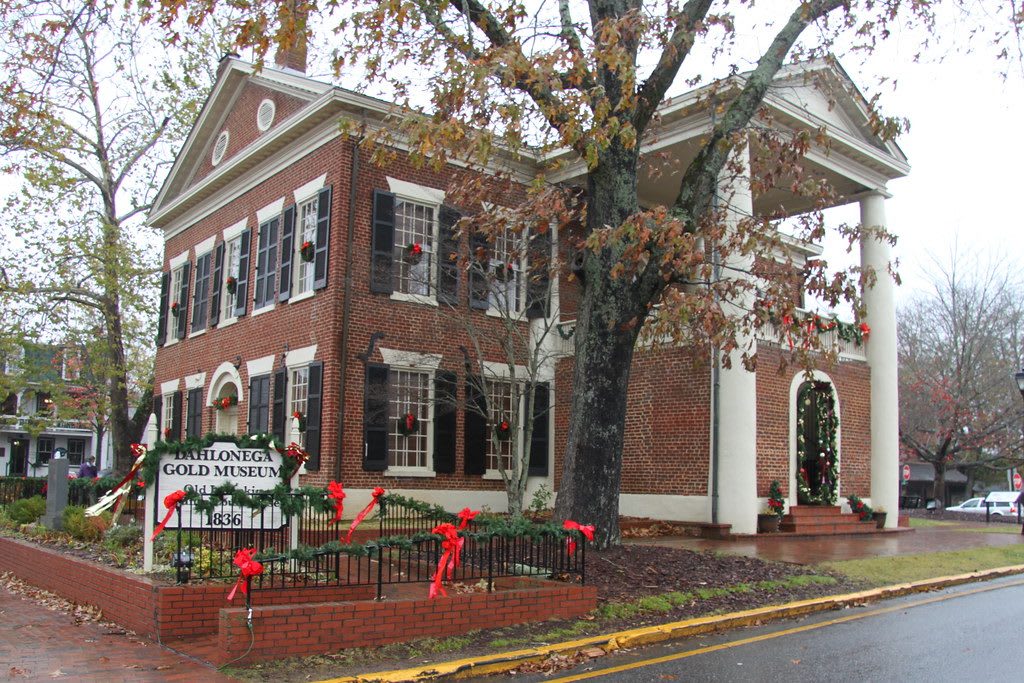
The town took its name from the Cherokee word for yellow or golden, and in 1836 the county built the brick courthouse that now holds the museum, one of the oldest standing courthouses in Georgia. Not every miner was free or white: enslaved men worked the Calhoun Mine, and a free Black miner and merchant known as "Free Jim" Bosclair grew wealthy here. A federal branch mint opened in 1838 and coined more than $6 million in gold before Georgia seized it in 1861. In 1849 the mint's assayer, Matthew Stephenson, stood on these steps begging miners not to leave for California, swearing the ridge south of town held millions. They went anyway.
Inside are a full set of Dahlonega coins, a nugget of more than five ounces, a hydraulic cannon used to blast soil off hillsides, and the old courtroom. There is no elevator. The mint burned in 1878, and the college that took over its site built Price Memorial Hall on the foundations, its steeple leafed in local gold.
Visitor Info
On the Map
Nearby
The closest stops worth working into your route
Historical markers nearby
Roadside plaques and monuments within a short detour