Home / Georgia / Vidalia, Statesboro & the Inner Coastal Plain / Botanic Garden at Georgia Southern University
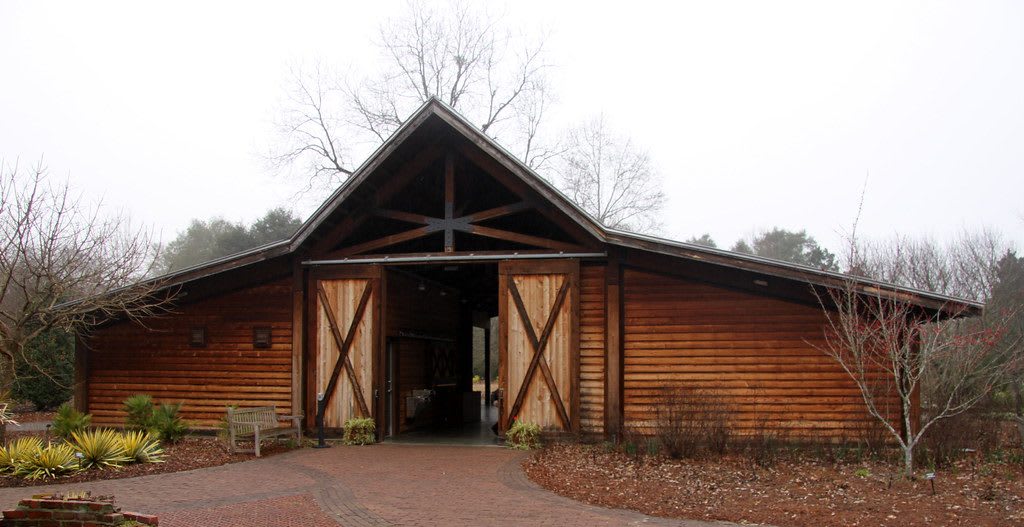
A low wooden barn with a steep gabled roof and open double doors behind a brick path and planted beds on a gray day.muffinn / CC BY 2.0 via Flickr
🌲Natural

Botanic Garden at Georgia Southern University

Part ofVidalia, Statesboro & the Inner Coastal Plain

Eleven acres of native coastal plain plants around Dan and Catharine Bland's farmstead in Statesboro, willed to the university, with a one-room schoolhouse moved from Tattnall County.

⏱
Duration
One to two hours.
🎟
Admission
Contact the garden for current admission; member of the American Horticultural Society reciprocal program (2026).
📅
Best Season
Late winter for camellias, spring for azaleas. Open Monday to Friday 9 a.m. to 5 p.m., Saturday 9 a.m. to 2 p.m. and Sunday 1 to 5 p.m.; June 1 to August 31, Monday to Saturday 9 a.m. to 2 p.m., closed Sunday (2026).

The Story

Dan Bland was born in Bulloch County in 1894, and Catharine O'Neal in Hinesville in 1897. They met in 1914 as students at the First District Agricultural and Mechanical School, the school that became Georgia Southern, and married in 1916. On this farm they coaxed a living out of thin, sandy coastal plain soil, running a small dairy, raising livestock and growing pecans, pears and row crops, and in 1929 Georgia Magazine praised the place as a model farm. Dan was a self-taught naturalist who knew the plants and animals of the region, and he brought native plants home to grow beside the old favorites.

The Blands willed their farmstead to the university; Catharine died in 1983 and Dan in 1985. Their cottage is now the visitor center, and the old farm buildings still stand among eleven acres of gardens: a large collection of native azaleas, the Whelchel camellia garden, wetland and bog gardens, a heritage garden, the Magnolia Allee and a pollinator garden, with woodland trails, benches and an outdoor classroom stage. In 2010 the Oak Grove School, a one-room schoolhouse from Tattnall County, was moved here; Georgia had some 7,000 such schools in 1900, and few survive.

Late winter brings camellias, spring the azaleas and native wildflowers. The garden holds plant sales and an Arbor Day seedling giveaway, and wood thrushes and brown thrashers are among the birds of its woods. It is a short drive from the Georgia Southern Museum.

Visitor Info

⏱
Time Needed
One to two hours.
🎟
Admission
Contact the garden for current admission; member of the American Horticultural Society reciprocal program (2026).
📅
Best Season
Late winter for camellias, spring for azaleas. Open Monday to Friday 9 a.m. to 5 p.m., Saturday 9 a.m. to 2 p.m. and Sunday 1 to 5 p.m.; June 1 to August 31, Monday to Saturday 9 a.m. to 2 p.m., closed Sunday (2026).
🛣️
Highway
US 301

On the Map

Nearby

The closest stops worth working into your route

cultural0.5 mi away
Georgia Southern University Museum
The natural and cultural history museum of Georgia's coastal plain, in the 1937 Rosenwald Building in Statesboro, built around a mosasaur and an early whale dug up at Plant Vogtle.
historical1.9 mi away
Lynching in Bulloch County Marker
The 2024 marker beside Statesboro City Hall naming nine Black men lynched in Bulloch County between 1886 and 1911, among them Paul Reed and Will Cato, burned alive in 1904.
historical9.5 mi away
Willow Hill Heritage & Renaissance Center
A museum near Portal on the grounds of the Willow Hill School, started in 1874 by formerly enslaved families in a turpentine shanty and open for 125 years.
historical22 mi away
George L. Smith State Park
A cypress and tupelo millpond near Twin City, held back by the 1880 Parrish Mill, a gristmill, sawmill, covered bridge and dam built in one.
historical33 mi away
Magnolia Springs State Park
A clear spring north of Millen and the site of Camp Lawton, the 42-acre 1864 stockade where some 10,000 Union prisoners were held and nearly 500 died.
cultural38 mi away
Vidalia Onion Museum
A small museum in Vidalia telling how a Depression-era crop became Georgia's protected sweet onion, and the hand labor that still plants and pulls it.

Historical markers nearby

Roadside plaques and monuments within a short detour

Marker0.7 mi away
Pioneer Turpentining Experiment
Statesboro
Marker1.9 mi away
Bulloch County
Statesboro
Marker11 mi away
Croatan Indian Community
Statesboro
Marker12 mi away
John Abbot (1751-1839)
Brooklet
Marker17 mi away
Candler County
Metter
Marker20 mi away
British Headquarters
Newington