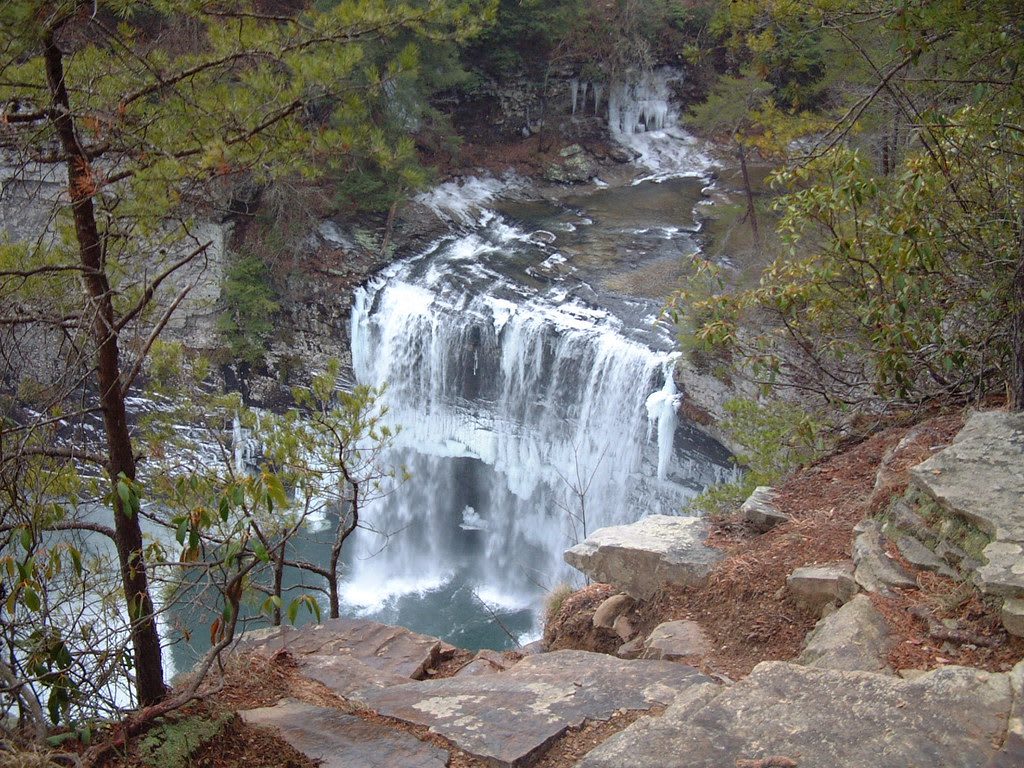
 AmeriGirlUK / CC BY 2.0 via Flickr
The Story
Fall Creek Falls sits on the western edge of the Cumberland Plateau, where Cane Creek has cut a gorge some fifteen miles long. The namesake waterfall drops about 256 feet into the Fall Creek Gorge, and it is only the best known of several. Cane Creek Falls drops 85 feet, Rockhouse Falls 125 and Piney Creek Falls 95, and an overlook beside the main parking lot looks straight down into the gorge. Trails lead along the rim and down to the plunge pools.
The plateau here was never easy ground. Its thin soil kept farms few, and the creeks flood hard. In the Good Friday flood of 1929 the water took out the Cane Creek Mill, which had stood above the falls since 1831 and was never rebuilt. Its miller, Lawson Fisher, later described feeling the building quiver, running for the door, and turning around in time to watch it go over the falls.
The park is a New Deal creation. In 1937 the federal government began buying eroded, worn-out land here for under seven dollars an acre. The Resettlement Administration moved the families living on it, and the Civilian Conservation Corps and the Works Progress Administration restocked wildlife, replanted the hills and built trails, shelters, a dam and cabins. The National Park Service handed the park to the state in 1944. It now covers nearly 20,000 acres across Van Buren and Bledsoe counties, among the largest in Tennessee.
Visitor Info
On the Map
Nearby
The closest stops worth working into your route
Historical markers nearby
Roadside plaques and monuments within a short detour