 Carol M. Highsmith / public domain via Library of Congress
The Story
Earl Scruggs was born on January 6, 1924, in the Flint Hill community near Boiling Springs, about ten miles west of Shelby. His father, a farmer and bookkeeper who played banjo, died when Earl was four, and his mother, brothers and sisters all played something. Three-finger picking was already the common way to play the five-string banjo around Flint Hill, and a local player, DeWitt "Snuffy" Jenkins, came close to what Scruggs would make of it. He was on the radio at eleven. Through the war years, deferred from the draft to support his mother, he made sewing thread at the Lily Mill near home for about 40 cents an hour.
In 1945 he joined Bill Monroe's Blue Grass Boys, and his driving three-finger roll took the banjo from a comedian's prop to a lead instrument; the band's sound gave bluegrass its name. He and Lester Flatt left in 1948. Their "Foggy Mountain Breakdown," recorded in December 1949, came back for a new generation in Bonnie and Clyde in 1967 and is in the Library of Congress's National Recording Registry, and "The Ballad of Jed Clampett" in 1962 was the first bluegrass record to top Billboard's country chart.
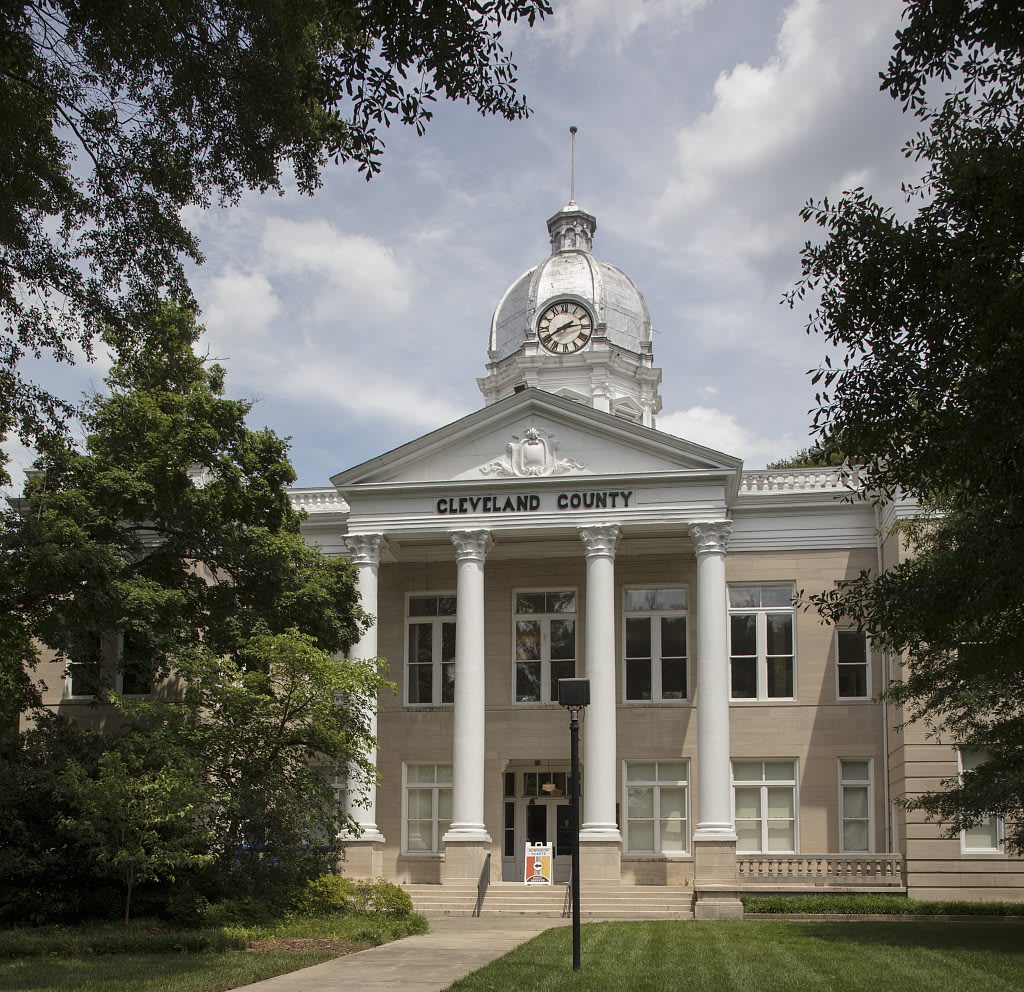
The center opened in January 2014, two years after his death, in the restored 1907 Cleveland County Courthouse on Shelby's court square. Its interactive exhibits follow his life and the music and stories of the county that shaped him, and special exhibitions take up other chapters of its history.
Visitor Info
On the Map
Nearby
The closest stops worth working into your route
Historical markers nearby
Roadside plaques and monuments within a short detour