 Carol M. Highsmith / public domain via the Library of Congress
The Story
Barbed wire reached Texas as a hard sell. In 1875 Joseph Glidden, who had patented his wire at DeKalb, Illinois, hired his former clerk Henry B. Sanborn to sell the factory's output to Texas ranchers. Sanborn met suspicion, shipped four carloads to Sherman, Dallas, Austin and San Antonio, and by 1876 was selling close to a million dollars of wire a year. In 1881 he and Glidden started the Frying Pan Ranch near what became Amarillo to show what fenced range could do. By 1886 the XIT had fenced 781 miles of its range, and in 1882 Charles Goodnight strung a drift fence across a canyon above the JA's Home Ranch.
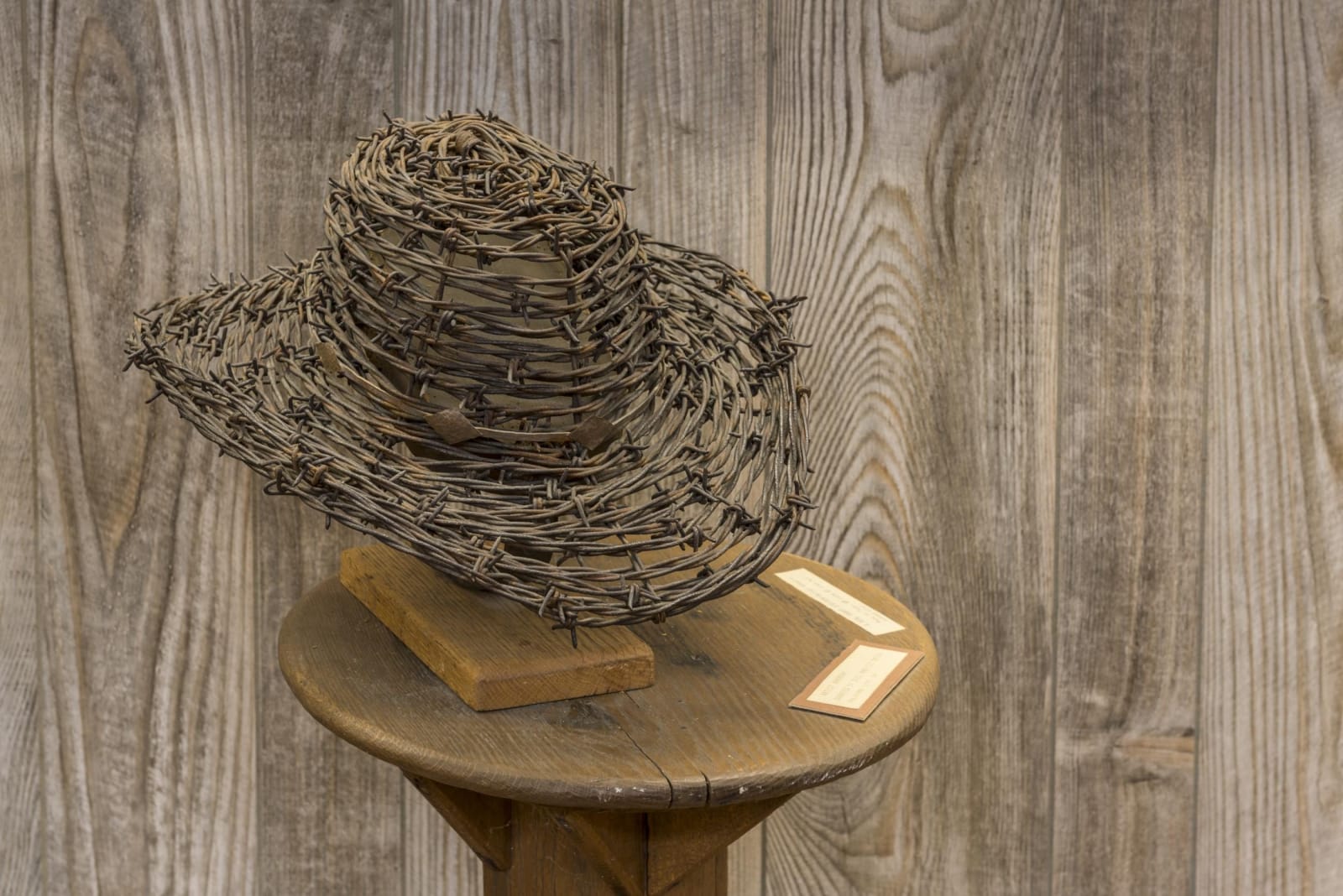
The museum at 100 Kingsley Street tells how the wire changed the West and follows it from ranch fences to battlefields. It shares the building with the Old Route 66 Museum, with its road signs and a mock-up of an old roadside diner, and with artifacts from the Dust Bowl years.
The building is part of the story too. It was a brassiere factory, and a billboard once welcomed drivers to McLean as the Uplift Capital of the World. The town was the last on the Texas stretch of Route 66 to be bypassed by Interstate 40, and its old business district, with a 1929 Phillips 66 station, is a short walk away.
Visitor Info
On the Map
A story featuring this place
Go deeper into the history and character of this stop
Nearby
The closest stops worth working into your route
Historical markers nearby
Roadside plaques and monuments within a short detour