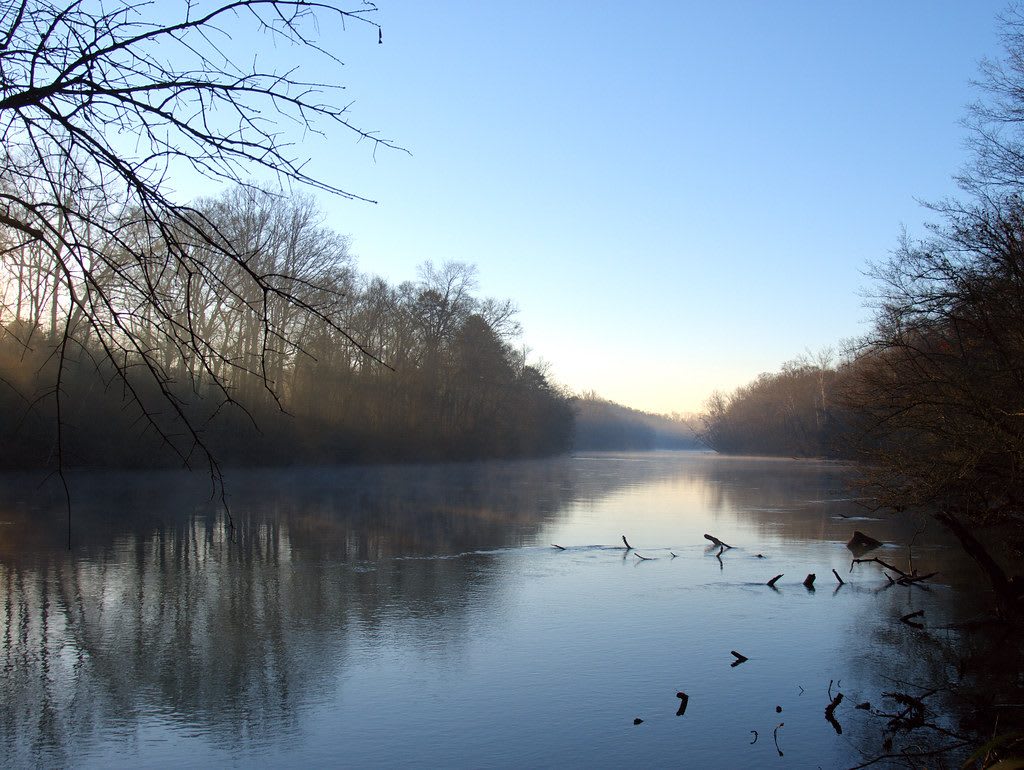
 TimothyJ / CC BY 2.0 via Flickr
The Story
The river's name is Muscogee. In 1799 the Indian agent Benjamin Hawkins wrote down chat-to as "stone" and ho-che as "marked" or "flowered," and the Muscogee (Creek) people valued the river for food, travel and its place in the spirit world, while the Cherokee lived near its headwaters. The Muscogee had ceded the land east of the river by 1825. Barges from West Point came up as far as Standing Peachtree, about seven miles from today's Five Points, and settlements grew around the ferry taverns.
James Power started a ferry here in 1835, linking what is now Sandy Springs with Cobb County, and in July 1864 units of Sherman's army crossed the Chattahoochee at Power's Ferry on the way to Atlanta. The park keeps the ruins of the Marietta Paper Mill on Sope Creek and of Akers Mill on Rottenwood Creek. On Vickery Creek stand the remains of Roswell's Ivy Mill, burned by Union troops in 1864 after its women workers were sent north.
Jimmy Carter signed the recreation area into being on August 15, 1978. It strings fifteen units along 48 miles between Lake Lanier and Atlanta, and in 2012 its stretch became the first National Water Trail. The cold water holds stocked rainbow trout; fishing needs a Georgia license and trout stamp. Start at Island Ford, where the visitor station is in Hewlett Lodge, then pick a unit for walking or paddling.
Visitor Info
On the Map
Nearby
The closest stops worth working into your route
Historical markers nearby
Roadside plaques and monuments within a short detour