 Dsdugan / CC0 via Wikimedia Commons
The Story
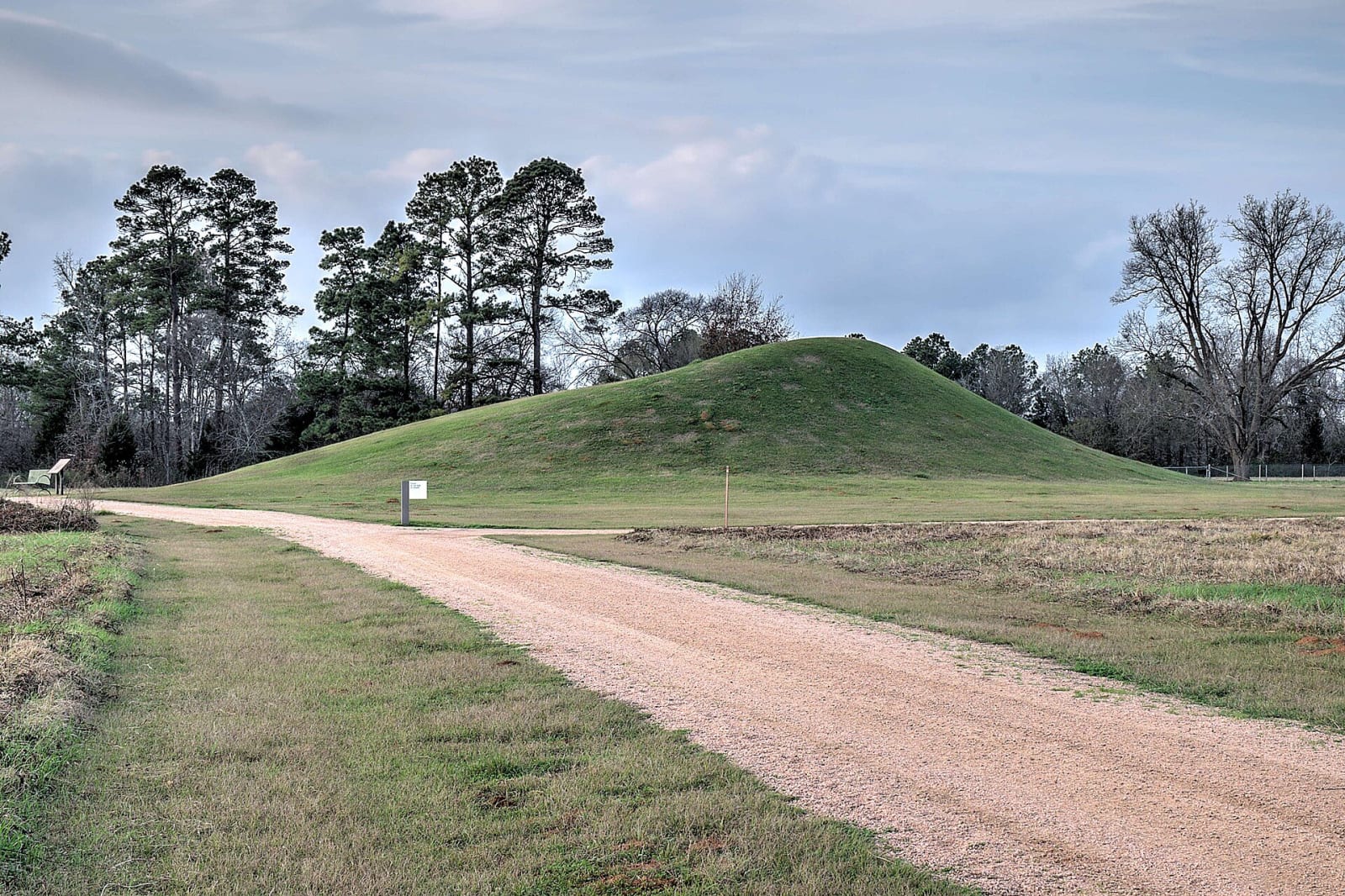
Caddo Mounds State Historic Site stands on State Highway 21 about six miles southwest of Alto, where ancestral Caddo chose a spot for a permanent settlement about A.D. 800. The Texas Historical Commission calls it a prehistoric village and ceremonial center on the original El Camino Real de los Tejas, and says the three mounds that remain are still considered sacred to Caddo people. The Handbook of Texas says the site takes in much of the George C. Davis Site, the southwesternmost ceremonial center of the Caddoan peoples, with the Old San Antonio Road along one edge.
The Handbook's account of the archaeology is specific. Two mounds were communal precincts and the third was a burial place for elite members of a hierarchical society, and the mounds grew as burials and the remains of destroyed buildings were covered with earth. People here grew corn, used the bow and arrow, made decorated pottery and traded as far as the Gulf Coast. The village was abandoned around A.D. 1300 for reasons unknown. Texas Parks and Wildlife bought 70 acres in 1974 and 23 more in 1981, and the Texas Historical Commission took over operations on January 1, 2008.
The site is at 1649 State Highway 21 West in Alto. The Handbook lists a visitor center, a three-quarter-mile self-guided trail and a reconstructed Early Caddo dwelling, a beehive-shaped house about 25 feet across. It is open Tuesday through Sunday, 8:30 a.m. to 4:30 p.m. Adults pay $5, seniors, veterans, teachers and first responders $3, and children 6 to 17 $2; five and under are free.
Visitor Info
On the Map
Nearby
The closest stops worth working into your route
Historical markers nearby
Roadside plaques and monuments within a short detour