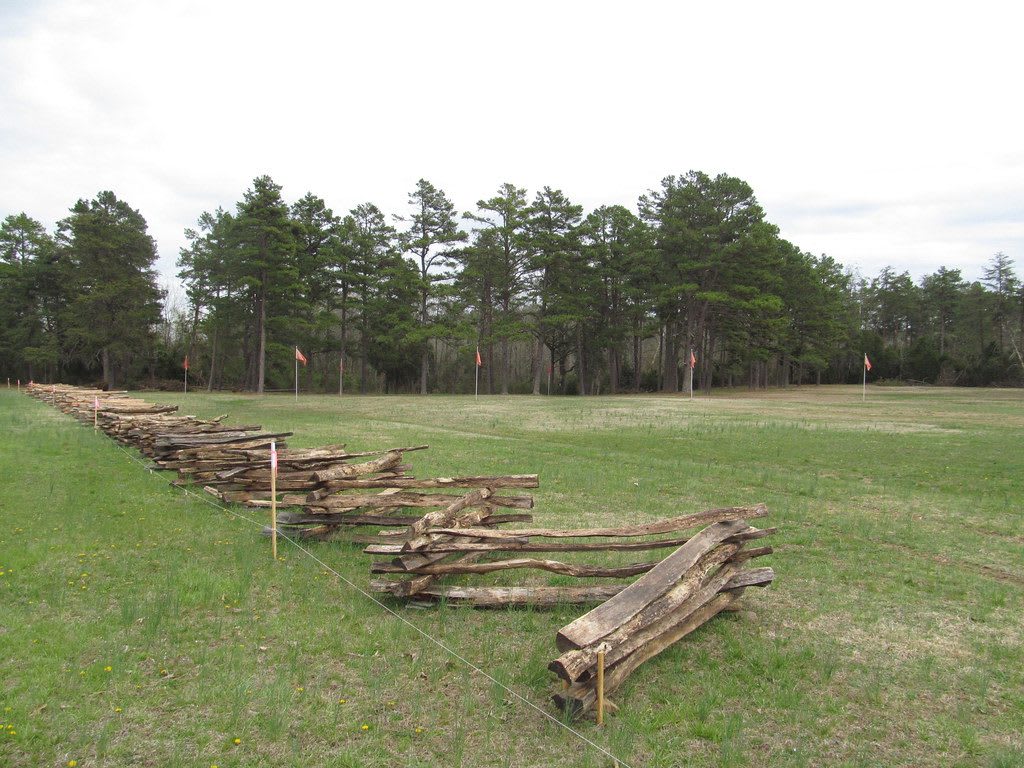
 Doug Kerr / CC BY-SA 2.0 via Flickr
The Story
In the 1760s farmers in the Piedmont counties organized against sheriffs who pocketed tax money, court officers who charged illegal fees, and a colonial government far to the east that ignored them. They called themselves Regulators and had no single leader; men such as Herman Husband, a Quaker pamphleteer, James Hunter and Rednap Howell spoke for them. They petitioned, sued and won seats in the assembly, and when that changed nothing, a crowd broke up the court at Hillsborough in September 1770 and beat the official Edmund Fanning.
Governor William Tryon raised about a thousand militia, led by planters and gentlemen, and marched west with artillery. On May 16, 1771, some 2,000 Regulators, fewer than half of them armed, met him along the road here and sent a last petition. Tryon gave them an hour to disperse, they refused, and he opened fire with grapeshot. Most scattered; about four hundred stood and fought while the cannon fired for half an hour, and the militia then pursued them for another hour and a half. Accounts differ; the state counts about a hundred Regulators killed and two hundred wounded. James Few, a prisoner, was executed at the camp the next day, and Tryon's army then burned farms across the Regulator country and made people swear allegiance.
The visitor center shows the battle and the powder horn of Regulator Harmon Cox. Outside are the 1880 granite column, the 1901 monument to Hunter, a three-quarter-mile trail through the battle positions and the log house of John Allen, Husband's brother-in-law, built about 1780 and moved here from Snow Camp.
Visitor Info
On the Map
Nearby
The closest stops worth working into your route
Historical markers nearby
Roadside plaques and monuments within a short detour