County guide · Oklahoma
Tulsa County
4 places to stop and 5 historical markers in Tulsa County, Oklahoma.
Places to stop
historical · Tulsa
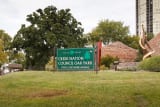
Creek Nation Council Oak Park
The oak on a south Tulsa hill where the Lochapoka Muscogee lit their fire in 1836 after removal from Alabama, the ceremonial ground from which Tulsa took its name.
historical · Tulsa
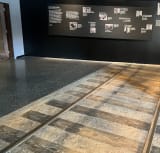
Greenwood Rising
The history center at Greenwood and Archer that tells how Tulsa's Black Wall Street was built, how white mobs burned it in 1921, and how its people rebuilt it.
cultural · Tulsa
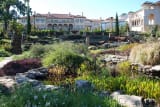
Philbrook Museum of Art
Waite Phillips's 1927 Italian villa and its Villa Lante-inspired gardens, given to Tulsa in 1938 and open as an art museum since October 1939, strong in Native American art.
cultural · Tulsa
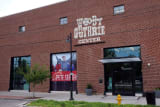
Woody Guthrie Center
The archive and museum of the Okemah-born songwriter, in a 1922 paper warehouse in the Tulsa Arts District, holding more than 10,000 items including his notebooks.
Historical markers
Erected 1995
Battle of Round Mountain
Where this fight happened is still argued. The Keystone site, now under Keystone Lake, was long accepted, but in 1949 researcher John H.
Historical marker
Booker T. Washington High School
The East Woodrow Place school opened in September 1950 and graduated its first class in 1951. In 1973 the Tulsa district made Booker T.
Historical marker
First Oil Well, Tulsa County
Two Pennsylvania drillers, John S. Wick and Jesse A. Heydrick, held a doubtful lease on 410,000 acres of the Creek Nation, and when the Frisco agent at Red Fork would…
Erected 1995
Glenn Pool, World's Greatest Oil Pool
The discovery well stood on a Muscogee (Creek) allotment. Ida E. Glenn and her husband, Robert, leased it to Robert Galbreath for forty-five dollars and a one-eighth…
Erected 1971
International Petroleum Exposition
The first show, the International Petroleum Exposition and Congress, ran October 8 to 14, 1923, through heavy rain and martial law.