County guide · Kentucky
Warren County
2 places to stop and 17 historical markers in Warren County, Kentucky.
Towns: Bowling Green (16), Smiths Grove (1), Rockfield (1)
Places to stop
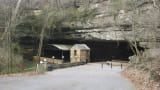
geological · Bowling Green
Lost River Cave
A karst valley and underground river inside Bowling Green, with 10,000 years of human use, an old mill site, a 1930s nightclub at the cave mouth and a boat tour.
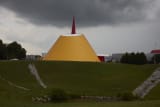
cultural · Bowling Green
National Corvette Museum
The Corvette's museum beside the only plant that builds it, best known for the 2014 sinkhole that opened under its yellow Skydome and swallowed eight cars.
Historical markers
Bowling Green
Civil War Occupations
The Confederate stay began on September 18, 1861, when Simon Bolivar Buckner's troops took Bowling Green, prized for the Barren River and the Louisville and Nashville…
Bowling Green
College Hill
The Federals who took the town in February 1862 finished the Confederate works and named this one Fort C. F. Smith; it was the largest in the ring around Bowling Green.
Bowling Green · Erected 2008
Eliza Calvert Hall, 1856-1935
Lida Calvert grew up comfortable on Vinegar Hill until her father, a Bank of Kentucky man accused of embezzlement, vanished when she was a teenager and stayed away…
Bowling Green · Erected 2009
Ernest Hogan
Hogan's best-selling song was also the one that haunted him. Published in 1896, it carried a racial slur in its title and sold more than a million copies.
Bowling Green
Fort Webb
The Confederates left this work unfinished in February 1862, and the Federal troops who took the town the next day completed and held it; they named it Fort Webb, though…
Bowling Green
Hobson House
Riverview is an Italianate house above the Barren River, with arched windows, deep bracketed eaves and a cupola.
Bowling Green
Home of Thomas HInes
The breakout from the Ohio Penitentiary took Hines and five other captains most of November 1863.
Bowling Green · Erected 1988
Home/Office of Duncan Hines 1941-1959
Hines found his calling as a traveling salesman for a Chicago direct-mail advertising firm, keeping notes on good meals until friends' requests turned his list into a…
Bowling Green
James T. Morehead, 1797-1854
Morehead was a Clay man before the Whigs had a name. Nominated for lieutenant governor at the 1831 National Republican convention in Baltimore, he won on a split ticket…
Bowling Green · Erected 2001
Jonesville
Look for Jonesville and you find ballfields. When Western Kentucky University pushed its campus down off the hill, the state bought out the neighborhood through urban…
Bowling Green
McFadin's Station
Settlers liked to tell a story about the station. A boastful young Virginian turned up claiming he could outrun any man in Kentucky, barefoot.
Smiths Grove
Old Stagecoach Stop
Behind the 1841 Greek Revival inn stands a two-room saddlebag log house of about 1818, presumed to be the one Susannah Henry Madison lived in.
Historical marker
Old Union Church
John Hightower, the church's first pastor, had preached for years in South Carolina before settling on the Middle Fork of Drakes Creek in 1795.
Bowling Green · Erected 2005
Ora Porter (1880-1970)
Porter finished Tuskegee's nursing school in 1904, when most paid work open to Black women in Kentucky was domestic service. Booker T.
Bowling Green · Erected 2019
Presbyterian Church
The congregation's history is a run of splits and reunions. Between 1849 and 1858 it divided along the national Old School and New School lines, then reunited.
Rockfield
Providence Knob Baptist Church
Among the nine who founded the church in September 1804 was Joseph Taylor, a North Carolinian who had preached as a Methodist before his Baptist baptism in Tennessee.
Bowling Green · Erected 2004
Shake Rag
One building carries much of Shake Rag's story into the present. James Covington built the Southern Queen Hotel at 140 State Street in 1906, with his family's home at…