County guide · Kentucky
Madison County
2 places to stop and 15 historical markers in Madison County, Kentucky.
Towns: Richmond (13), Berea (3), Big Hill (1)
Places to stop
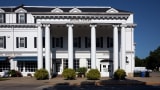
historical · Berea
Berea College
The 1855 school founded by abolitionists, the first integrated, coeducational college in the South, segregated by Kentucky's Day Law from 1904 to 1950.
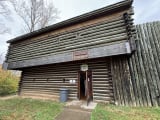
historical · Richmond
Fort Boonesborough State Park
The Transylvania Company's 1775 fort on the Kentucky River, built on country the Shawnee hunted, and the site of the Shawnee siege of September 1778.
Historical markers
Berea
Church of Christ, Union
The congregation set its own rules from the start. Members came from many traditions, so sprinkling and immersion were both accepted as baptism, and the 1853 fellowship…
Richmond
Civil War Field Hospital
The Mt. Zion congregation grew out of the Baptist churches at Viney Fork and Bethel and joined the Campbellite movement late; its building was dedicated on June 7, 1852…
Richmond
County Named, 1786
Paint Lick and Boonesborough, the two largest settlements, each wanted the county seat, so the justices organized the county on August 22, 1786, at Milford, midway…
Richmond
Daniel Boone's Trace
Richard Henderson needed a road before he could sell the land he had bought from the Cherokee at Sycamore Shoals, and he hired Boone to mark it.
Richmond
Frances E. Beauchamp (1857-1923)
Her work reached inside the prison walls. In her day the state leased the penitentiary at Frankfort to the highest bidder, and the lessees worked convicts hard for…
Richmond
Gov. James B. McCreary
McCreary's war split his family. Born in Madison County in 1838, he joined the Confederate army against his parents' wishes and wrote that he stood alone among his…
Richmond
Laura Clay (1849-1941)
Her parents' divorce likely showed Clay what Kentucky law then let a husband claim of his wife's property and children, and her antislavery father opposed votes for…
Richmond · Erected 1963
Lion of White Hall
Clay spoke against slavery from his youth and still held people in slavery himself. In 1844 he freed some of them, at a cost put at $40,000, and many stayed at White…
Richmond · Erected 2019
Lynwood, Brutus Clay II/Pattie A. Clay
The infirmary Brutus Clay gave in his wife's memory opened in a renovated building on Glyndon Avenue with ten beds and a volunteer staff, governed by seven women from…
Richmond
Medal of Honor Winners
Little Bighorn was a defense: Lakota and Cheyenne warriors turning back an Army attack on their village beside the river on June 25, 1876.
Big Hill
Merritt Jones/Wayside Tavern
Local tradition, long unconfirmed, gives the fullest picture of Grant's night here. A cavalry officer rode ahead and told the household, who sided with the South, that…
Richmond · Erected 2015
Route of Advance
The Union soldiers in Kirby Smith's path were largely new regiments, raised in haste by Midwestern governors after the invasion began and sent to the front with little…
Berea · Erected 2003
Site of Boyhood Home of Red Foley
Foley grew up around Berea in a musical family, and by nine he was playing harmonica, guitar and banjo for customers at his father's general store.
Richmond
Twitty's or Little Fort
Boone's road cutters camped near here on the night of March 24, 1775, and posted no guards, thinking the danger behind them. Shots hit the camp before dawn.
Richmond · Erected 2005
White Hall
Green Clay, who built Clermont, made his money surveying and claiming land, then ran taverns, mills, furnaces, distilleries, ferries and a resort.