County guide · Kentucky
Fayette County
4 places to stop and 75 historical markers in Fayette County, Kentucky.
Towns: Lexington (78), Athens (1)
Places to stop
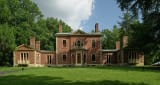
historical · Lexington
Ashland, the Henry Clay Estate
Henry Clay's Lexington estate, rebuilt by his son in the 1850s, where the guided tours now tell the lives of the more than 140 people Clay enslaved.
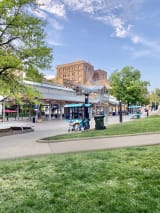
historical · Lexington
Cheapside and Henry A. Tandy Centennial Park
Lexington's old courthouse square, for decades the center of Kentucky's slave trade, renamed in 2020 for Henry A. Tandy, a formerly enslaved builder.
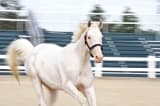
cultural · Lexington
Kentucky Horse Park
The state's 1,224-acre horse farm and museum north of Lexington, where the great jockey Isaac Burns Murphy is buried near Man o' War.
natural · Lexington
Raven Run Nature Sanctuary
Lexington's largest park, more than 700 acres of woods, meadow and stone fences where Raven Run Creek drops through the Kentucky River Palisades.
Historical markers
Lexington
Adolph F. Rupp (1901-77)
Rupp was the fourth of six children of German Mennonite parents in Halstead, Kansas, and loved basketball from the age of six.
Lexington · Erected 2003
African Cemetery No. 2
Burials here go back to the 1820s, decades before the society bought four acres in 1869; it added four more in 1875.
Lexington
African-American Physicians
For the first thirty years of the 1900s, Black doctors and the Marble Sisters Pharmacy shared this building.
Lexington · Erected 2007
Ashland
When Clay died in 1852, Lincoln gave his eulogy on July 6 in the Hall of Representatives of the Illinois statehouse at Springfield, with the town's stores closed for the…
Lexington
Beck House
The crenellated brick parapet across the front is the thing to look for: round-topped merlons set over brick panels, a medieval touch on an otherwise Grecian house.
Athens · Erected 2007
Boone's Station
Not everyone here in 1779 chose to come. Wives and children often had little say in the move, and the enslaved people brought west had none, many separated from their…
Lexington
Cave Spring
Cave Spring shows the Kentucky building sequence on one farm: a log house of about 1784, the stone house finished in 1792, then brick outbuildings including a…
Lexington
Cedar Hall-Helm Place
The plan came from a book. The house adapts two Country Villa designs printed on one page of Chester Hills's Builder's Guide, published in Hartford in 1834, and its…
Lexington
Clay Villa, ca. 1845
Clay did not stay long in his villa. After his father's death in 1852 he bought the Ashland land from the other heirs, and in 1857 built a new house on the old…
Lexington
Colonel George Nichols
Nicholas came from a Williamsburg family, a son of Robert Carter Nicholas, and before he moved west he sat in Virginia's 1788 convention that ratified the federal…
Lexington
Colored Orphan Industrial Home
Its board was all women: E. Belle Mitchell Jackson as president, with Emma O. Warfield, Ida W.
Lexington · Erected 2018
Commonwealth of Kentucky v. Jeffery Wasson
Wasson, a nursing student in his twenties, chose to fight rather than pay, with Ernesto Scorsone as his lawyer.
Lexington · Erected 1893
Confederate Soldiers Monument
Four Lexington men paid for this statue of a Confederate soldier in a winter greatcoat, raised in 1893 over a pedestal carrying the names of 160 Confederates buried in…
Lexington
Desegregation of UK
Johnson came to Louisville in 1930 at his sister's urging and taught at Central High School, where he also fought for equal pay for Black teachers.
Lexington · Erected 2018
Deweese (Dewees) St. Neighborhood
The Lyric Theatre at Third Street and Elm Tree Lane was opened by an Indianapolis theater company and billed as the nation's finest colored theater.
Lexington
Dr. Luke P. Blackburn Correctional Complex
The man this prison honors was accused, in April 1865, of trying to start yellow fever epidemics in Northern cities. A Confederate agent named Godfrey Hyams told U.S.
Lexington
Dr. Robert Peter
Peter was born in Cornwall, reached the United States in 1817, took his medical degree at Transylvania in 1834 and married Frances Paca Dallam the next year; they raised…
Lexington
Early Land Grant
Thomas Lewis came from Fairfax County, Virginia, in the mid-1780s with his wife, Elizabeth Payne Lewis, and his war comrade Major Henry Payne.
Lexington
Eastern State Hospital
Before 1824, Kentucky boarded out people judged insane at public expense or sent a few to Williamsburg.
Lexington · Erected 2019
Fairness Ordinance
Louisville had acted first, in January 1999, but its ordinance covered only employment; Lexington's reached housing and public places too and took effect at once.
Lexington
First Inauguration
The new government took shape quickly in that market house. The governor and legislature assembled on June 4, James Brown became the first secretary of state the next…
Lexington · Erected 2008
First Presbyterian Church
The congregation began as Mount Zion Church under Adam Rankin, a minister from western Pennsylvania who arrived on October 1, 1784, and drew as many as 500 communicants…
Lexington
First Race Course
Racing in early Kentucky began in the streets. Settlers from Virginia, Maryland, Pennsylvania and North Carolina brought their horses and their taste for short dashes…
Lexington · Erected 2015
Florence Crittenton Home
The home occupied the Thomas Grant house, built in 1823 at 519 West Fourth Street, from its start in 1894 as the Lexington House of Mercy.
Lexington · Erected 2014
Glengarry Field-Cool Meadow
Bigger multi-engine planes needed longer runways than Halley Field could give, so in February 1930 the Board of Commerce's airport committee leased Glengarry Farm for a…
Lexington
Henry Clay's Law Office
For a century this little office was hidden in plain sight. In 1830 a larger building went up around it, taking in the 20-by-22-foot room as its front corner; the old…
Lexington
Historic Land
Pleasant Green traces itself to 1790 and to Peter Duerett, the enslaved preacher called Brother Captain, who is counted as founder of both this church and First African…
Lexington · Erected 2018
Historic LGBTQ Site
The license Marjorie Jones and Tracey Knight sought was refused, and they went to court. In November 1973 the Kentucky Court of Appeals ruled against them in Jones v.
Lexington · Erected 2011
Hunt-Morgan House
Hunt reached Lexington in 1795 as a dry goods merchant, and much of his fortune rested on slavery.
Lexington
James Lane Allen
Allen came to fiction after years of teaching, in Kentucky, in Missouri and at Bethany College in West Virginia.
Lexington · Erected 2019
Joyland Amusement Park
For white Lexington, Joyland was the summer place; Black families were admitted only on reserved special days.
Lexington
Keeneland
The racetrack grew out of the old Lexington track's collapse. When the Kentucky Association course closed in 1933, Jack Keene, a Thoroughbred breeder and trainer to whom…
Lexington · Erected 2018
KET
O. Leonard Press, a University of Kentucky telecommunications teacher, conceived a statewide educational broadcaster in 1959, and the 1962 General Assembly created the…
Lexington · Erected 1874
Ladies' Confederate Memorial
A society of well-to-do Lexington women, formed only to build this memorial and disbanded once it was done, raised it in 1874 and unveiled it the next year.
Lexington · Erected 2006
Lewis and Clark in Kentucky - William Clark in Lexington & Meriwether Lewis in Lexington
Clark reached Traveler's Hall with grief still fresh. Two days earlier, at Shelbyville, he had bought a copy of the Argus of Western America and read of Lewis's death…
Lexington · Erected 2005
Lewis and Clark in Kentucky, George Shannon
Shannon joined the expedition in October 1803 at the Falls of the Ohio, the youngest of the permanent party.
Lexington
Lexington Cemetery
The cemetery grew out of the garden-cemetery movement and out of Lexington's grim experience with cholera in 1833.
Lexington · Erected 2010
Lexington Historic Distillery District
Prohibition did not empty these warehouses. With the stills idle, the Pepper buildings became locked storage for whiskey stockpiled from distilleries around the region…
Lexington · Erected 1962
Lexington Named
The camp spring did not stay a beauty spot. Over two centuries the land held farms, a gunpowder mill, a dairy and a railroad, and by the late twentieth century it was a…
Lexington · Erected 2006
Lexington Public Library / Carnegie Library
Setting the library at the south end of Gratz Park changed the old campus square. Architectural historian Clay Lancaster judged that the building, together with the…
Lexington · Erected 2009
Lexington, 1850-1875
Lexington first raced as Darley, trained by Harry Lewis, a free Black horseman known as Burbridge's Harry.
Lexington · Erected 2014
Lexington's First Airport
Lindbergh's visit was meant to be secret. He arranged it with the field's manager, Ted Kincannon, a World War I ace, and a seventeen-year-old named Melvin Rhorer marked…
Lexington · Erected 2007
Maddoxtown
Samuel Maddox divided his land into lots of one and a half to two acres, and Mattie and George Clay were among the first Black owners to build on them.
Lexington
Madeline M. Breckinridge
Tuberculosis reached her as a student at State College in the early 1890s and settled in the bone; it led to an amputation, and the once athletic young woman walked on a…
Lexington · Erected 2004
Main Building
The cupola that topped the tower held a clock, and its captain's walk served Lexington's weather observers; it came off in 1897.
Lexington
Man O' War
Retired to stud, the champion became one of Kentucky's great public attractions. More than 500,000 visitors signed the guest book at Faraway Farm, where his longtime…
Lexington · Erected 2010
Margaret I. King Library
King came to the job by way of the president's office. After graduating in 1898 she worked as secretary to James Patterson, the university's first president, before…
Lexington
Mary Todd Lincoln
Mary Todd was born into a large, wealthy household that held people in slavery, the fourth of seven children of Robert S. Todd and Eliza Parker Todd.
Lexington · Erected 2008
Mary Todd Lincoln House
The young woman who left this house for Springfield in 1839 had a hard public life ahead.
Lexington
Masterson's Station
Francis Asbury reached this house in May 1790 after crossing the Wilderness Road under an armed guard, riding with Richard Whatcoat and Hope Hull and sleeping little on…
Lexington · Erected 1991
Matthew H. Jouett (1788-1827)
His father, Capt. Jack Jouett, was remembered for a Revolutionary War ride that warned Thomas Jefferson of a raid on Monticello, letting Jefferson and several Virginia…
Lexington · Erected 2002
Maxwell Place
The house came with a contest attached. When Lexington bid for the state college against a strong offer from Bowling Green, it put up the old Maxwell Springs land and…
Lexington · Erected 2002
Memorial Hall
The lobby has been argued over for two decades. Ann Rice O'Hanlon's 1934 fresco places Black workers, likely enslaved, bent over tobacco near its center, with a Native…
Lexington · Erected 2016
Mentelle Park
Mentelle Park was planned for its trees as much as its houses. In 1905 the Mentelle Company, headed by Thomas B.
Lexington · Erected 2013
Methodism in Lexington
Growth came fast once the circuit was split. In 1788 the single Kentucky circuit gave way to Lexington and Danville circuits, with Francis Poythress and James Haw as…
Lexington
Miller Hall 1898
Arthur McQuiston Miller was born in Eaton, Ohio, in 1861 and took his degrees at Princeton, a bachelor's in 1884 and a master's in 1887.
Lexington · Erected 2014
Myrtle Weldon (1890-1971)
Weldon came to Kentucky from a farm near Rockford, Illinois, with degrees from Rockford College and Columbia and Illinois extension experience. Her focus was farm women.
Lexington · Erected 2011
Old Episcopal Burying Ground
Christ Church paid Charlton Hunt, Lexington's first mayor, $750 for this ground in 1832, and ten members advanced $1,500 to buy and improve it.
Lexington
Old Morrison
Old Morrison rose because fire destroyed Transylvania's main building in 1829, and the new hall, about $31,000 in the end, was not finished until 1834.
Lexington
Patterson Cabin
The cabin's travels began in 1901, when John H. Patterson, founder of the National Cash Register Company and the colonel's grandson, bought it.
Lexington · Erected 2018
Paul Laurence Dunbar High School, 1922-1967
The school was named for the poet Paul Laurence Dunbar, whose parents came from Kentucky, and its North Upper Street building later shared a ball field with the Russell…
Lexington
Pioneer Leaders Founded Church
The stone church of 1801 went up during the Great Revival and is counted the oldest Presbyterian church building in Kentucky.
Lexington · Erected 2005
Pope Villa
John Pope probably met Latrobe through the Gallatin Plan, the national roads-and-canals scheme Jefferson's administration encouraged.
Lexington · Erected 1998
Sarah Blanding
Blanding came to UK in 1919 not as a student but as its physical education instructor, coaching the women's basketball team while working toward her own degree, and she…
Lexington · Erected 2006
Sayre Female Institute/David Austin Sayre
Most female academies of the day taught music and languages; Sayre's taught those and a good deal more.
Lexington · Erected 2015
Second Presbyterian Church
The church on this lot, bought in 1919 after fire destroyed the Market Street building, is the only known Bluegrass work of Cram and Ferguson, the firm of Ralph Adams…
Lexington
Silversmith Shop
The silversmith Lexington knew as Asa Blanchard seems to have begun as Asa Blansett, born about 1770 and probably at work in Dumfries, Virginia, where he stamped his…
Lexington · Erected 2008
Stoll Field
The 1880 game here was not the state college's. Kentucky University, today's Transylvania, beat Centre College 13 3/4 to 0 on April 9 in a game that looked like soccer…
Lexington · Erected 2007
Thomas D. Clark, 1903-2005
Clark came from Louisville, Mississippi, where he was born in 1903, and he rose through every rank at the university, from history instructor in 1931 to distinguished…
Lexington · Erected 2011
Thomas Hunt Morgan (UK)
As a boy of ten living in the country, Morgan collected birds, their eggs and fossils, the start of a naturalist's habits.
Lexington
Thomas Satterwhite Noble
Noble grew up in a Lexington family that enslaved people on a hemp and cotton plantation and ran a rope business, and he served in the Confederate army from 1862 to…
Lexington
Transylvania Pavilion
Students called this one-story brick refectory the Kitchen. It is the last of the original Transylvania buildings still standing on the square that became Gratz Park.
Lexington · Erected 2009
Vertner Woodson Tandy, 1885-1949
Tandy learned building by watching his father, Henry, a brick mason and contractor born enslaved, raise houses around Lexington.
Lexington · Erected 2009
What's in a Name?
For its first dozen years the college that became UK did not own its campus. Its endowment came from the proceeds of 330,000 acres of federal land given to the state…
Lexington
Wing Commander
Wing Commander's Kentucky home was Castleton Farm, owned by Frederick Van Lennep and his wife Frances Dodge Van Lennep, a daughter of the automaker John Dodge.