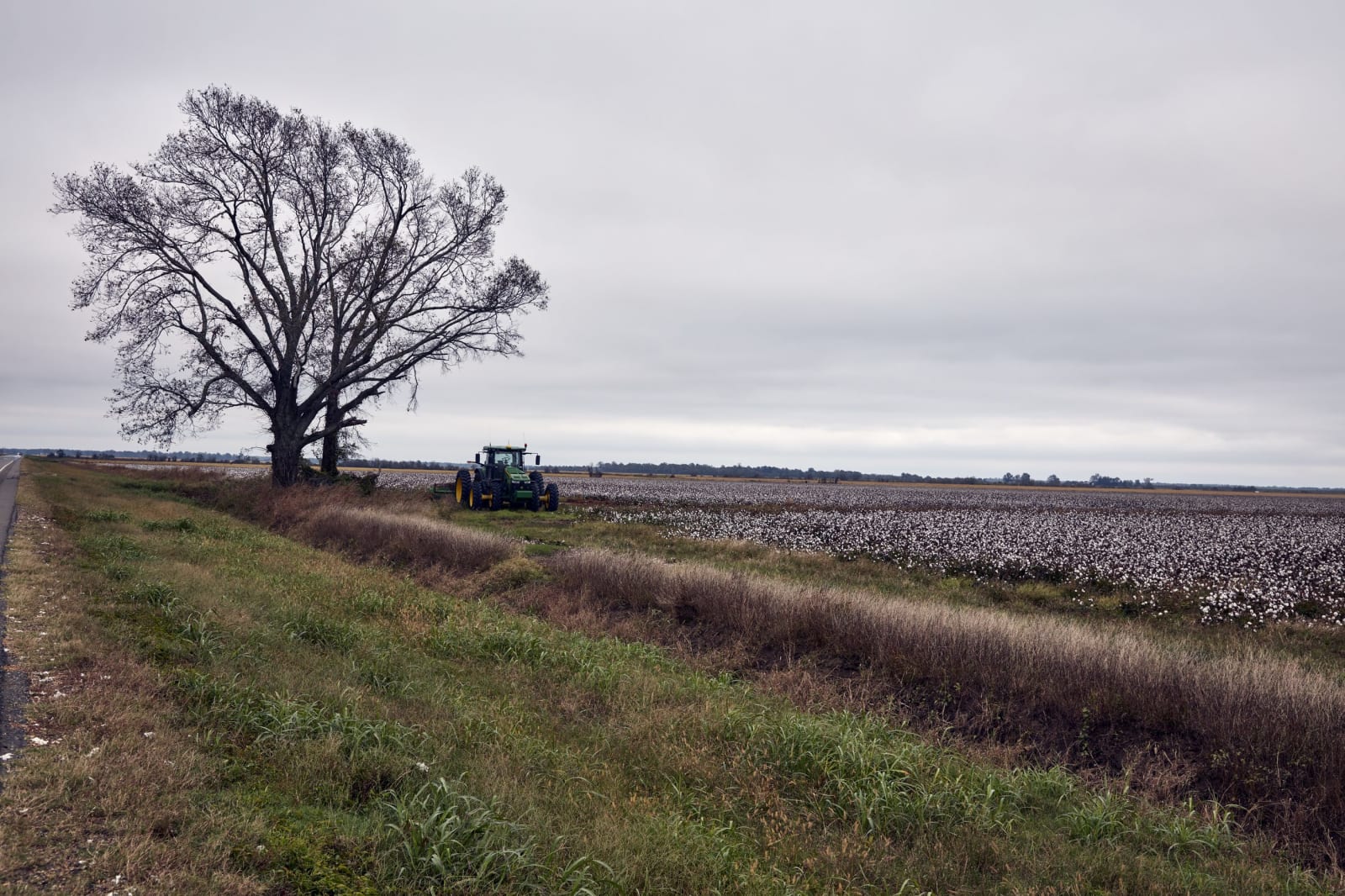
In cotton season on Bayou Boeuf, the day ended at the gin-house with a scale. Solomon Northup, a free man from New York who was kidnapped in 1841 and sold to Edwin Epps in 1843, wrote that every picker's load was weighed at night and that the same weight was expected the next day. An ordinary day's work, he says, was two hundred pounds. Anyone who fell short was stripped, made to lie face down and whipped: twenty-five lashes for a dry leaf in the cotton, fifty for the next grade of fault, a hundred for standing idle. On Epps' plantation, Northup writes, the crack of the lash and the shrieking of the enslaved could be heard from dark until bedtime.
The best picker on the bayou
Patsey, an enslaved woman on the Epps place, was the fastest picker on Bayou Boeuf, in Northup's telling. She worked with both hands, and five hundred pounds a day was not unusual for her. That made her quota twice anyone else's, and she would have been beaten for bringing in less. Northup also describes her driving mules, turning a furrow and splitting rails as well as any man.
Epps pursued her sexually, and Northup writes that she was whipped for refusing him. His wife, Mary Epps, was jealous of the girl, and Patsey bore the brunt of her rage. Patsey told Epps that his wife would not give her soap, as she did the rest, "and you know why."
The soap
One Sunday Patsey walked to a neighboring plantation to borrow a piece of soap. Epps accused her of going to see another man. He had four stakes driven into the ground, had her stripped and tied face down, and ordered Northup to whip her. Northup struck her about thirty times, then refused to go on. Epps took the whip himself and, in Northup's words, she was "literally flayed." Afterward, he writes, she "no longer moved with that buoyant and elastic step."
What became of Patsey
Northup left the plantation on January 3, 1853, after the carpenter Samuel Bass mailed his letters to New York. As the carriage pulled away, Patsey ran from behind a cabin and threw her arms around his neck. "What'll become of me?" she cried. He looked back and saw her "with drooping head, half reclining on the ground."
In May 1863 Union regiments reached the same bayou country. Captain Henry Devendorf of the 110th New York wrote to his wife on May 11 that he had met an enslaved man named Bob, who remembered Platt, and that "Patsy went away with our army last week." On May 20 Private John Hall of the 8th Vermont wrote that Bob and Patsey had gone off with soldiers. Historian Jonathan W. White, who found the letters, concludes that she survived long enough to reach freedom.
Frogmore Cotton Plantation and Gins in Concordia Parish shows how the cotton Patsey picked was ginned and what the quarters looked like. The cottage Epps built in 1852 now stands as the Epps House at LSU Alexandria, and in Marksville the Avoyelles Parish Courthouse marker stands where Northup's freedom was signed.