On January 1, 1863, the Emancipation Proclamation listed the parts of Virginia it left untouched: "the forty-eight counties designated as West Virginia," Berkeley County, and a few coastal counties and cities. Jefferson County, next door to Berkeley, was not on the list. In 1850 enslaved people made up more than a quarter of Jefferson's population, the largest share of any county in what became West Virginia, and Berkeley held 1,956, about one resident in six. For them, which state claimed the county was never just a question of lines on a map.
The vote of May 28, 1863
The new state's 1862 constitution named Berkeley, Jefferson and Frederick as counties that could join if their voters approved, but Confederate control kept those polls closed. The Reorganized Government of Virginia, the Unionist government under Governor Francis H. Pierpont, passed acts on January 31 and February 4, 1863, consenting to Berkeley and Jefferson joining West Virginia if voters agreed. Polls opened in both counties on Thursday, May 28. Pierpont certified a very large majority for joining in Berkeley that July and in Jefferson that September, and the West Virginia legislature admitted Berkeley on August 5 and Jefferson on November 2, 1863. Frederick County voted to stay in Virginia.
Under the Willey Amendment, the condition Congress set for statehood, the new state left enslaved adults in bondage until its legislature ended slavery on February 3, 1865.
About one hundred votes
Most white residents had sided with the Confederacy. After the war, former Confederates were barred from voting, and in 1865 the Jefferson County seat moved from Charles Town to Shepherdstown. When some Jefferson residents planned to vote in a Virginia election that year, Governor Arthur Boreman forbade it, and federal troops sent to Charles Town ended the plan.
In December 1865 Virginia's legislature, back in the hands of eastern Virginians, repealed its consent. In the House of Representatives, One congressman argued on February 6, 1866, that polls had opened only at Harpers Ferry and Shepherdstown, both under military control, and that "only about one hundred votes were cast" of some 2,500. The Judiciary Committee had answered that Washington already treated the counties as West Virginian, placing their post offices and tax collection under the new state. The House passed a resolution consenting to the transfer that day, 112 to 24, and the Senate followed in March.
The court's answer
Virginia sued in the Supreme Court, arguing that Congress's act admitting West Virginia named 48 counties and neither of these, and that the county elections were fraudulent. On March 6, 1871, the court ruled 6 to 3 for West Virginia. Justice Samuel Miller's opinion held that Virginia's statutes and the new state's constitution formed an agreement Congress had approved, and that the governor's certification settled the elections. Justice David Davis dissented, joined by Nathan Clifford and Stephen Field. The court never ruled directly on whether statehood itself was lawful, but in practice settled that too. The same year, the Jefferson County seat went back to Charles Town.
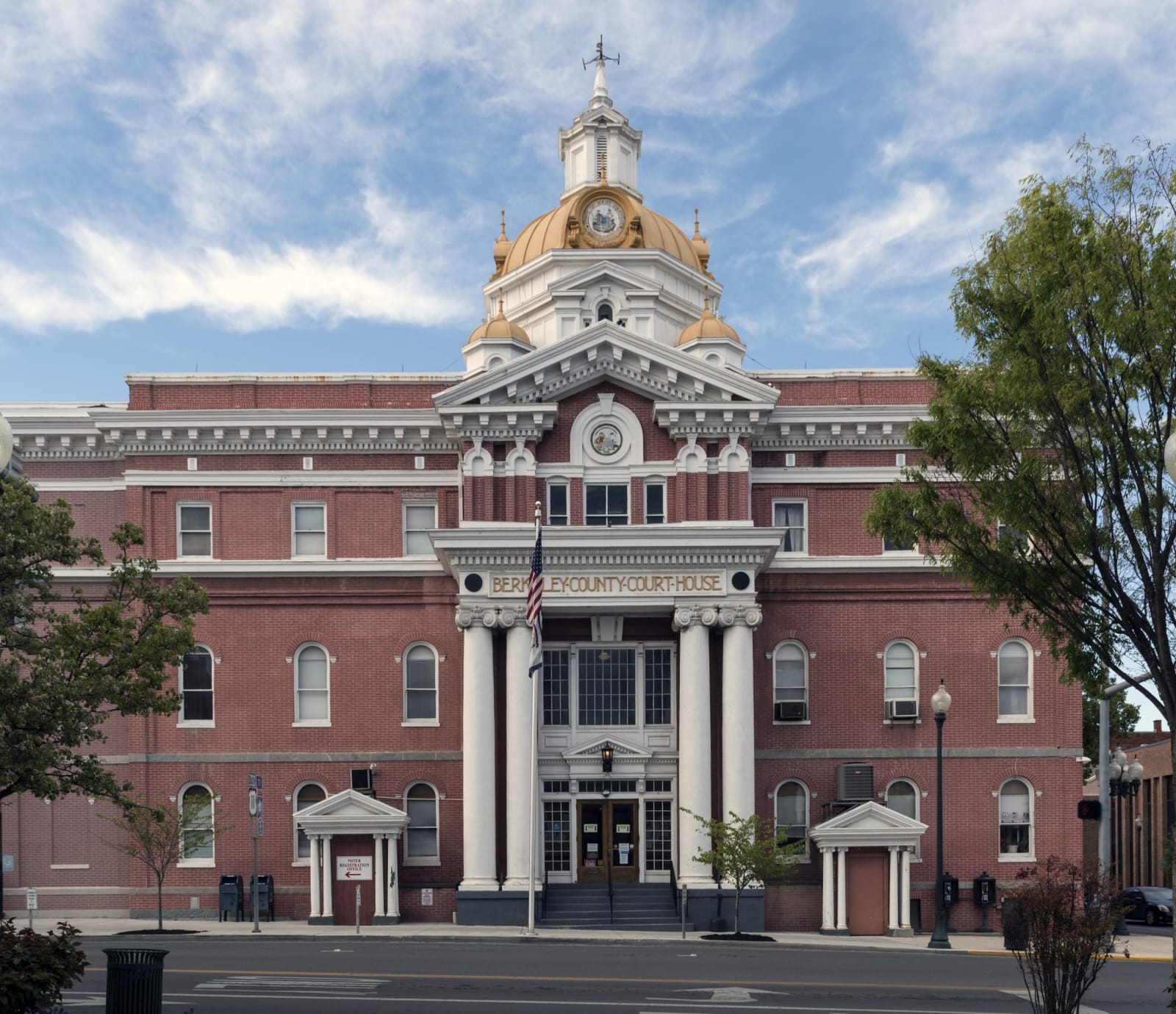
The Jefferson County Courthouse stands in Charles Town, and the Berkeley County Courthouse anchors downtown Martinsburg. Shepherdstown was one of the two polling places named in 1866.