Omar ibn Said, whom modern scholars call Umar, was born about 1770 in Futa Toro, along the Senegal River in present-day Senegal. When he was about five his father, a wealthy man, was killed in a war, and an uncle raised him. He studied for some twenty-five years: the Qur'an, the prayers, Arabic reading and writing, and some mathematics. How he was enslaved is not clear. In his own account a large army killed many men, took him and sold him to Christians. Historians generally place his arrival at Charleston in 1807, the year before the foreign slave trade closed.
The road to Fayetteville
His first owner in Charleston died within the year. The second, a man he named Johnson, put him to hard labor in the rice fields, and Omar called him wicked and an infidel. He ran, walking for about a month, and reached Fayetteville on August 29, 1810. By several accounts he was seized after he entered a church to pray. He was jailed and advertised as a fugitive.
The writing on the walls
In his cell he wrote in Arabic with coals from the fireplace, prayers to God in a script no one in town could read, and the writing caused a stir. It also undercut the belief, convenient to slaveholders, that Africans brought in chains could not read or write. After about ten days of attention he was bought by James Owen of Bladen County, brother of John Owen, governor from 1828 to 1830.
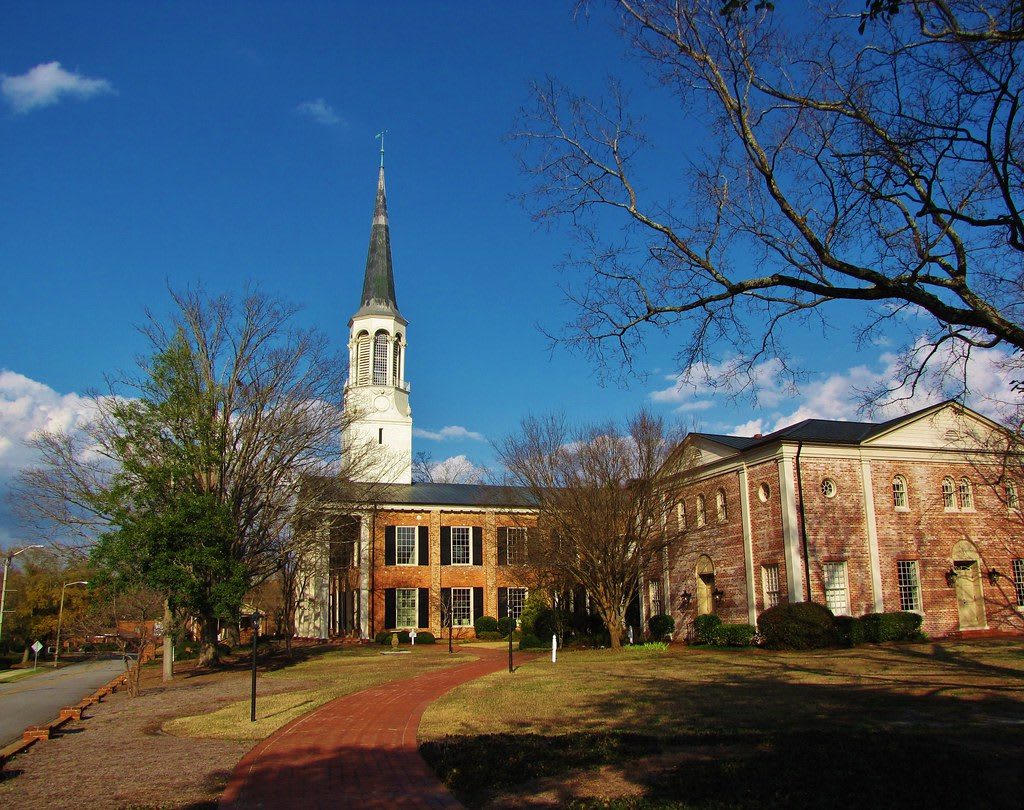
At Owen's plantation, Milton, he had a small house of his own and a horse. Owen got him an English Qur'an and, with help from Chief Justice John Louis Taylor and Francis Scott Key, an Arabic Bible in 1819; that Bible is now at Davidson College. On December 3, 1820, he joined Fayetteville's First Presbyterian Church under the name Omeroh. Whether he truly accepted Christianity is a question historians still debate. Inside his Bible he wrote phrases in praise of Allah. A card long described as his Lord's Prayer, written at 88, holds instead the 110th chapter of the Qur'an, and a Psalm 23 in his hand opens with a blessing on the Prophet Muhammad.
Fourteen manuscripts
In 1831 he wrote a fifteen-page account of his life in Arabic and in 1836 sent it to Lamine Kebe, a freed man from Futa Toro living in New York. It is the only known autobiography written by an enslaved person in America in his own language. Lost by the 1920s, it turned up in a Virginia trunk in 1995. Fourteen Arabic manuscripts in his hand survive.
Newspapers made him an "Arabian Prince," and the 1860 slave schedule lists a 91-year-old man in Owen's household as an African prince. He moved with the Owens to Wilmington in the mid-1830s and spent the Civil War at Owen Hill on the Cape Fear. He most likely died there in July 1863, though most sources give 1864, still enslaved after more than fifty years in the country. He was buried in the Owen family plot, and his headstone was later removed.
State marker I-89 stands on Murchison Road near Fayetteville State University. Downtown, the Market House stands where Fayetteville bought and sold enslaved people.