Tennessee · Region

The Tri-Cities & Northeast Tennessee

Long Island and Sycamore Shoals, Jonesborough's Emancipator, Andrew Johnson, the Wilderness Road, Erwin, Vardy and Bristol: Northeast Tennessee's frontier and music.

12 places to explore

The Cherokee (Tsalagi) and Shawnee hunted and traveled this country long before settlers named it. Long Island of the Holston at Kingsport was a Cherokee council and treaty ground, and in 1976 the city returned 3.61 acres of it to the Eastern Band of Cherokee Indians. At Sycamore Shoals in 1775 the Transylvania Company bought about 20 million acres from the Cherokee, and Dragging Canoe refused the sale and began the war that followed.

That purchase opened the Wilderness Road, cut from Long Island through Cumberland Gap, and the towns that followed: Rocky Mount, Jonesborough, Rogersville. Elihu Embree printed The Emancipator in Jonesborough in 1820. Andrew Johnson's Greeneville names the people he enslaved, Swift Memorial College taught Black students in Rogersville, and in Erwin the railroad town saw Tom DeVert killed in 1918 and its Black residents driven out.

Vardy's Melungeon families, the balds of Roan Mountain and the trails of Warriors' Path State Park fill in the land between. Bristol's State Street on the Tennessee side of the line, where Ralph Peer recorded the Carters and Jimmie Rodgers in 1927, closes the loop, and the Overmountain Men's muster at Sycamore Shoals, Fort Watauga and the Carter Mansion tie the frontier years together.

What to See in The Tri-Cities & Northeast Tennessee

12 places across the region, grouped by what they are.

Natural Areas

Roan Mountain and Carvers Gap

Roan Mountain

The saddle on the Tennessee-North Carolina line where the Appalachian Trail crosses the Roan Highlands' grass balds, with Catawba rhododendron gardens, rare spruce-fir forest and the site of the Cloudland Hotel.

View details →

Hikes & Trails

Warriors' Path State Park

Kingsport

A state park around Fort Patrick Henry Lake on the Holston at Kingsport, named for the Great Indian Warpath, with an unfinished late-1800s railroad grade, mountain-bike trails and a marina.

View details →

Historic Sites

Andrew Johnson National Historic Site

Greeneville

The tailor shop, homestead and grave of the seventeenth president in Greeneville, where the people he enslaved are named and where the Eighth of August emancipation celebration took root.

View details →
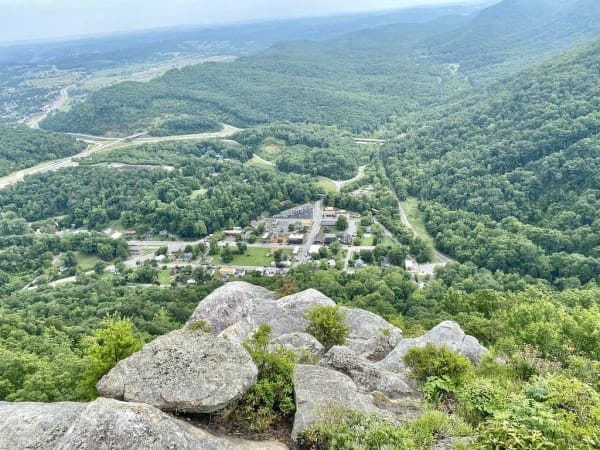
A rocky overlook high above the small town of Cumberland Gap, Tennessee, with a highway and forested ridges beyond.

Cumberland Gap, Tennessee, and the Wilderness Road

Cumberland Gap

The Claiborne County town below the notch in Cumberland Mountain where Daniel Boone's axmen widened the Warriors' Path into the Wilderness Road in 1775, now bypassed by a tunnel.

View details →

Jonesborough Historic District

Jonesborough

Tennessee's oldest town, chartered in 1779, where Elihu Embree printed The Emancipator in 1820 and a hay wagon by the courthouse started the National Storytelling Festival in 1973.

View details →

Long Island of the Holston

Kingsport

A four-mile island in the Holston at Kingsport, Cherokee council and treaty ground, the start of Boone's Wilderness Road in 1775, and in part returned to the Eastern Band of Cherokee Indians in 1976.

View details →

Rocky Mount Museum

Piney Flats

William Cobb's log house at Piney Flats, where Governor William Blount ran the Southwest Territory from 1790 to 1792, now a living-history museum set in 1791 with a reconstructed cabin for the enslaved.

View details →
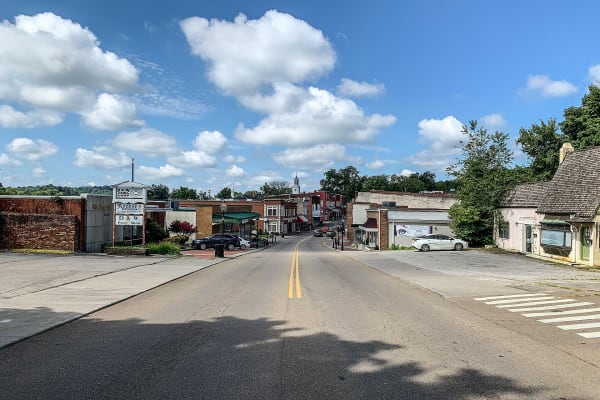
A two-lane downtown street in Rogersville lined with brick storefronts, a white church steeple and a clock tower in the distance under a blue sky.

Rogersville Historic District

Rogersville

Tennessee's first newspaper was printed in this Hawkins County seat in 1791, and Swift Memorial College, founded in 1883, educated Black students after the state's 1901 law forced Maryville College to expel them.

View details →

Sycamore Shoals State Historic Park

Elizabethton

A shoal on the Watauga River where the Transylvania Company bought about 20 million acres from the Cherokee in March 1775, Dragging Canoe refused, and the Overmountain Men mustered in 1780.

View details →

Towns & Gateways

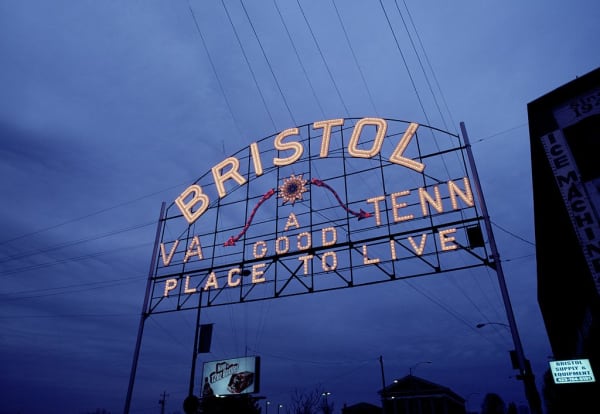
A lighted steel arch sign over the street at dusk reading BRISTOL, with VA on one side, TENN on the other and A GOOD PLACE TO LIVE below.

Bristol's State Street and the 1927 Sessions

Bristol

The Tennessee side of the street that is also the state line, where producer Ralph Peer recorded 76 songs in the summer of 1927, with the Birthplace of Country Music Museum a few blocks away in Virginia.

View details →

Unicoi County Heritage Museum and the Erwin Rail Yard

Erwin

A museum in the old fish hatchery superintendent's house in Erwin, a Clinchfield railroad town where the elephant Mary was hanged in 1916 and Black residents were driven out in 1918.

View details →

Vardy Community Museum

Sneedville

A 1899 Presbyterian church in Hancock County, now a museum, beside the Mahala Mullins cabin and the ruins of the Vardy school that educated the Melungeon children of Newman's Ridge.

View details →

The Tri-Cities & Northeast Tennessee rewards the unhurried. Pick a base, fan out, and let the country between the headline stops surprise you.

← Explore more of Open Road Guide