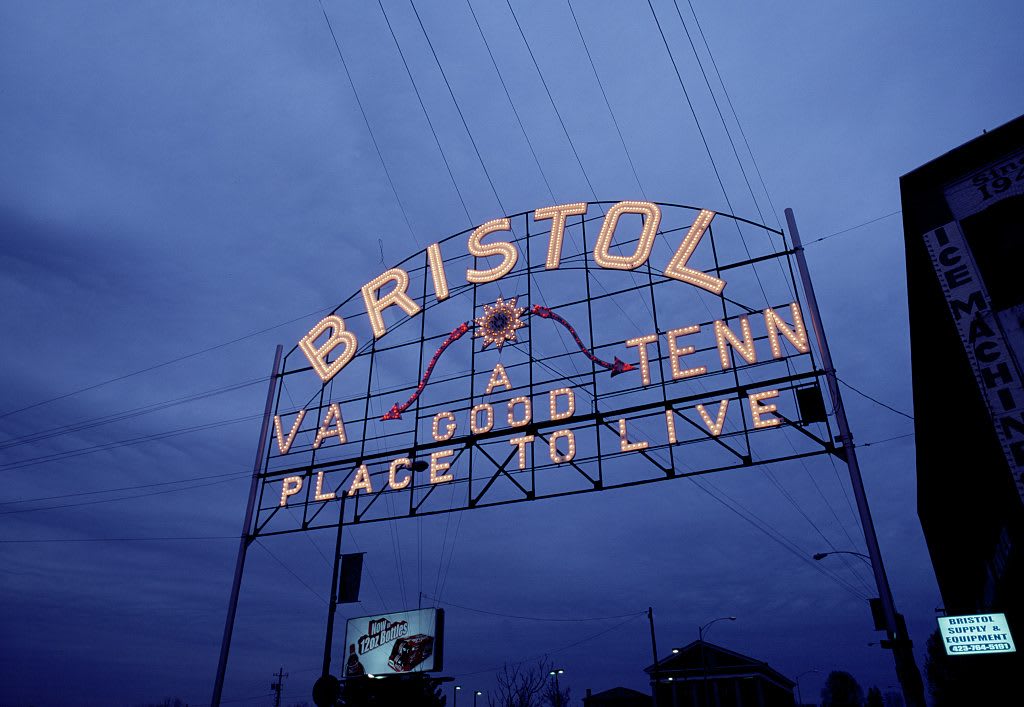
 Carol M. Highsmith / public domain via Library of Congress
The Story
State Street in Bristol is also the Tennessee-Virginia line, and in the summer of 1927 the Tennessee side of it held one of the most consequential rooms in American music. Ralph Peer, a producer for the Victor Talking Machine Company, set up a makeshift studio on the upper floors of the Taylor-Christian Hat Company building, at 408 State Street. Between July 25 and August 5 he recorded 76 songs by 19 performers or groups. The building was razed years ago. A Tennessee state marker unveiled in 2009 now stands at 410 State Street.
Peer paid $50 a side and 2.5 cents for each record sold, and he kept the publishing rights, an arrangement that became the template for later recording contracts. Ernest Stoneman, a Virginian, recorded first, on July 25. A.P., Sara and Maybelle Carter recorded on August 1 and 2, with Sara singing lead and 18-year-old Maybelle playing an influential guitar style. Jimmie Rodgers recorded alone on August 4, after a quarrel with his band, which recorded as the Tenneva Ramblers. El Watson recorded on July 28, and a Black blues duo, Steve Tarter and Harry Gay, came to the 1928 follow-up sessions.
The Birthplace of Country Music Museum stands a few blocks away on the Virginia side. It opened in 2014 and carries the story indoors, and a low-power radio station, WBCM, broadcasts from inside it. A mural of Peer and the artists he recorded is in downtown Bristol. The Bristol Rhythm & Roots Reunion fills the street with bands on the third weekend of September.
Visitor Info
On the Map
Nearby
The closest stops worth working into your route
Historical markers nearby
Roadside plaques and monuments within a short detour