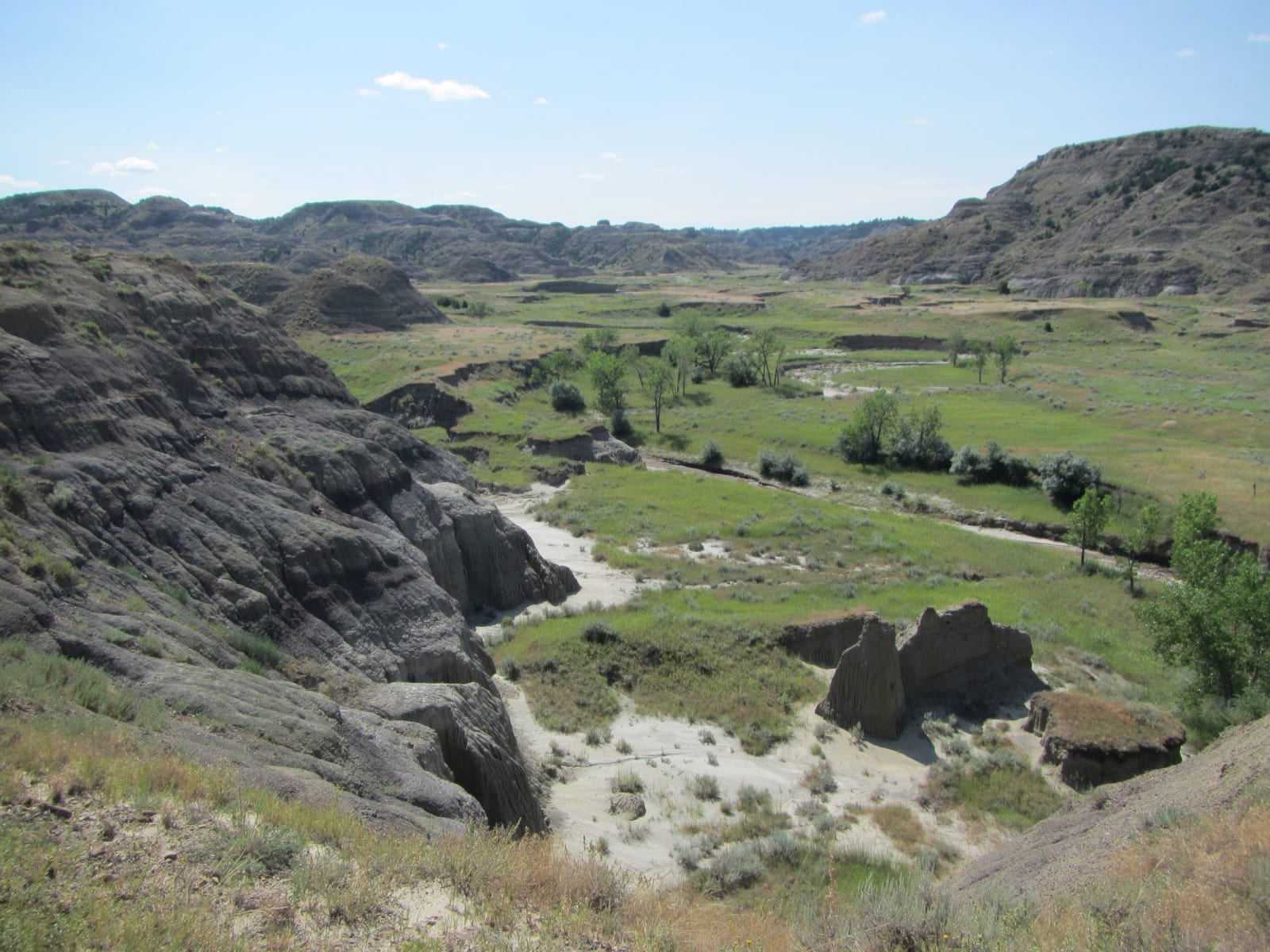
A green valley floor opening between grey badland walls at Makoshika, a dry white creek bed curving through it toward distant buttes
TheTurducken / CC BY 2.0 via Wikimedia Commons
Montana · Region

The Southeastern Badlands

Lakota and Northern Cheyenne country: the Powder River attack that opened the Great Sioux War, the Hell Creek beds that gave up T. rex, and Evelyn Cameron's plains.

6 places to explore

The Powder River country was Lakota and Northern Cheyenne hunting ground, and the Great Sioux War opened here. At dawn on March 17, 1876, Colonel Joseph Reynolds's cavalry rode into a winter camp of Cheyenne and some Oglala Lakota under Old Bear, on the Powder River southwest of present-day Broadus, and in bitter cold burned the lodges and the food stores and drove off the horses. The Cheyenne took most of the horses back, and the families who had lost their homes went to Crazy Horse's camp. Two Moons and the young Wooden Leg were in that village, and three months later both fought at the Little Bighorn.

Under the grass lie the badlands of the Hell Creek Formation, laid down at the end of the age of dinosaurs. In 1902 Barnum Brown of the American Museum of Natural History dug bones out of the breaks near Jordan that became the type specimen of Tyrannosaurus rex, and the general store in Jordan ran out of lumber and plaster before he had them crated.

Evelyn Cameron came out from England in 1889 to ranch near Terry on the Yellowstone. Raising polo ponies failed, so she turned to a glass-plate camera, the first bought in 1894, and for more than thirty years photographed the buttes, the roundups, the sheepherders and the homesteaders, selling prints to keep the ranch going. She died in 1928. Some eighteen hundred of her negatives sat in a friend's basement for half a century, until Donna Lucey learned of them in 1978.

What to See in The Southeastern Badlands

6 places across the region, grouped by what they are.

Natural Areas
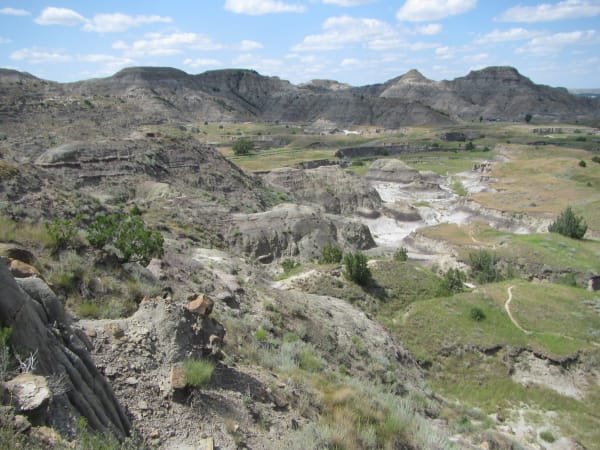
Eroded grey and buff badlands at Makoshika, a pale wash winding through green draws below a line of buttes

Makoshika State Park

Glendive

Montana's largest state park, a badland on the edge of Glendive where the rock shows the end of the age of dinosaurs.

View details →
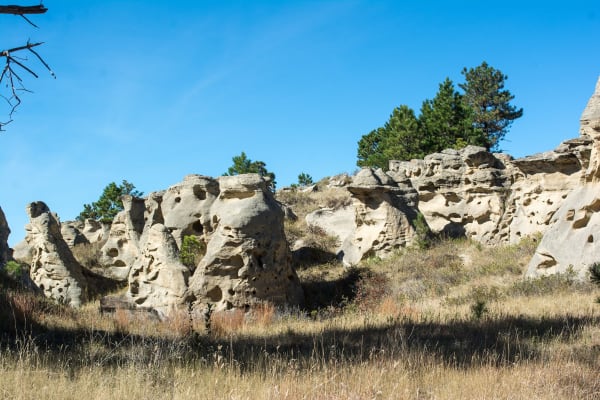
Holed and sculpted sandstone outcrops at Medicine Rocks, a few ponderosa pines on top and dry grass in front

Medicine Rocks State Park

Ekalaka

Sandstone towers worn full of holes, holy ground to the Lakota and Cheyenne and a stone register of everyone who came after.

View details →

Historic Sites

A mansard-roofed officers' quarters at Fort Keogh in 1989, a screened porch across the front and cottonwoods beside it, in black and white

Fort Keogh

Miles City

Nelson Miles's post at the mouth of the Tongue, built after the Little Bighorn, a remount depot by 1909 and a range lab since 1924.

View details →

Towns & Gateways

Carter County Museum

Ekalaka

Montana's first county museum, built in 1936 by a ranch county to keep the dinosaurs its own ground kept giving up.

View details →

Miles City Bucking Horse Sale

Miles City

A sale of bucking stock that began with thirty-five unwanted horses in 1950 and became eastern Montana's biggest weekend.

View details →

Architecture

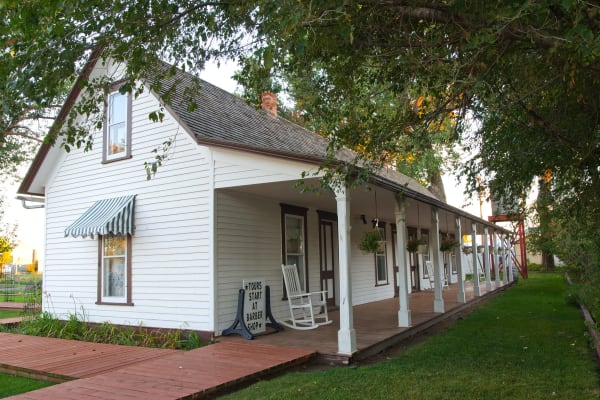
The Pierre Wibaux House, a white clapboard building with a long shaded porch and rocking chairs, under green trees

Pierre Wibaux House

Wibaux

The town office of a French cattle baron who came through the Hard Winter and bought up the range, in the town renamed for him.

View details →

Stories from The Southeastern Badlands

History

The Last of the Buffalo Outfit

In 1886 the Smithsonian sent its chief taxidermist to eastern Montana to shoot some of the last wild bison before there were none. He came home a conservationist, and the six he mounted are back in Montana.

5 min read

The Southeastern Badlands rewards the unhurried. Pick a base, fan out, and let the country between the headline stops surprise you.

← Explore more of Open Road Guide