Mississippi · Region

Oxford & the North Hills

Chickasaw and Choctaw country: Rowan Oak and the Lyceum, Ida B. Wells and Rust College in Holly Springs, Carrollton and Winona, and the Sardis and Enid lakes.

12 places to explore

This was Chickasaw and Choctaw country. Hoka, a Chickasaw woman, sold the land Oxford stands on in 1837, five years after the Treaty of Pontotoc Creek, and the Choctaw gave up the hills to the south and west at Dancing Rabbit Creek in 1830. Cotton farms worked by enslaved people followed within a few years. Chewalla Lake, in Holly Springs National Forest, carries a Choctaw name for a supreme being.

What settlers made of the land fills the rest of the region. Rowan Oak and the Oxford square hold Faulkner's town, and a memorial on the courthouse lawn names the county's lynching victims. At the Lyceum on the Ole Miss campus, marshals held off a mob on 30 September 1962 so that James Meredith could register. Holly Springs gave the country Ida B. Wells, and Rust College, founded in 1866, taught her. Carrollton's courtroom was the scene of a massacre in 1886.

Winona, where Fannie Lou Hamer was beaten in a jail in 1963, and Grenada, site of the 1966 school fight, both have Freedom Trail markers. Quieter stops sit between them: the Casey Jones depot at Water Valley, the worn farmland the CCC replanted as national forest, and the Sardis and Enid lakes, which hold back the Yazoo and moved farm families off the Yocona valley floor.

What to See in Oxford & the North Hills

12 places across the region, grouped by what they are.

Natural Areas

Holly Springs National Forest

Water Valley

A patchwork national forest of about 155,000 acres in the north Mississippi hills, assembled in the 1930s from worn-out cotton fields and replanted in pine by the Civilian Conservation Corps.

View details →

Hikes & Trails

Enid Lake

Enid

A Corps of Engineers lake on the Yocona River, finished in 1952 after farm families were moved off the valley floor, and the home water of a world-record white crappie.

View details →

Sardis Lake and Dam

Sardis

A flood-control lake on the Little Tallahatchie, built from 1930s labor and a dredge named Pontotoc, with a dam that for years was the largest earth-filled dam in the world.

View details →

Historic Sites

Carroll County Courthouse

Carrollton

The courthouse in Carrollton where, on 17 March 1886, armed white men fired into a courtroom and killed about two dozen Black people, and no one was ever charged.

View details →

Casey Jones Railroad Museum

Water Valley

The old Illinois Central depot in Water Valley, where Casey Jones worked in the 1890s, with a Mississippi Blues Trail marker for the songs written about his death in 1900.

View details →

Grenada Freedom Movement Marker

Grenada

The Mississippi Freedom Trail marker at Line and Green streets for the 1966 Grenada movement, when Black children entering white schools were beaten by a mob and 13 white men were arrested.

View details →

Ida B. Wells-Barnett Museum

Holly Springs

The house in Holly Springs where Ida B. Wells was born into slavery in 1862, now a museum of African American history, art and culture.

View details →
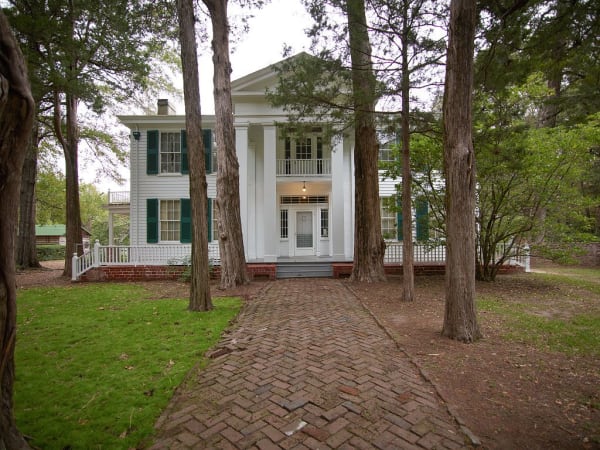
A white two-story Greek Revival house with a columned porch and green shutters, seen along a brick path between tall cedars.

Rowan Oak

Oxford

William Faulkner's Greek Revival house in Oxford, bought in 1930 and kept by the University of Mississippi, with the outline of A Fable still written on his study wall.

View details →
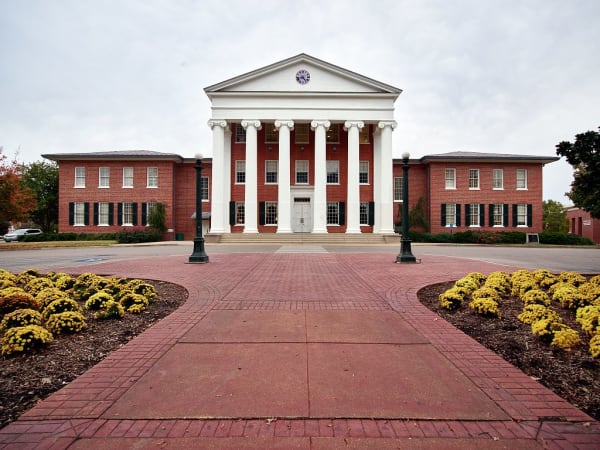
The red-brick Lyceum with its white Ionic portico and clock pediment, seen across a brick plaza edged with yellow chrysanthemums.

The Lyceum and the Circle, University of Mississippi

Oxford

The 1848 Greek Revival building at the center of the Ole Miss campus, where federal marshals held off a mob on 30 September 1962 and James Meredith registered the next morning.

View details →

Winona: Fannie Lou Hamer and the Montgomery County Jail

Winona

Two Freedom Trail stops in Winona for 9 June 1963, when Fannie Lou Hamer and other voting-rights workers were arrested at the bus depot and beaten in the Montgomery County Jail.

View details →

Towns & Gateways

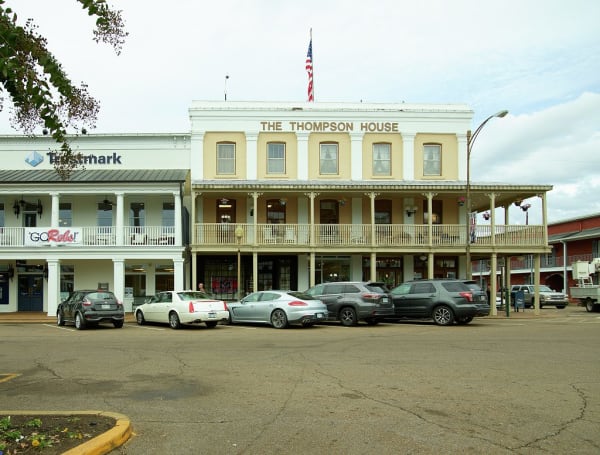
The two-story Thompson House with its upper gallery and a neighboring bank building on the Oxford courthouse square, with parked cars in front.

Oxford Square

Oxford

The courthouse square laid out in 1837 on land bought from a Chickasaw woman, rebuilt after the 1864 burning and home to Square Books and a memorial to Lafayette County's lynching victims.

View details →
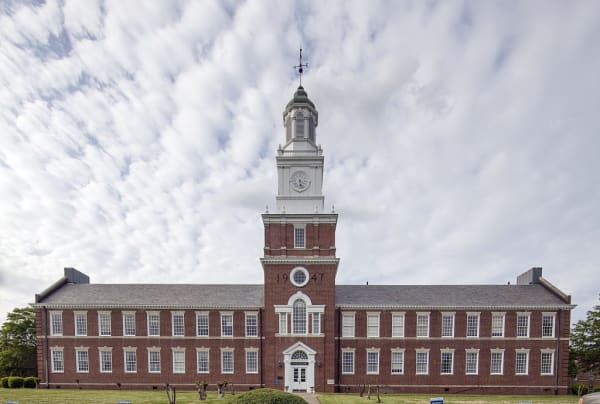
McCoy Hall at Rust College, a long red-brick building with a central clock tower and white cupola under a cloudy sky.

Rust College

Holly Springs

The first historically Black college founded in Mississippi, started in 1866 in a Holly Springs church by a formerly enslaved minister and a white Methodist clergyman.

View details →

Oxford & the North Hills rewards the unhurried. Pick a base, fan out, and let the country between the headline stops surprise you.

← Explore more of Open Road Guide