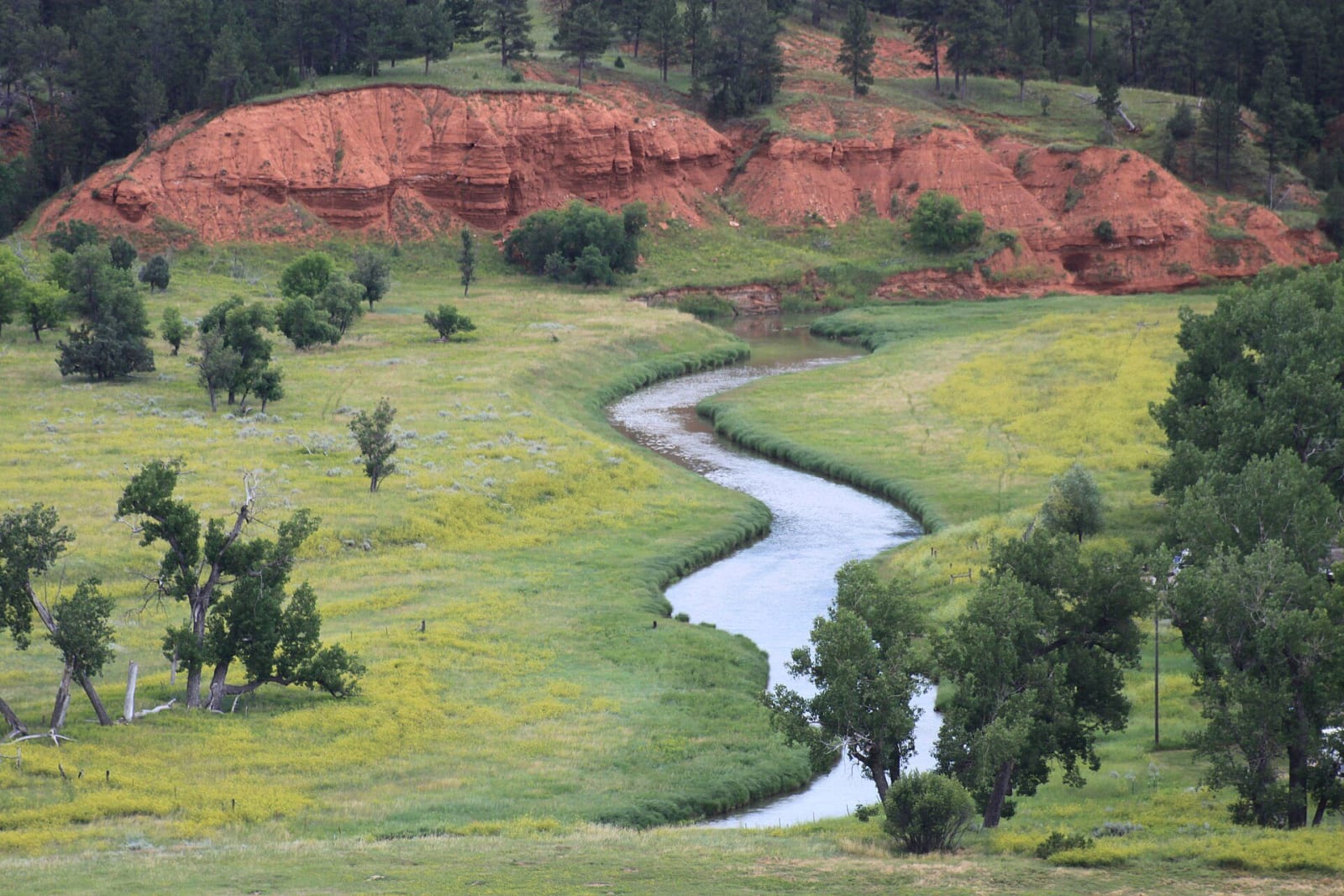
Devils Tower & the Black Hills
Bear Lodge, renamed by a mistranslation and made the first national monument, the June climbing closure, Inyan Kara's summit, and the jail that named the Sundance Kid.
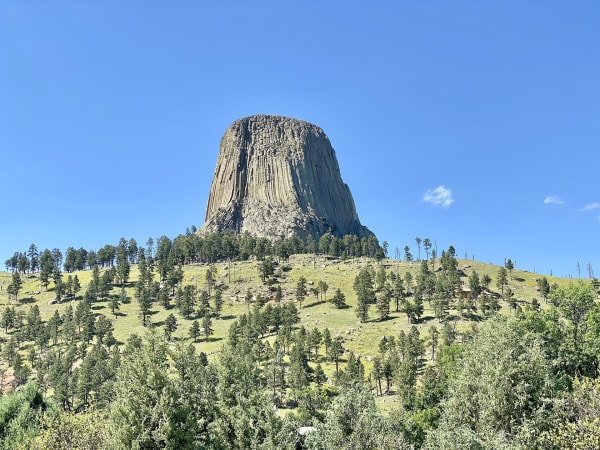
The earliest official maps label the tower Bear Lodge, a direct translation of its Lakota name, Mato Tipila, and several Plains nations tell of it in stories of a bear. The name on the signs came in 1875 from Colonel Richard Dodge, who wrote that the Indians called it Bad God's Tower and turned that into Devil's Tower. On September 24, 1906, Theodore Roosevelt proclaimed it, under that name, the first national monument in the country, and tribal members have long asked that it be called Bear Lodge again. Since 1995 climbers have been asked to stay off the columns through June, when ceremonies are held around the tower, and most do.
Inyan Kara, Íŋyaŋ Káǧa to the Lakota and sacred to them, stands apart on the western edge of the Black Hills, which the 1868 treaty had set inside the Great Sioux Reservation. On July 23, 1874, George Armstrong Custer climbed it with the expedition he had led into the Hills against that treaty, and someone in his party, most likely his engineer William Ludlow, cut Custer's name and the year into a rock on the summit. Three weeks later word of the expedition's gold went out, and the rush that followed ended with the seizure of the Hills in 1877.
Sundance, the Crook County seat below the Bear Lodge Mountains, gave its name to Harry Longabaugh, who served eighteen months in its jail for stealing a horse, saddle and revolver in 1887 and came out in February 1889 as the Sundance Kid.
What to See in Devils Tower & the Black Hills
4 places across the region, grouped by what they are.
Geology & Rock Formations
Towns & Gateways

Industry & Mining
Stories from Devils Tower & the Black Hills
Devils Tower & the Black Hills rewards the unhurried. Pick a base, fan out, and let the country between the headline stops surprise you.
← Explore more of Open Road Guide