Chattanooga & Southeast Tennessee
Cherokee towns and removal grounds, Chattanooga's riverfront and Black history, Lookout Mountain, the Scopes courthouse, Savage Gulf and the Ocoee River.
The Cherokee (Tsalagi) built their towns along the rivers of this country long before Chattanooga existed. Overhill towns such as Chota and Tanasi stood on the Little Tennessee, where Sequoyah was born and where British soldiers held Fort Loudoun until the 1760 siege. The last Cherokee councils before removal met at Red Clay, and in 1838 families waited at Blythe Ferry and Ross's Landing for the boats and ferries that took them west.
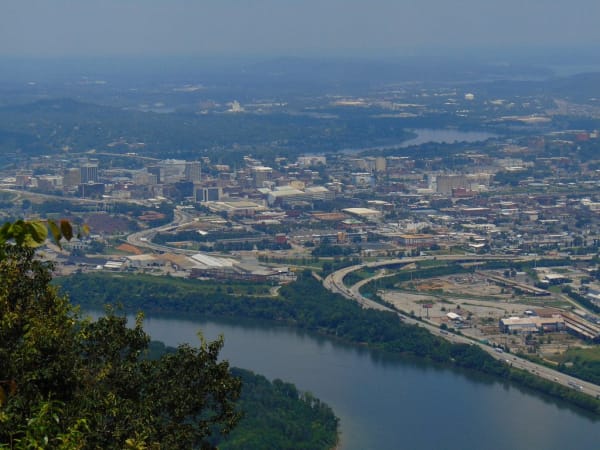
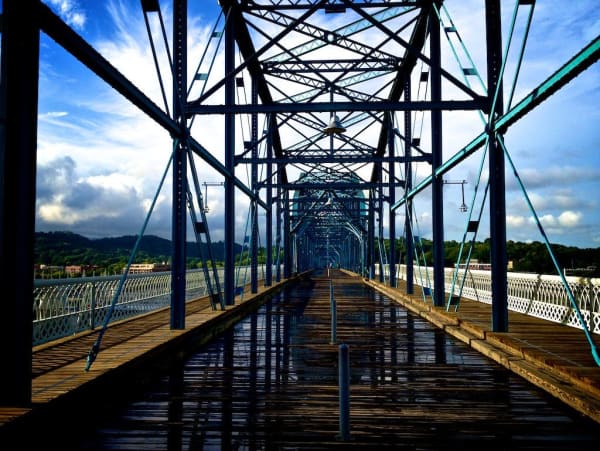
Chattanooga grew up on that same riverbank. Alfred Blount and Ed Johnson were lynched at the Walnut Street Bridge, in 1893 and 1906, and the Bessie Smith Cultural Center tells the city's Black history from the Ninth Street district where she first sang. On Lookout Mountain, Point Park looks down on Moccasin Bend, where people lived for twelve thousand years before the Civil War reached the mountain.
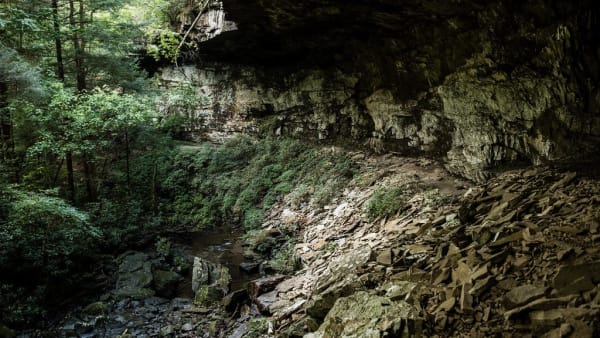
Beyond town the roads climb to the Cumberland Plateau, where Savage Gulf drops into its gorges, and run to Dayton, where the Scopes trial filled a courthouse in 1925. Another road follows the Ocoee, a dammed river that hosted Olympic paddlers. Back downtown, the Tennessee Aquarium stands beside the landing it was built to renew. Each stop is a short drive from the next, so the region suits a slow loop of several days.
What to See in Chattanooga & Southeast Tennessee
12 places across the region, grouped by what they are.
Natural Areas
Hikes & Trails
Historic Sites
Towns & Gateways
Attractions
Chattanooga & Southeast Tennessee rewards the unhurried. Pick a base, fan out, and let the country between the headline stops surprise you.
← Explore more of Open Road Guide