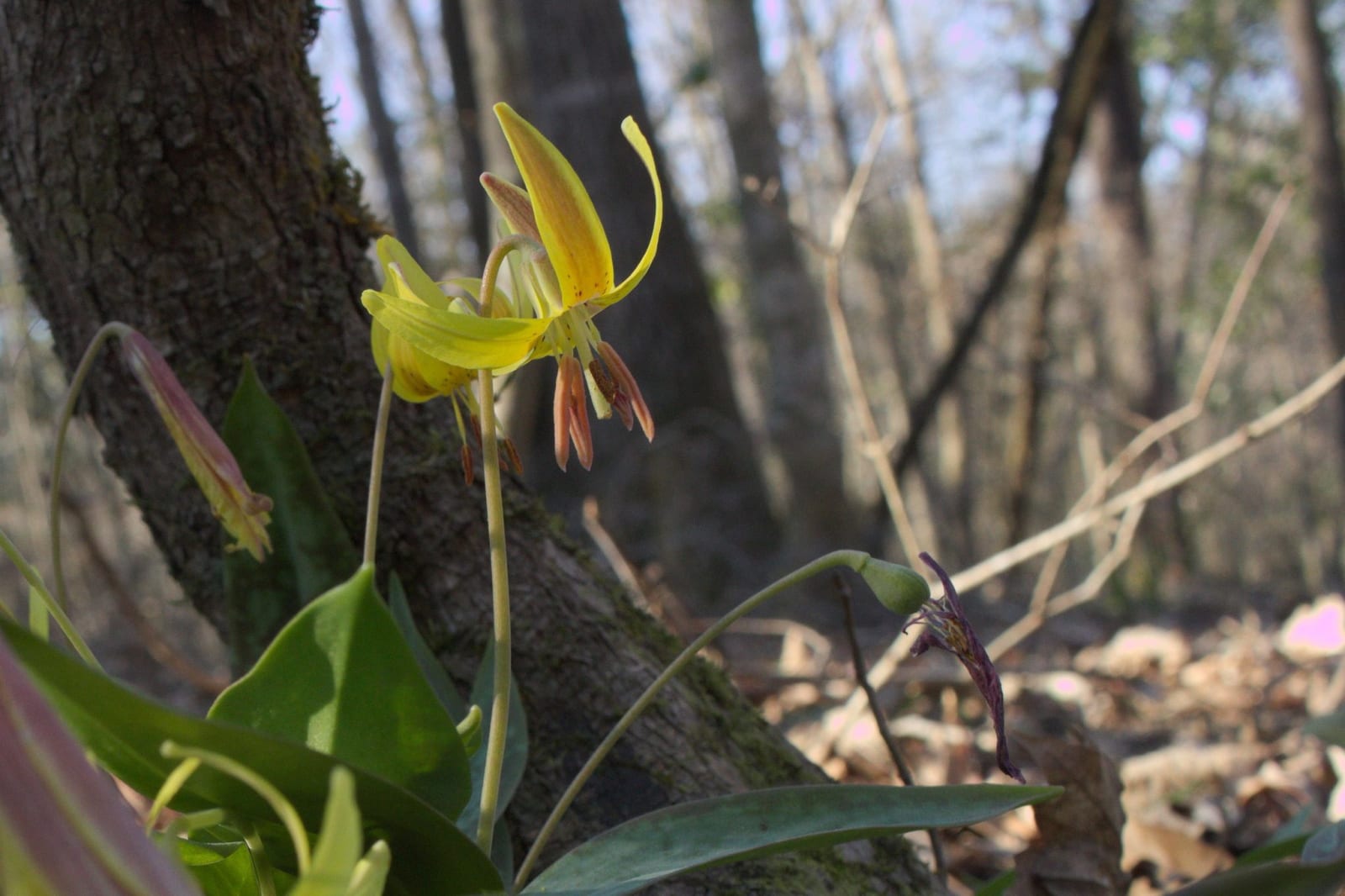
 Daniel McClosky / CC BY 4.0 via iNaturalist
The Story
This hillside above Wolf Creek, on land long in the keeping of the Muscogee (Creek) and Hitchiti peoples, holds the largest known stand of the dimpled or spotted trout lily anywhere. The lily, named for leaves mottled like a trout's belly, is mostly a plant of the Appalachians, and down here it grows only where a north-facing slope, steady water and the right soil keep a cool pocket of forest. On about ten to fifteen acres naturalists count more than a million plants, a hundred or more to the square foot in places.
Each flower opens for only four or five days. Blooms can come anytime from January to early April, but the peak is in mid-February, when the slope turns pale gold under the bare beeches. The flowers open in the early afternoon and close by evening, and on overcast days they may not open at all. Spotted trillium, spring coralroot, bloodroot, spruce pine and more than 200 other plants grow here too; the old beech-magnolia and floodplain forest was named to the Old-Growth Forest Network, the first in south Georgia.
Volunteers from a Tallahassee native plant society chapter, some of them Georgians, saved the tract in 2009, and Grady County owns it with help from the Flint River Timber Company and the state land conservation program. Several trails wander through the forest, swamp and creek bottom. The preserve opens every afternoon in bloom season, weather allowing, and by reservation the rest of the year.
Visitor Info
On the Map
Nearby
The closest stops worth working into your route
Historical markers nearby
Roadside plaques and monuments within a short detour