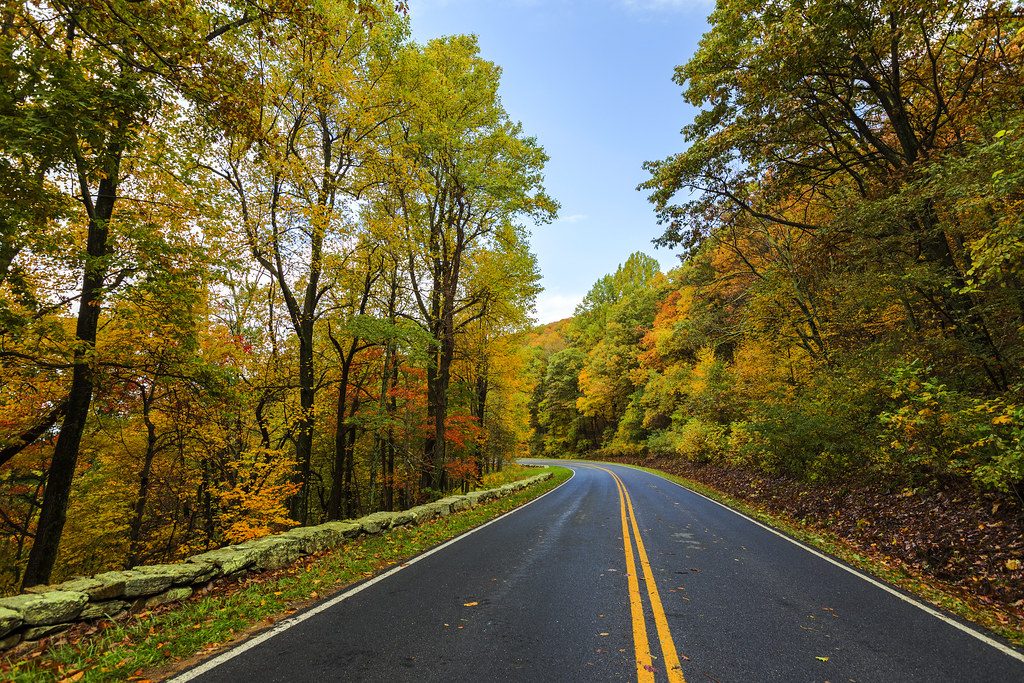
 NPS / public domain via Flickr
The Story
Shenandoah National Park is a long, narrow strip of the Blue Ridge, about 200,000 acres and only a few miles wide in places, with Skyline Drive running its whole length from Front Royal south to Rockfish Gap. Dickey Ridge Visitor Center, a few miles in from the north entrance, is the place to start. The forest along the drive looks old, but most of it is less than a century old, grown back over farms, orchards and cutover slopes.
That land was home to people. When Virginia bought or condemned more than a thousand tracts and deeded them to the federal government, about 465 families, some 2,200 people, still lived inside the line, and the Park Service decided that all of them had to go. Some fought removal in court and lost; many moved to seven resettlement communities built outside the boundary, and a few elderly residents kept lifetime leases. Sociologists' portraits of the hollows as places cut off from modern life helped win support for the removals, a picture descendants have contested ever since. Civilian Conservation Corps crews then took down most of the empty houses.
The park was dedicated on July 3, 1936, and it opened segregated. Lewis Mountain was built as the area for Black visitors, with its own lodge, cabins, campground and picnic ground, while the concessionaire was assured that Dickey Ridge, Skyland and Big Meadows would be kept for white visitors. Pinnacles picnic ground was opened to everyone in 1939, Lewis Mountain was integrated in 1947, and the whole park by the summer of 1950.
Visitor Info
On the Map
Nearby
The closest stops worth working into your route
Historical markers nearby
Roadside plaques and monuments within a short detour