 Carol M. Highsmith / public domain via the Library of Congress
The Story
The battleground is a strip of coastal prairie between Buffalo Bayou and the San Jacinto River, and the ground still explains the battle. On April 20, 1836, Santa Anna made camp below a rise of ground overlooking a marsh and threw up a barricade of trunks, baggage and packsaddles. Sam Houston's army camped in a skirt of timber about three-quarters of a mile away. At about 3:30 the next afternoon, screened by trees and a rise in the prairie and facing no lookouts, the Texans, settlers, Tejanos and volunteers from abroad, attacked during the siesta. The fight lasted eighteen minutes. Houston reported 630 Mexican soldiers killed and 730 taken prisoner against nine Texans killed or mortally wounded.
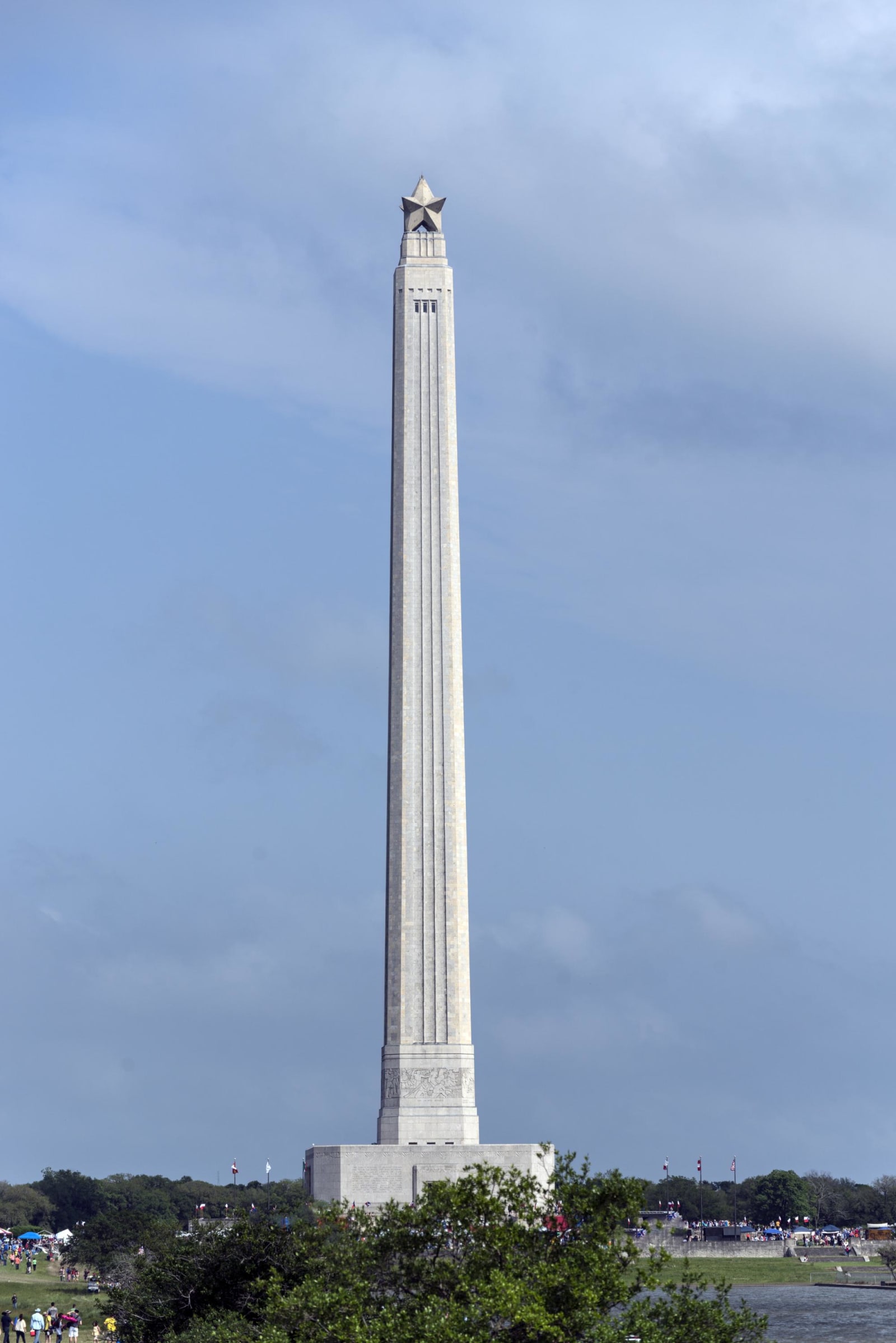
The monument was built from 1936 to 1939 with federal and state money, at a cost of $1.5 million, to a design by architect Alfred C. Finn and engineer Robert J. Cummins. It rises about 567 feet in reinforced concrete faced with fossilized buff limestone from near Austin, and a thirty-four-foot star crowns it. The museum in its base opened on April 20, 1939, and a reflecting pool 1,750 feet long lies before it. The Texas Historical Commission has run the site since 2019. The Battleship Texas, once berthed here, is under restoration in Galveston and will not return.
Visitor Info
On the Map
Nearby
The closest stops worth working into your route
Historical markers nearby
Roadside plaques and monuments within a short detour