 carlfbagge / CC BY 2.0 via Flickr
The Story
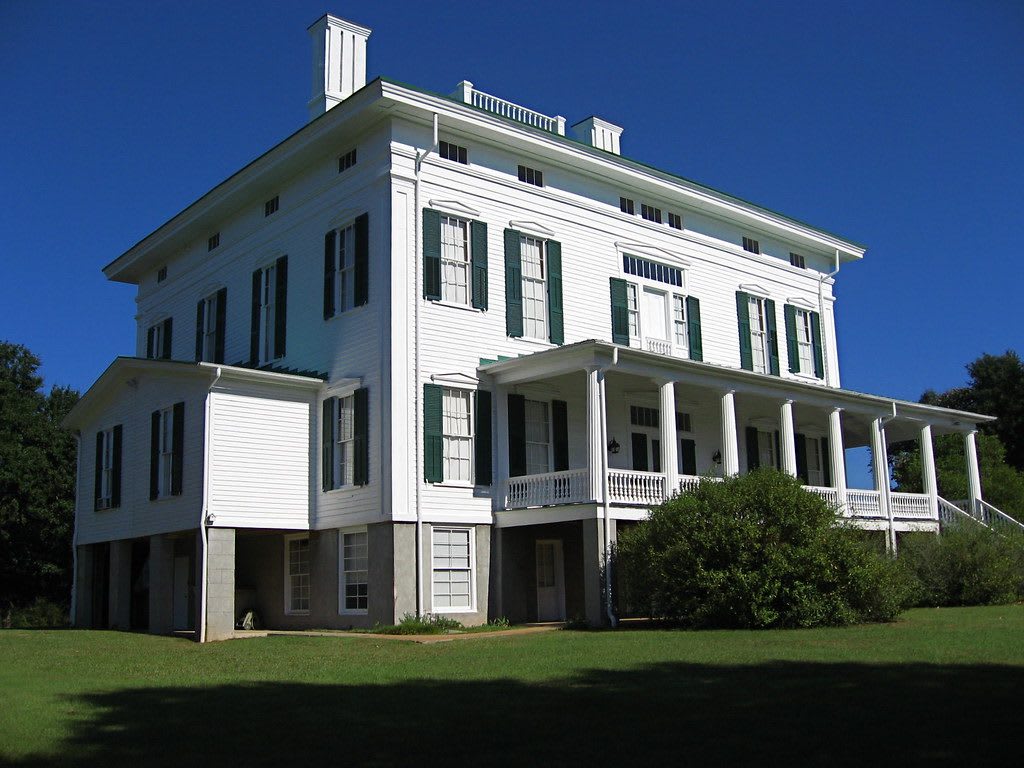
James Henry Hammond married the heiress Catherine Fitzsimons in 1831 and gained the Silver Bluff plantation on the Savannah River, and with it more than a hundred enslaved people. He went on to be congressman, governor and senator, and in 1858 told the Senate that "cotton is king" and that every society needed a "mud sill" class to do its drudgery. He and his eldest son sexually exploited two women they enslaved, a mother and her daughter. Redcliffe, built between 1857 and 1859, was the headquarters of cotton plantations worked by more than 300 enslaved people.
The site tells their story alongside the Hammonds'. Families named Henley, Goodwin and Wigfall worked here enslaved and stayed on as free men and women after the war. Two cabins built about 1857 for enslaved families survive on the grounds, and the tour takes in the stables and the cabins as well as the house, with its 53-foot center hall and woodwork of local sycamore. The magnolia avenue was planted in 1861.
John Shaw Billings, a Hammond descendant and an editor of Time and Life, bought Redcliffe in 1935, restored it and gave it to the state, which opened it as a house museum in 1975. More than 4,000 objects from four generations of the family stay in the house, and a 1.7-mile trail loops through the woods. The house is seen only on guided tours, so call ahead to reserve a place.
Visitor Info
On the Map
Nearby
The closest stops worth working into your route
Historical markers nearby
Roadside plaques and monuments within a short detour