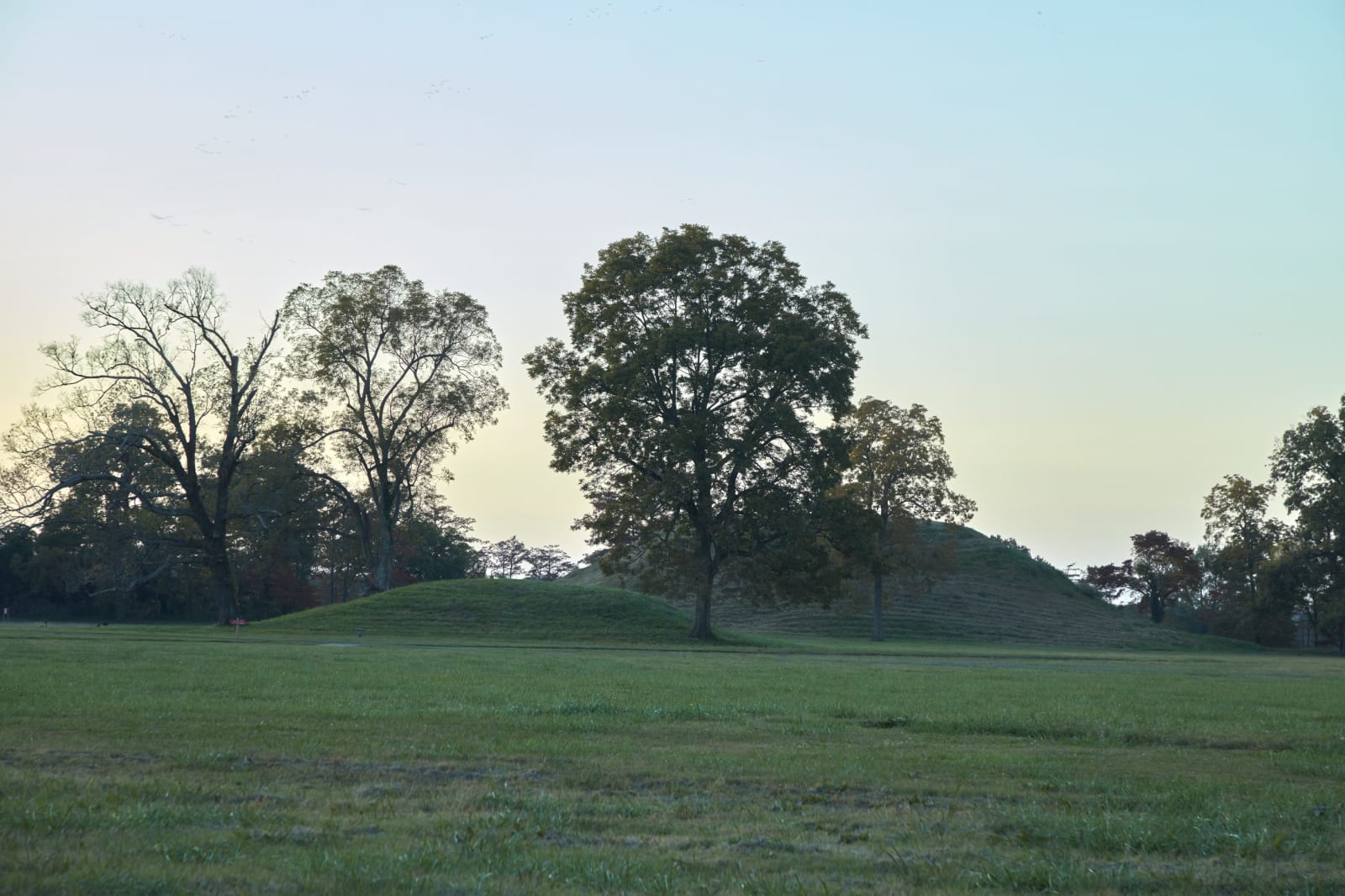
 Carol M. Highsmith / Library of Congress, public domain
The Story
People lived at this site on the Arkansas River floodplain from sometime before A.D. 700 until about A.D. 1050, and archeologists named them the Plum Bayou culture after a local stream. They raised as many as 18 mounds around two plazas, the tallest about 49 and 39 feet high, making it the main religious and political center of the culture. They are the tallest surviving prehistoric mounds in Arkansas, and deer bones in two of them suggest large feasts.
Some mounds line up with sunrise and sunset on the solstices and equinoxes; from Mound A, the summer solstice sunrise falls over Mound B. In 1891 the railway station and community took the name Toltec, from a mistaken 19th-century belief that the Toltecs of Mexico built the mounds, and the park carried that name for more than a century. In November 2022 it was renamed Plum Bayou Mounds Archeological State Park after consultation with the Quapaw Nation and the Arkansas Archeological Survey. Archaeology magazine reports that the Quapaw and Osage Nations steward the site.
The visitor center, at 490 Toltec Mounds Road in Scott, is open Wednesday through Saturday from 8 a.m. to 5 p.m. and Sunday from 1 to 5 p.m. It is closed Monday and Tuesday and on New Year's Day, Thanksgiving, Christmas Eve and Christmas Day. Two self-guided trails, the Knapp Trail and the Plum Bayou Trail, pass the mounds beside Mound Lake, an oxbow of the Arkansas River, and a garden grows plants found at Arkansas archeological sites.
Visitor Info
On the Map
Nearby
The closest stops worth working into your route