Home / Arkansas / Little Rock & Central Arkansas / Plantation Agriculture Museum
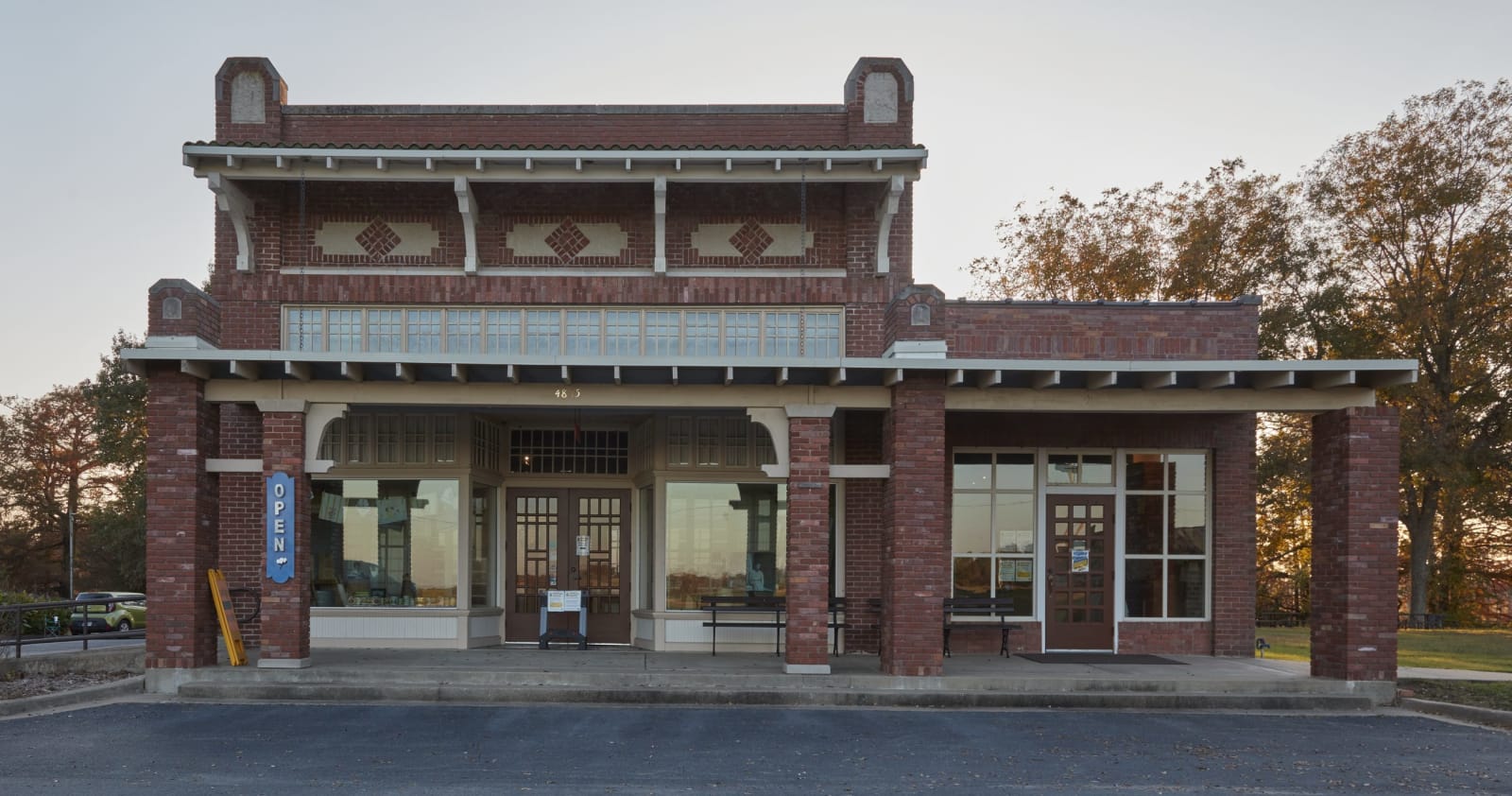
The 1912 Steele-Dortch general store building at the Plantation Agriculture Museum in Scott, ArkansasCarol M. Highsmith / Library of Congress, public domain
🏭Industrial

Plantation Agriculture Museum

Part ofLittle Rock & Central Arkansas

A 1912 brick store turned museum of cotton agriculture beside Horseshoe Lake, with a 1920s Munger gin and exhibits that run from slavery to sharecropping.

⏱
Duration
One to two hours.
🎟
Admission
No admission fee listed by the park.
📅
Best Season
Year round. Wednesday through Saturday, 8 a.m. to 5 p.m.; Sunday, 1 to 5 p.m. (state parks page, 2026). Closed Monday and Tuesday.

The Story

Conoway Scott Jr. built the large brick building in 1912 as a general store, though neither he nor his heirs ran it, and a post office wing followed in 1929. Robert L. Dortch and his daughter Floride Dortch Rebsamen bought it in the 1960s and turned it into a museum. It closed in 1978 and reopened on June 25, 1989, under the state parks department, with a mission to interpret the history of cotton agriculture, with an emphasis on plantations.

The story it tells runs from enslaved people to sharecroppers to plantation owners. By 1862 the Scott family owned 2,000 acres and ten enslaved people, and Scott's Station on the Cotton Belt line later gave the town its name. Exhibits follow cotton from the field to the gin. The Dortch gin building holds a 1920s Munger cotton gin and press assembled in its original arrangement, and the Dortch seed warehouse was added to the National Register of Historic Places in 2010. The collection numbers more than 10,000 artifacts, including two large steam traction engines.

The museum is at 4815 Highway 161 South in Scott, beside Horseshoe Lake and about twenty miles southeast of Little Rock. It is open Wednesday through Saturday from 8 a.m. to 5 p.m. and Sunday from 1 to 5 p.m. It is closed Monday and Tuesday and on New Year's Day, Thanksgiving, Christmas Eve and Christmas Day, with interpretive programs year round. The park lists no admission fee.

Visitor Info

⏱
Time Needed
One to two hours.
🎟
Admission
No admission fee listed by the park.
📅
Best Season
Year round. Wednesday through Saturday, 8 a.m. to 5 p.m.; Sunday, 1 to 5 p.m. (state parks page, 2026). Closed Monday and Tuesday.
🛣️
Highway
Arkansas 161

On the Map

Nearby

The closest stops worth working into your route

cultural3.8 mi away
Plum Bayou Mounds Archeological State Park
The Plum Bayou culture's mound center, A.D. 700 to 1050, formerly Toltec Mounds, with the tallest surviving prehistoric mounds in Arkansas and alignments to the solstices.
historical11 mi away
Old State House Museum
The oldest standing state capitol west of the Mississippi, where lawmakers met from 1836, enslaved people were auctioned in the east wing and Arkansas voted to secede.
cultural11 mi away
Mosaic Templars Cultural Center
The state museum of African American history on the site of the Mosaic Templars of America headquarters, a Black fraternal order's 1913 building on West Ninth Street.
architectural11 mi away
Arkansas State Capitol
The neo-classical Capitol built from 1899 to 1915 on the old penitentiary site with state convict labor, free to enter, with the Little Rock Nine monument on the grounds.
historical12 mi away
Little Rock Central High School National Historic Site
The 1927 high school where nine Black students entered under federal troops on September 25, 1957, with a National Park Service visitor center across the intersection.
attraction16 mi away
Big Dam Bridge
A 14-foot-wide walking and cycling bridge built onto Murray Lock and Dam, 90 feet over the Arkansas River between Little Rock and North Little Rock.