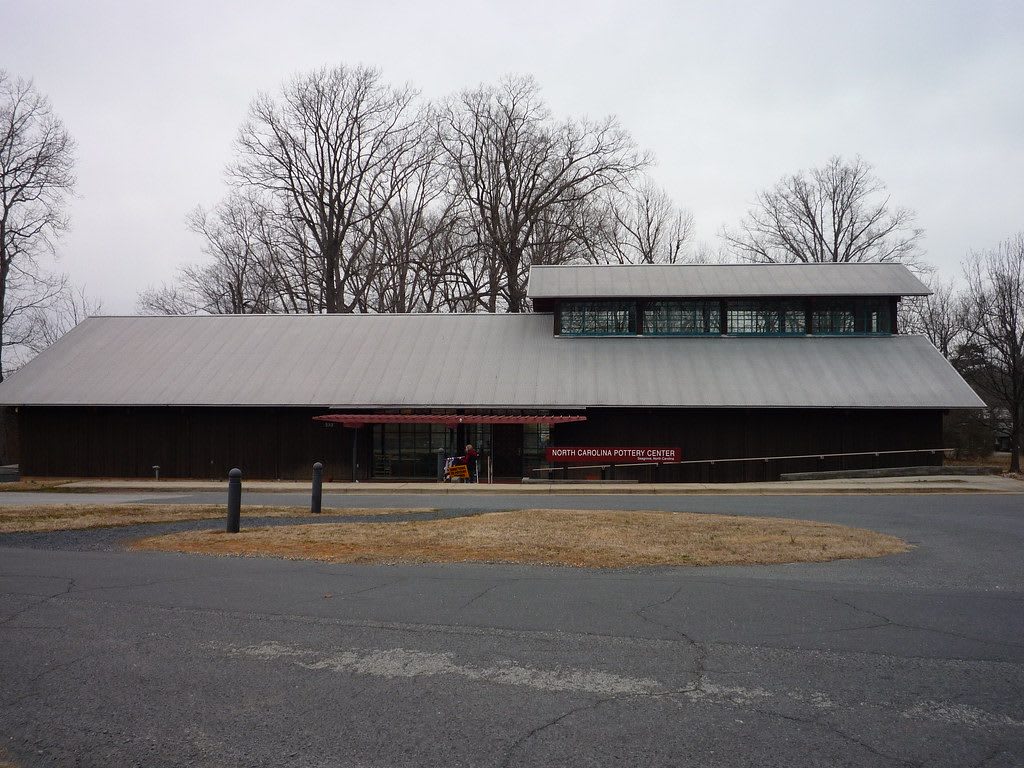
 Chris (Effervescing Elephant) / CC BY-SA 2.0 via Flickr
The Story
Potters have been digging clay and firing it in the country around Seagrove since the eighteenth century, many of the first of them Scots-Irish settlers making plain glazed earthenware for farm kitchens. Good clay and traders' roads kept them going. Factory goods and new ways of keeping food nearly ended the trade by the early 1900s, and when whiskey was outlawed the jug business went with it.
In 1915 Jacques and Juliana Busbee of Raleigh set out to revive the craft, hiring local potters such as J. H. Owen, Ben Owen and Charlie Teague to make wares they sold in New York, and in 1921 Jugtown Pottery began here. Around the same time tourists driving to Pinehurst and Florida started stopping for decorative pieces. Dorothy and Walter Auman opened Seagrove Pottery in 1953, when only seven potteries were working, and in 1969 moved the old railroad depot behind their shop as the area's first pottery museum. Families such as the Coles, Aumans, Owens, Teagues and Albrights are now eight and nine generations at the wheel.
The center grew out of that museum and the Seagrove festival and opened on November 7, 1998, the only statewide museum devoted to pottery. Its exhibits cover North Carolina clay from Native potters to the present, with a case of current Seagrove work, and two wood-fired kilns, one a traditional groundhog, sit on the hill behind. Pick up the free map of the more than fifty shops on and off NC 705, the Pottery Highway.
Visitor Info
On the Map
Nearby
The closest stops worth working into your route
Historical markers nearby
Roadside plaques and monuments within a short detour