 John Trainor / CC BY 2.0 via Flickr
The Story
Coweta County is named for Coweta, one of the Muscogee mother towns and the town of William McIntosh. The county was made from the land McIntosh signed away at Indian Springs in 1825, for which his nation put him to death under its own law. In 1828 the county seat moved from Bullsboro, which had no proper roads, to a new town two miles west named for Daniel Newnan, a soldier and Georgia secretary of state. By 1860 the county's 15,000 people were half Black, and one white farmer in four held land and enslaved workers.
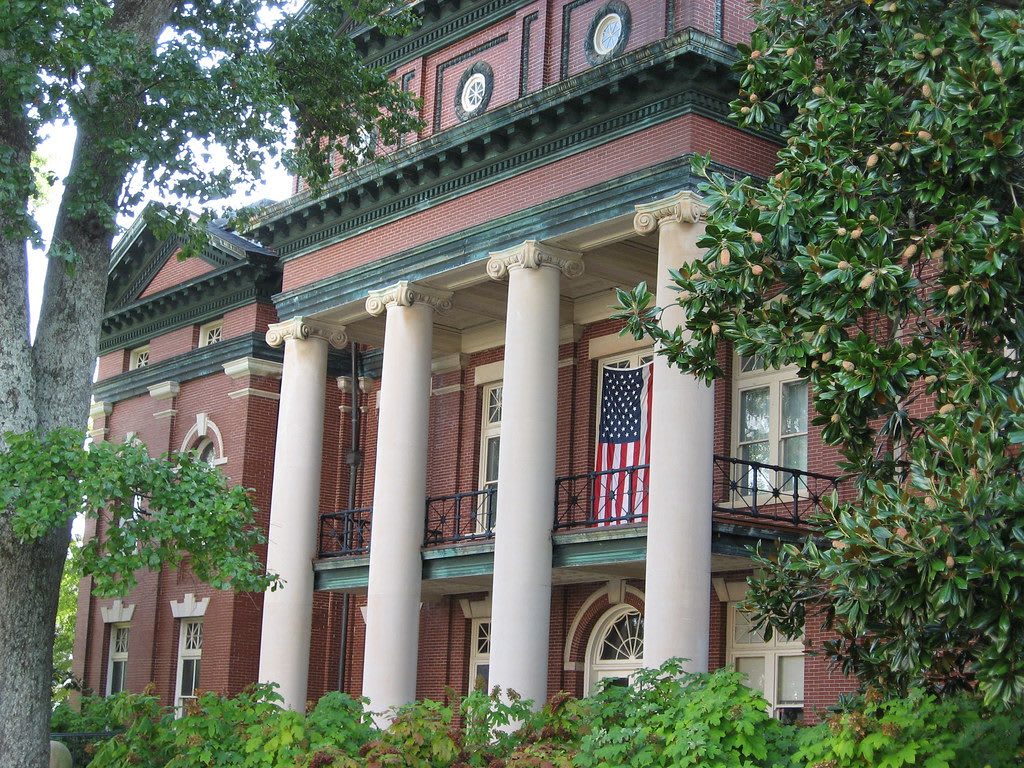
In the Civil War the railroad town escaped burning and became a hospital town, with seven hospitals that treated some 10,000 soldiers. The present courthouse went up from 1904, and the old houses around the square gave the town its nickname, the City of Homes.
On Sunday, April 23, 1899, a mob seized Sam Hose, a Black farm laborer born Tom Wilkes, who had killed his employer, Alfred Cranford, in what Hose said was self-defense; newspapers had added rumors of rape. About a mile from town they tortured him and burned him alive before a crowd the Atlanta Constitution put at 2,000, many of them on special trains from Atlanta, and sold pieces of his body. The next day a mob hanged Elijah Strickland, a Black minister accused of paying Hose. W. E. B. Du Bois, on his way to see the Constitution's editor, turned back when he learned Hose's knuckles were on display in a store nearby; the killing ended his faith that calm reason would stop lynching.
Visitor Info
On the Map
Nearby
The closest stops worth working into your route
Historical markers nearby
Roadside plaques and monuments within a short detour