 Carol M. Highsmith / public domain via Library of Congress
The Story
Water comes out of Pine Mountain here at about 88 degrees, and an old story holds that sick and wounded Muscogee people came to these springs to heal. By the 1880s Warm Springs was a resort for well-off Southerners. Franklin D. Roosevelt, paralyzed by polio in 1921, first came in October 1924 to swim in the pools. The water was no cure, but he gained strength in it, and in 1927 he bought the rundown resort and some 1,700 acres around it and set up the Georgia Warm Springs Foundation for polio patients, who took to calling him Doctor Roosevelt.
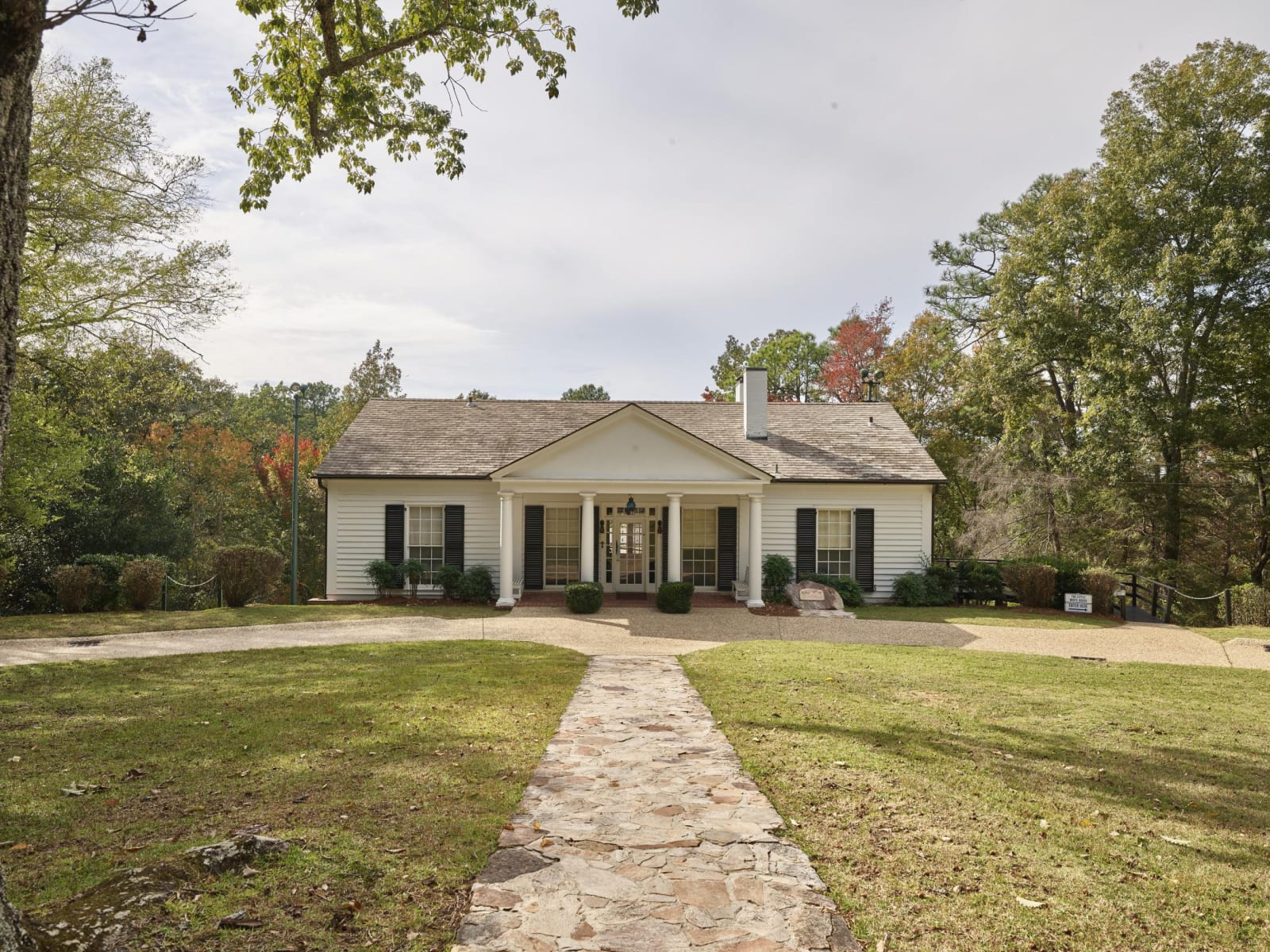
He visited Georgia 41 times between 1924 and 1945. In 1932, while governor of New York, he had this six-room house of Georgia pine built. On drives through country hurt by the boll weevil and falling cotton prices he saw how few farms had electricity, and his first electric bill here ran four times that of his New York home; in 1938 he called Warm Springs the birthplace of the Rural Electrification Administration. He would not take on segregation, though Eleanor Roosevelt and Black leaders pressed him to.
On April 12, 1945, posing for the painter Elizabeth Shoumatoff, he suffered a stroke and died soon after. The house has been open since 1948 and is kept much as he left it, with the guest house and servants' quarters beside it. The museum holds the Unfinished Portrait, his 1938 Ford with hand controls and Fireside Chats playing on a 1930s radio. The historic pools and their museum were closed for repairs in 2026.
Visitor Info
On the Map
Nearby
The closest stops worth working into your route
Historical markers nearby
Roadside plaques and monuments within a short detour