 Carol M. Highsmith / public domain via Library of Congress
The Story
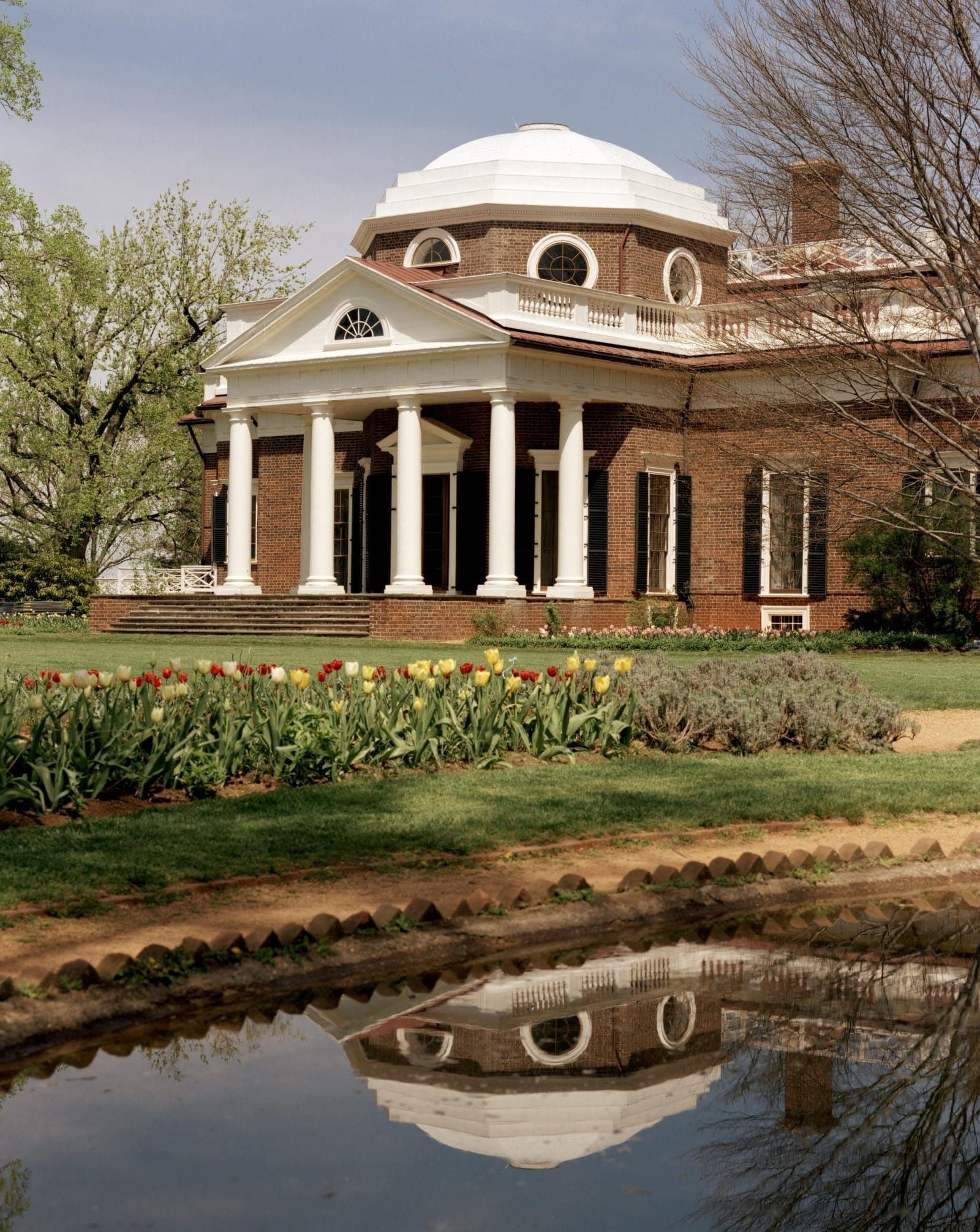
Monticello was a working plantation of about 5,000 acres, and more than 400 enslaved people lived and worked on it during Jefferson's lifetime. They made the bricks and nails, cooked in the kitchens under the South Wing, wove cloth, tended the tobacco and wheat, and served the household. Many of them lived on Mulberry Row, the street of workshops and dwellings below the house, where the stone workmen's house still stands among the marked sites of log cabins.
Sally Hemings went to Paris at about fourteen to attend Jefferson's daughter, and at sixteen agreed to return to Virginia in exchange for privileges and freedom for her future children. She had at least six children by Jefferson; four survived. Beverly and Harriet left Monticello in 1822, Madison and Eston were freed in Jefferson's will, and Sally herself was never legally freed. An exhibit in the South Wing tells her life. After Jefferson died in 1826, his debts were settled by offering 130 people for sale at Monticello, scattering families across Virginia and beyond.
Visits start at the visitor center at the foot of the mountain, where shuttles carry ticket holders to the house. A grounds ticket covers Mulberry Row and the gardens; house tours cost more, and the longest one centers on slavery and freedom. Since 1993 the foundation's oral history project has recorded descendants of the families enslaved here, and their voices run through the site. With the University of Virginia, the house is a World Heritage Site.
Visitor Info
On the Map
Nearby
The closest stops worth working into your route
Historical markers nearby
Roadside plaques and monuments within a short detour