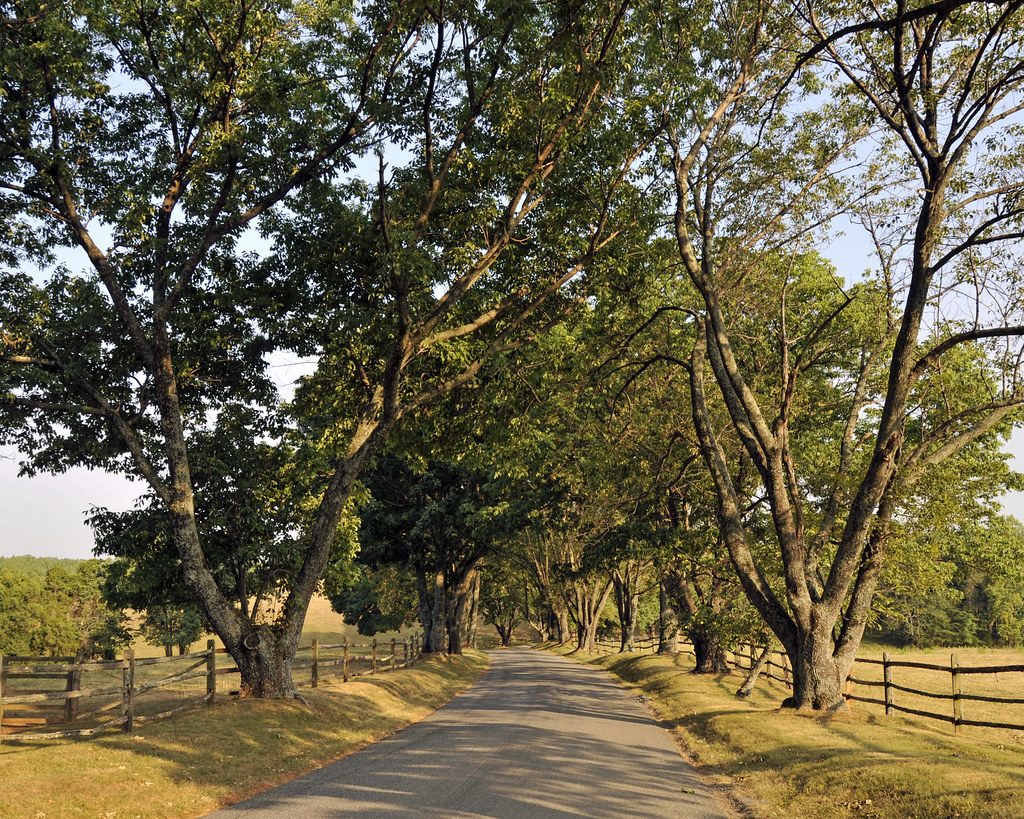
 Tony Fischer / CC BY 2.0 via Flickr
The Story
James Monroe bought about a thousand acres beside Jefferson's land in 1793 and moved his family here in 1799. The work was done by enslaved people: in 1810 Monroe held 49 enslaved adults at Highland, one of the largest holdings in Albemarle County. They were field hands and blacksmiths, carpenters and masons, cooks and maids, and they ran the place while Monroe was away in Richmond, Paris and Washington. Families were split by moves between Highland and his Loudoun County farm. In July 1826 a couple named George and Phebe ran away, and Monroe advertised for their return; no one knows whether they reached freedom. When debt forced him to sell, many of the people here were sold to a cotton plantation in Florida.
For generations visitors were shown a modest frame house as Monroe's home. Tree-ring dating and archaeology have since shown it to be a guest house built around 1818, and the foundations of a much larger main house were found nearby. A three-room quarters rebuilt from a 1908 photograph stands near the yard.
The College of William and Mary, Monroe's alma mater, has owned Highland since 1974 and dropped the old name, Ash Lawn-Highland, in 2016. The exhibits in the guest house set free and enslaved residents in one story, shaped with Highland's Council of Descendant Advisors, and the 535 acres are still a working farm with a free rustic trail.
Visitor Info
On the Map
Nearby
The closest stops worth working into your route
Historical markers nearby
Roadside plaques and monuments within a short detour