 Alexander Hatley / CC BY 2.0 via Wikimedia Commons
The Story
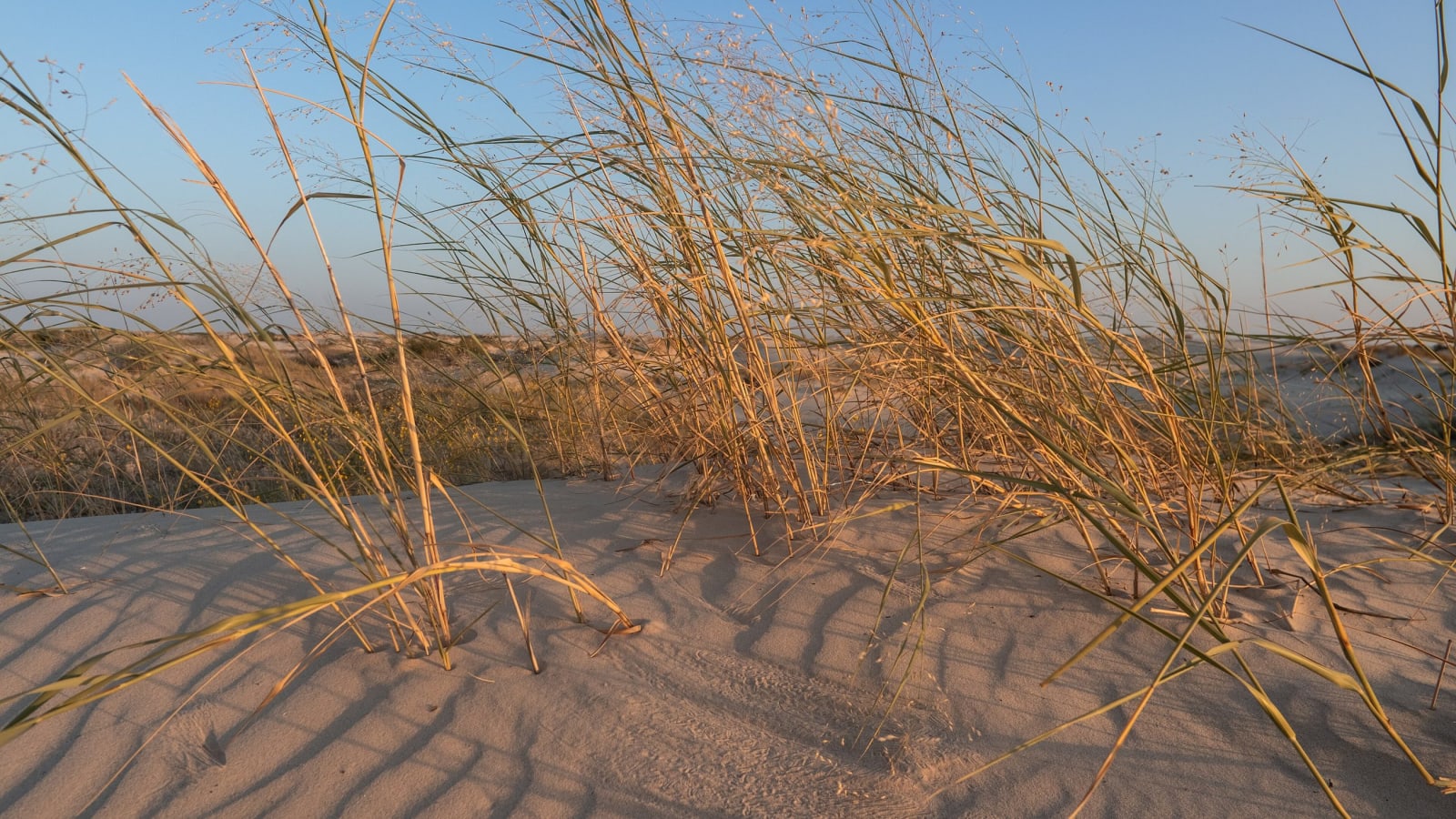
Monahans Sandhills State Park covers 4,717 acres of dunes in Ward and Winkler counties, land the state leases from Ward County, the Sealy-Smith Foundation and the Williams family of Monahans. It opened in 1957. The park is a small piece of a dune field that runs about 200 miles from south of Monahans west and north into New Mexico. Plants hold most of those dunes in place, but many inside the park are still active, reshaped by the seasonal winds, and some stand 50 feet tall.
What made the sand worth crossing was water. Fresh water lies at shallow depth inside the dune field and sometimes seeps up to stand in the hollows between dunes. Apache and Comanche people camped and met here, finding game, water beneath the sand, and acorns and mesquite beans that they ground into paste with stone tools. The acorns came from the shin oak, or Havard oak, which is not a stunted tree but a full-grown oak that rarely reaches four feet, its roots binding the dunes. In the 1880s the Texas and Pacific Railway chose Monahans as its water stop between the Pecos River and Big Spring for the same reason.
There are no marked trails, so you walk where you like and keep track of the way back; the sand heats fast in summer. Sand discs for sliding the dunes are rented at headquarters from 8:30 a.m. to 4:30 p.m. The Dunagan Visitor Center has windows over a wildlife watering area, and at dusk the seeps draw badgers, kangaroo rats and javelinas.
Visitor Info
On the Map
Nearby
The closest stops worth working into your route
Historical markers nearby
Roadside plaques and monuments within a short detour