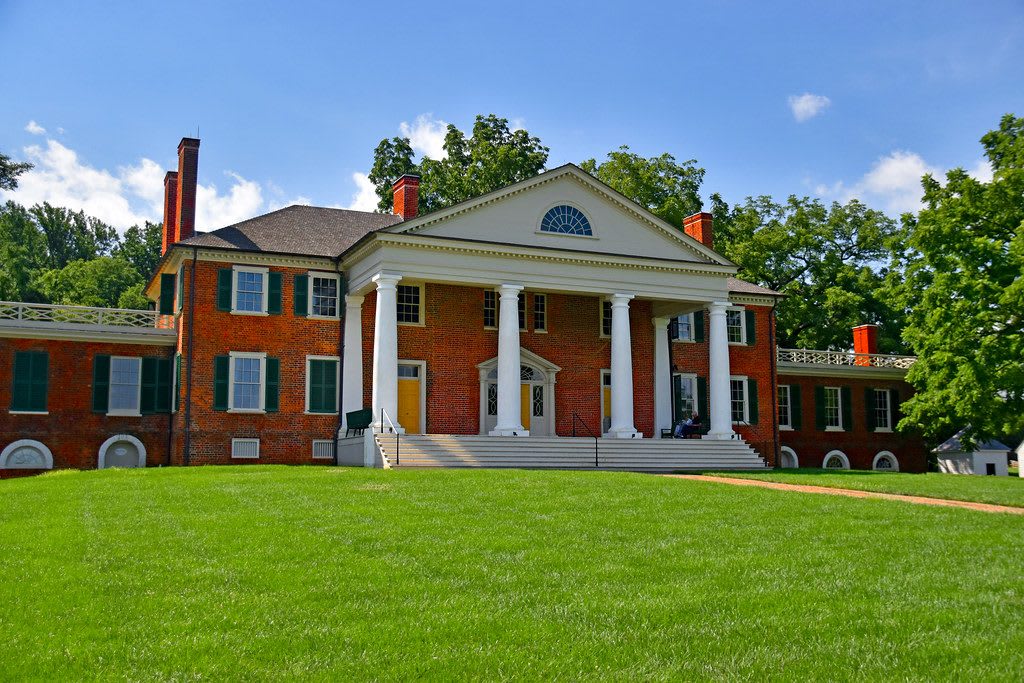
 Ron Cogswell / CC BY 2.0 via Flickr
The Story
About a hundred enslaved people did the work of Montpelier while James Madison owned it, and five, six and perhaps seven generations were born into slavery here. The best known is Paul Jennings, who served Madison from boyhood, gained his freedom in 1845 through Daniel Webster, who bought him from the widowed Dolley Madison, helped plan the 1848 escape attempt on the schooner Pearl, and wrote what is counted the first White House memoir. Catherine and Ralph Taylor, separated when Dolley took Ralph to Washington, won their freedom in 1853. Madison's grandfather Ambrose, who first settled the land, died in 1732; court records say three enslaved people poisoned him.
The National Trust for Historic Preservation took the estate in 1984 and, from 2003 to 2008, stripped away the duPonts' additions and stucco to bring the house back to its 1820 size. Archaeology in the quarters followed, and in 2017 the cellars opened as The Mere Distinction of Colour, an exhibition shaped by descendants that names everyone known to have been enslaved here and traces slavery's place in the Constitution. Rebuilt cabins stand in the South Yard. In 2021 the foundation agreed to share governance with the Montpelier Descendants Committee, which by 2022 held a majority of board seats.
Park at the visitor center off Route 20. The Gilmore Cabin, from the years after emancipation, and the Jim Crow-era train station at the entrance carry the story into freedom and segregation.
Visitor Info
On the Map
Nearby
The closest stops worth working into your route
Historical markers nearby
Roadside plaques and monuments within a short detour