The San Luis Valley
The tallest dunes in North America, Colorado's oldest town and its first water right, the heirs who won back La Sierra, and the fort Kit Carson commanded.
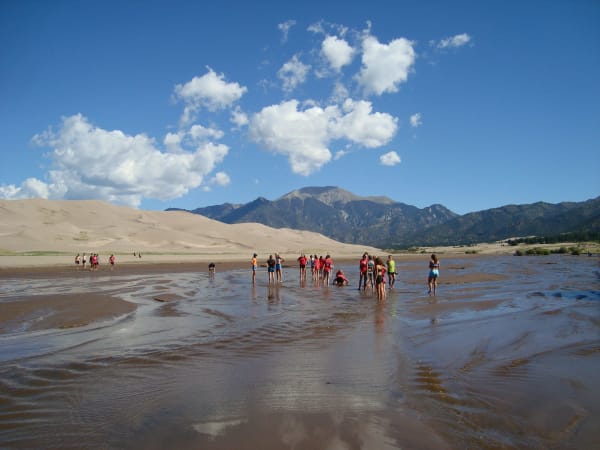
The San Luis Valley is a high basin of farmland and sage larger than Connecticut, walled by the San Juans on the west and the Sangre de Cristos on the east. The Nuuchiu hunted and wintered here, and Blanca Peak at its southeast corner is Sisnaajiní, the Diné sacred mountain of the east. Wind crossing the valley floor has driven sand against the foot of the Sangre de Cristos into the tallest dunes in North America, and Medano Creek runs along their base each spring.
San Luis was founded in April 1851 by Hispano families from the Taos Valley on the Sangre de Cristo land grant, which Mexico had issued in 1843, and it is the oldest town in Colorado that has been lived in ever since. The settlers dug the People's Ditch the following spring; its water right, dated April 10, 1852, carries decree priority number one in the state, and La Vega, the town's common pasture, is still grazed. In 1960 a North Carolina lumberman, Jack Taylor, bought the grant's mountain tract and fenced the heirs out of land their families had used for a century. The Colorado Supreme Court restored their rights to graze, gather firewood and cut timber there in 2002.
The Army built Fort Garland in 1858 to guard the settlements, and Kit Carson commanded it in 1866 and 1867, two years after leading the campaign that burned Diné fields and drove the people on the Long Walk. At Fort Garland he met the Ute leader Ouray, who with Chipeta spent the next decade negotiating to keep a homeland in western Colorado. The fort closed in 1883, after the Utes of this country had been moved onto reservations, and its adobe barracks are a museum.
What to See in The San Luis Valley
3 places across the region, grouped by what they are.
Natural Areas
Towns & Gateways
Roadside Stops

Stories from The San Luis Valley
The Supervolcano Under the San Juans
Twenty-eight million years ago a caldera near present-day Creede blew out some 1,200 cubic miles of rock in one of the largest explosive eruptions known on Earth. The San Juans are what was left.
The Cranes of the San Luis Valley
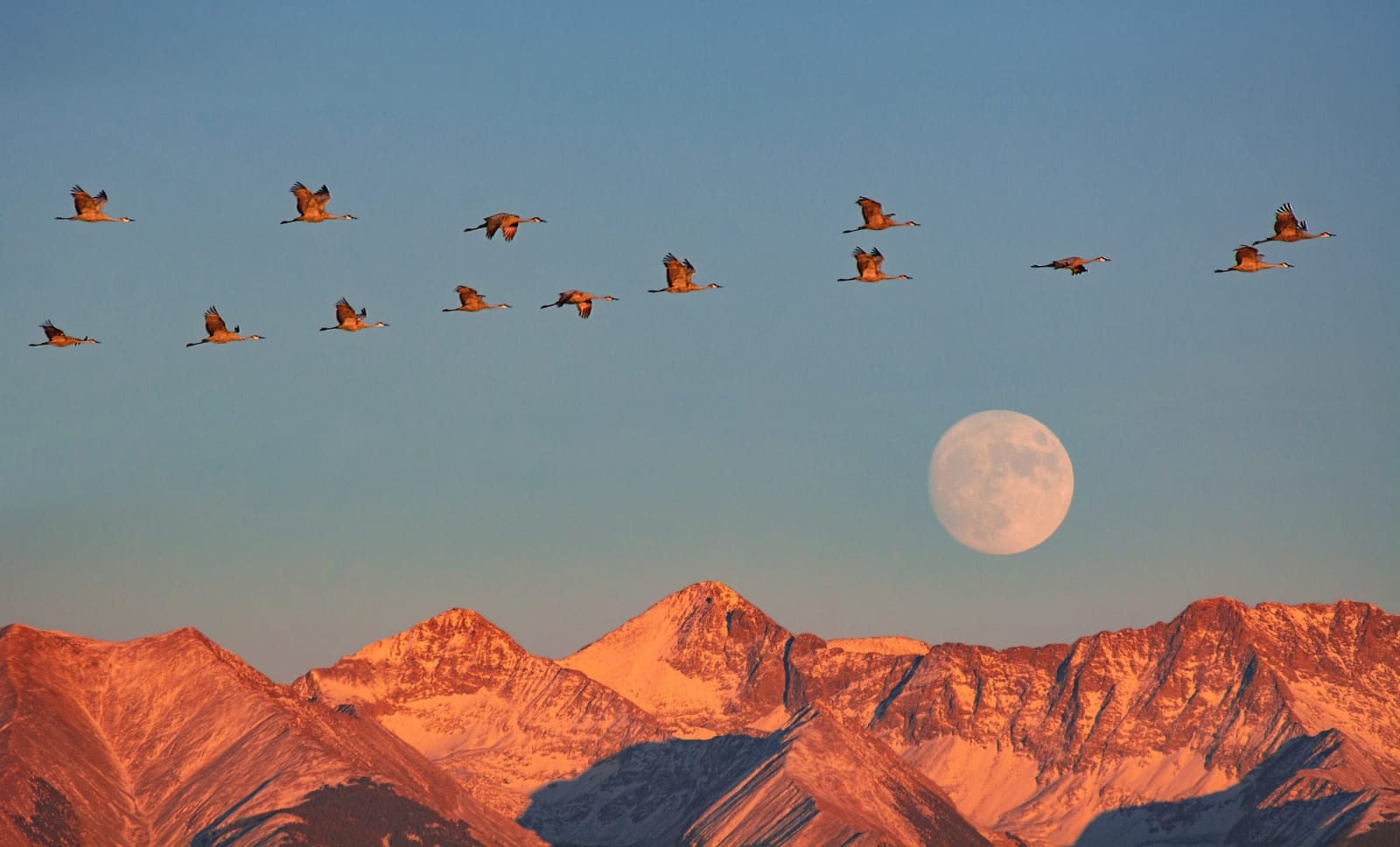
Twice a year some twenty thousand greater sandhill cranes stop in the barley fields and wetlands of the San Luis Valley, the whole Rocky Mountain population passing through one high basin.
The San Luis Valley rewards the unhurried. Pick a base, fan out, and let the country between the headline stops surprise you.
← Explore more of Open Road Guide