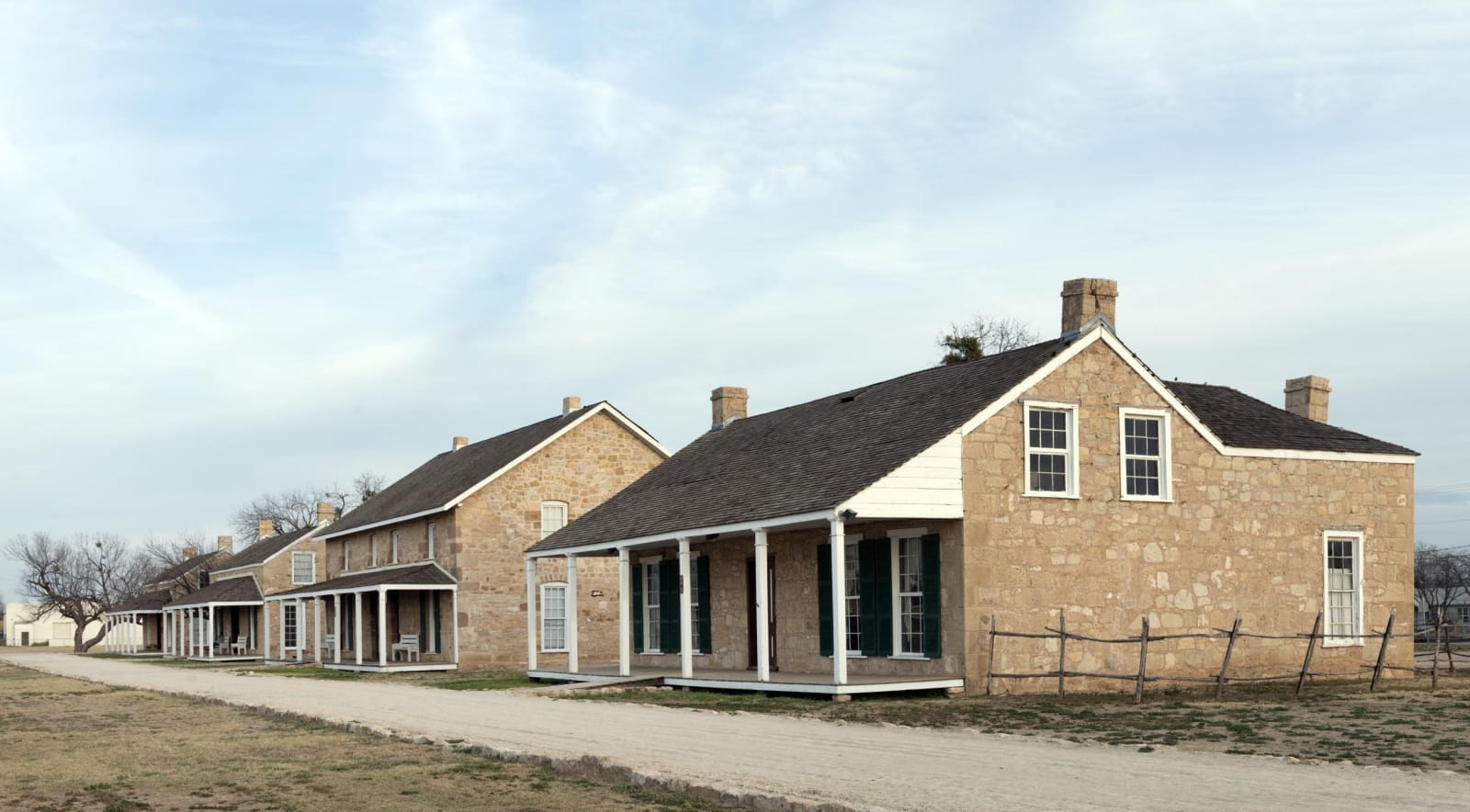
 Carol M. Highsmith / public domain via the Library of Congress
The Story
In late 1867 the army chose a site where the North and Middle Concho rivers join to replace Fort Chadbourne, which had run short of water. By 1879 Fort Concho was an eight-company post of some forty buildings of local limestone around a parade ground about 500 by 1,000 feet. Across the river a town of saloons, gambling and prostitution grew up, so rough that officers would not leave the post after dark. It became San Angelo.
The Tenth Cavalry, the Buffalo Soldiers, made its headquarters here from 1875 to 1882, and elements of all four Black regiments served at the post. Its troops mapped West Texas, built roads and telegraph lines and escorted stagecoaches and cattle drives, and the fort supplied Mackenzie's campaign of 1872, the Red River War and the Victorio campaign. The record includes what the campaigns did to families: in 1872 and 1873 more than 100 Native women and children captured by Mackenzie were held for six months in a stone corral here. The army left on June 20, 1889.
The buildings survived as houses and storage. In 1929 Ginevra Wood Carson raised the money to buy the old headquarters for her West Texas Museum, and the city took it over in 1935 and began buying back the post. Fort Concho became a National Historic Landmark in 1961. Barracks, headquarters, the hospital and officers' quarters now hold the museum and exhibits on a self-guided walk, and the city recently finished rebuilding barracks and mess halls 3 and 4.
Visitor Info
On the Map
Nearby
The closest stops worth working into your route
Historical markers nearby
Roadside plaques and monuments within a short detour