Home / Mississippi / The Mississippi Delta / Fannie Lou Hamer Memorial Garden
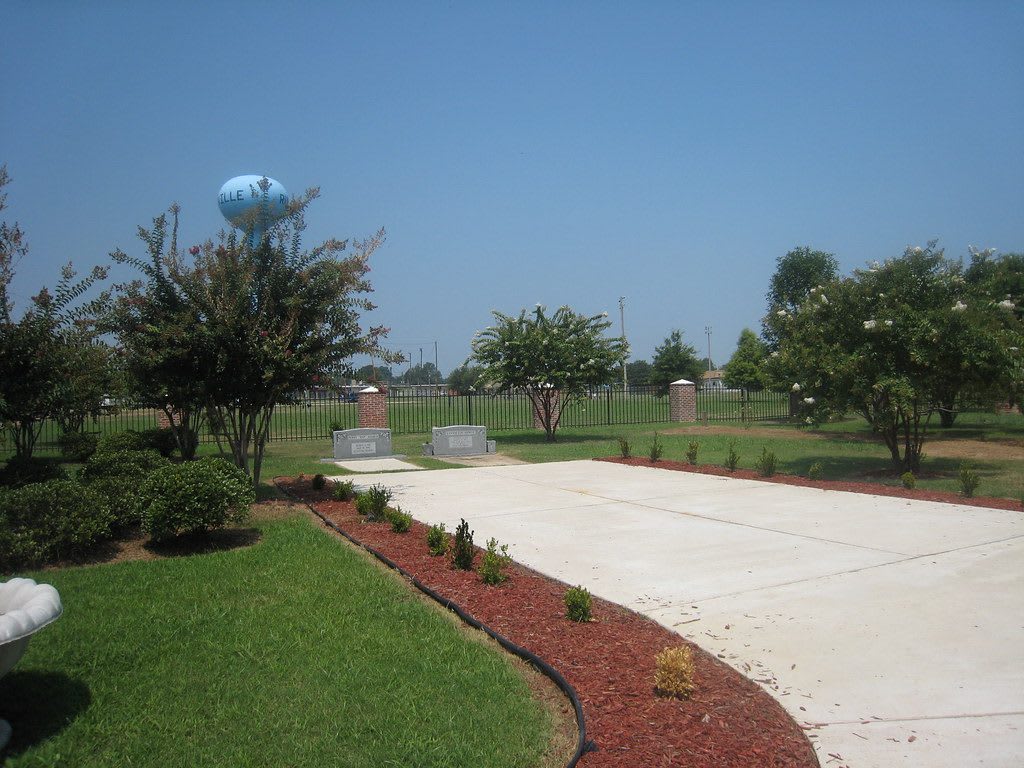
Two gray headstones stand inside a black iron fence at the far end of a landscaped garden, with a concrete walk, crape myrtles and the Ruleville water tower behind.stevebott / CC BY 2.0 via Flickr
🏛️Historical

Fannie Lou Hamer Memorial Garden

Part ofThe Mississippi Delta

The small park on Byron Street in Ruleville where Fannie Lou Hamer is buried beside her husband, with a Freedom Trail marker and a 2012 bronze statue.

⏱
Duration
Thirty minutes to an hour.
🎟
Admission
Free.
📅
Best Season
Year round, in daylight; the museum on Floyce Street is open by appointment only.

The Story

Fannie Lou Hamer asked her friend Charles McLaurin not to let them bury her on a plantation, and she lies instead in a small park on Byron Street in Ruleville, beside her husband, Perry "Pap" Hamer. She was the youngest of twenty children of sharecroppers and had been picking cotton since she was six. In 1962 she tried to register to vote in Sunflower County, and the owner of the plantation where the Hamers lived and worked evicted them.

From there she became one of the movement's strongest voices: a field worker for the Student Nonviolent Coordinating Committee, a survivor of a beating in the Winona jail in 1963, a founder of the Mississippi Freedom Democratic Party, and the speaker whose challenge to the all-white delegation at the 1964 Democratic convention reached the whole country. Later she started the Pig Bank and the Freedom Farm Cooperative so her neighbors could eat. Within three years of her death in 1977 her tombstone and plaque were stolen, and the park was not dedicated until 2002.

Today the garden holds her grave, a Mississippi Freedom Trail marker and a bronze statue unveiled in 2012. It stands five feet four inches tall, the height she named when she said she would fall that far forward for freedom. Her headstone carries her line about being sick and tired of being sick and tired. A small museum at 660 Floyce Street opens by appointment. Treat the garden as the cemetery it is.

Visitor Info

⏱
Time Needed
Thirty minutes to an hour.
🎟
Admission
Free.
📅
Best Season
Year round, in daylight; the museum on Floyce Street is open by appointment only.
🛣️
Highway
Byron Street

On the Map

Nearby

The closest stops worth working into your route

cultural4.4 mi away
Dockery Farms
The plantation on the Sunflower River where Charley Patton lived and played from about 1900, now a working farm, a National Register district and a Mississippi Blues Trail stop.
historical14 mi away
Parchman Farm (Mississippi State Penitentiary)
The state penitentiary on Sunflower County cotton land, built in 1900 as a prison plantation, where Freedom Riders were held in 1961; a working prison with no visits and a Blues Trail marker at its gate.
historical15 mi away
Mound Bayou
The Bolivar County town founded in 1887 by men who had been enslaved at Davis Bend, built to be Black-owned, home of Taborian Hospital and a museum on Roosevelt Street.
historical19 mi away
Emmett Till Interpretive Center and the Tallahatchie County Courthouse
The 1955 courthouse in Sumner where Emmett Till's killers were acquitted, restored to that year, and the interpretive center across the street that opened after the county's 2007 apology.
historical20 mi away
Bryant's Grocery
The ruin of the Money store where Emmett Till was accused in August 1955, on private land beside the railroad, with a Mississippi Freedom Trail marker at the corner.
cultural21 mi away
B.B. King Museum and Delta Interpretive Center
A museum built around the brick cotton gin in Indianola where B.B. King worked in the 1940s, with his grave in a memorial garden on the grounds.