 Carl Wycoff / CC BY 2.0 via Flickr
The Story
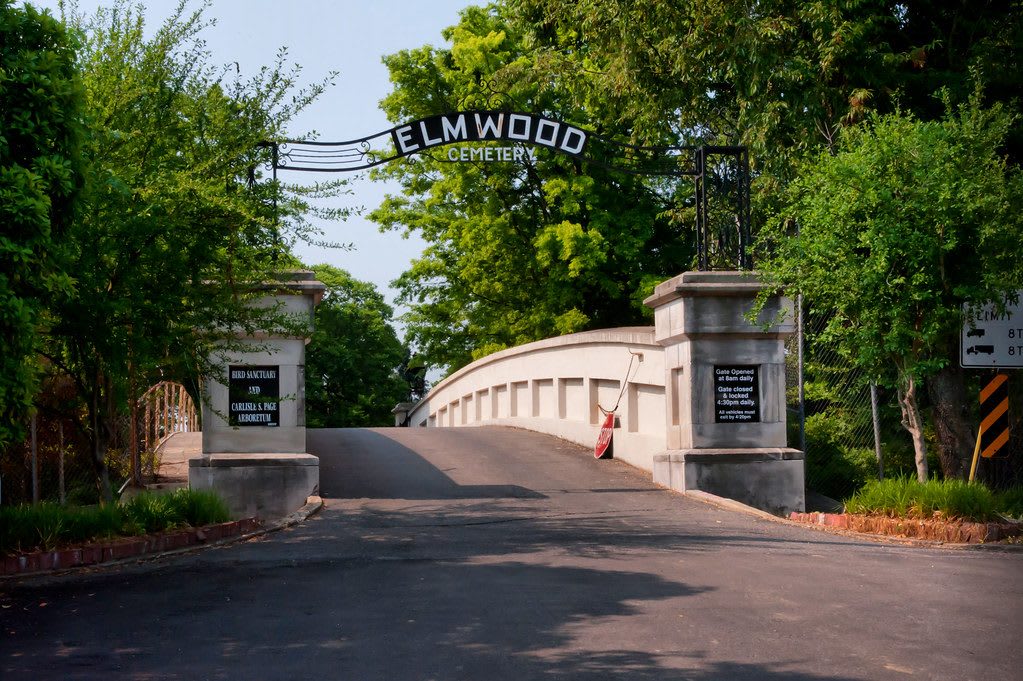
Elmwood opened in 1852, when fifty Memphis citizens put up $500 each for forty acres south of town and laid out one of the first rural cemeteries in the South, with winding drives and old trees, meant as a park for the living as well as the dead. The name was drawn from a hat, and the first elms had to be ordered from New York. Today it covers about eighty acres and nearly 1,500 trees, a state-recognized arboretum, and the grounds are open daily with no admission charge.
The cemetery holds the whole of Memphis, which means Confederate officers and a slave trader as well as people the city was slower to remember. Robert R. Church Sr., the freedman who built Church's Park on Beale Street, is buried here, along with the civil rights leader Maxine Smith and the country blues singer Mae Glover. In 1878 yellow fever killed more than five thousand people in Memphis. About 2,500 of them lie in four public lots at Elmwood, among them doctors, ministers and nuns who stayed to nurse the sick.
Start at the Phillips Cottage, a Carpenter Gothic building from 1866 that serves as the visitor center, and ask for a map for a self-guided walk. Docent-led tours and an October evening of costumed stories are offered as well. Walk slowly, keep to the paths, and remember that families still come to these graves.
Visitor Info
On the Map
Nearby
The closest stops worth working into your route
Historical markers nearby
Roadside plaques and monuments within a short detour