 twbuckner / CC BY 2.0 via Flickr
The Story
Work on the Blue Ridge Parkway began on September 11, 1935, near Cumberland Knob, close to the Virginia line, and some twenty miles along, the road reaches Doughton Park. It is named for Robert L. Doughton, a congressman who lived near the route, supported the Parkway and is credited with helping bring it through North Carolina. The Bluffs, which opened here in 1949 as the first restaurant on the Parkway, served for 61 years and reopened in 2020. About 30 miles of trails cross the ridgetop meadows and drop through streams that hikers may ford many times.
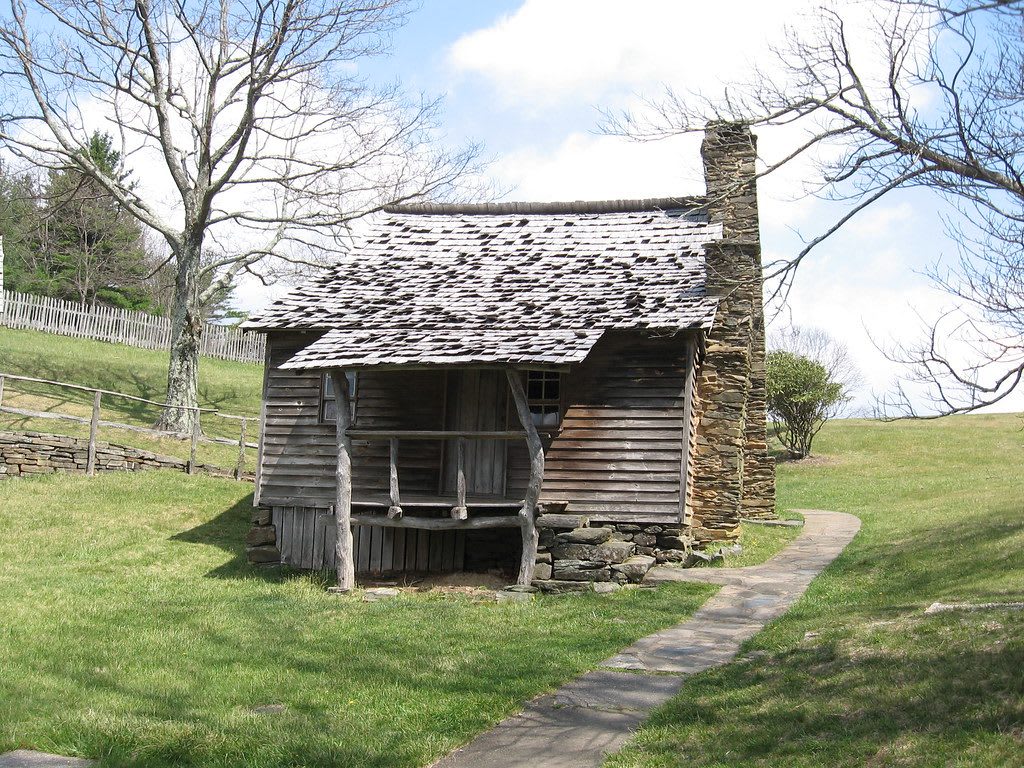
At milepost 238.5 stands the cabin Martin and Caroline Brinegar built in 1886 on a 125-acre farm, with a granary and a springhouse; the barn is gone. They raised buckwheat, rye, oats, corn and sorghum and let their livestock range free. Martin earned cash as a cobbler, making shoes for about a dollar a pair, and Caroline wove linsey-woolsey on a four-poster loom her father gave her as a wedding gift, following "tromped as writ" patterns that read like sheet music and told her which pedals to press.
Caroline and the children gathered bloodroot, mayapple and black snakeroot and sold them to drug merchants in Jefferson and Boone. Martin died in 1925, and Caroline lived on in the cabin until 1935, the year work on the Parkway began. The site interprets mountain farm life from 1885 to 1935, including loom weaving and the family cemetery, and rangers give programs at the cabin in season. Summer and early fall bring concerts of traditional music to the park.
Visitor Info
On the Map
Nearby
The closest stops worth working into your route
Historical markers nearby
Roadside plaques and monuments within a short detour