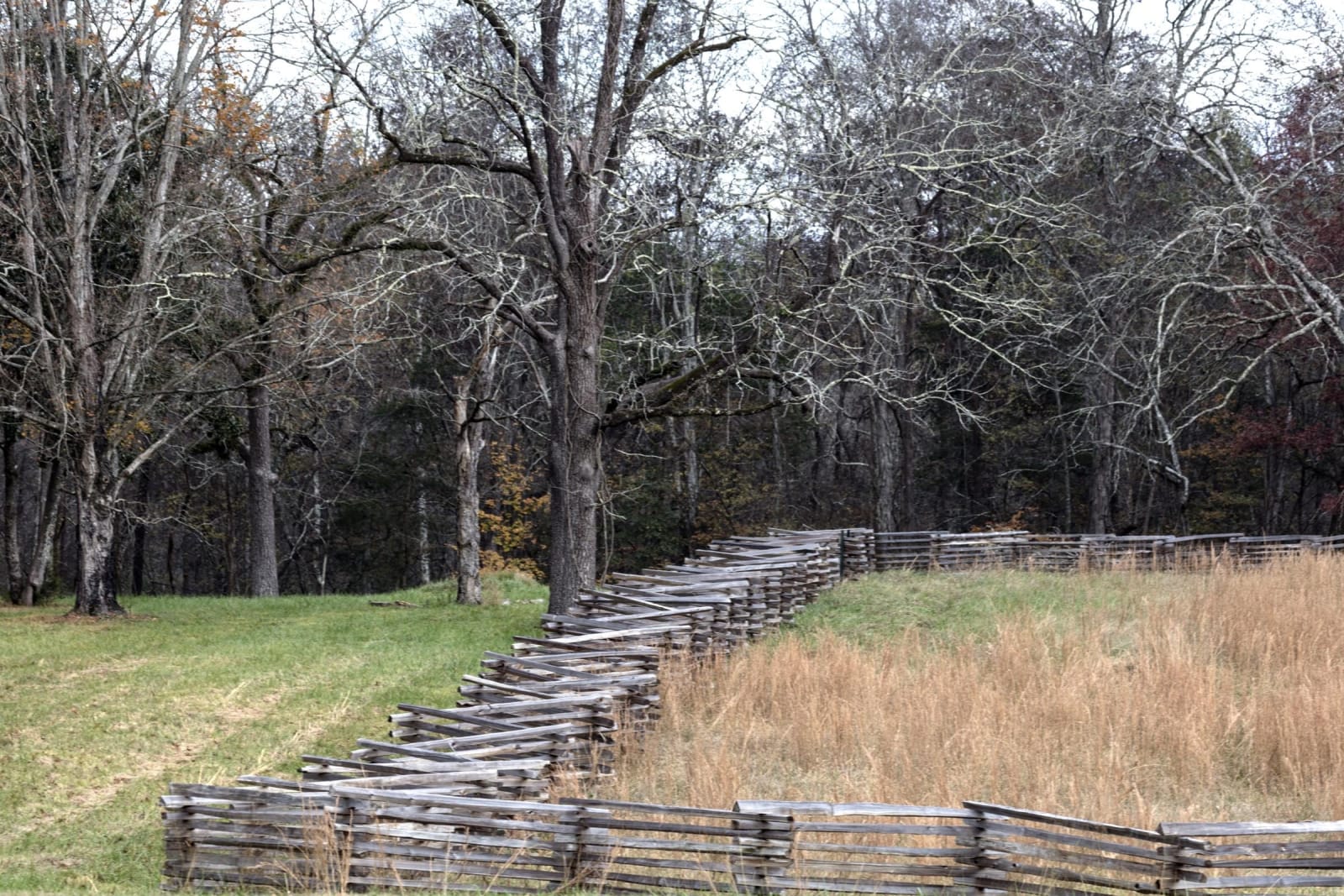
 Carol M. Highsmith / public domain via Library of Congress
The Story
This valley was Cherokee country until the 1830s. Crawfish Spring, now the town of Chickamauga, took its name from Chief Crawfish, who lived there, and Georgia handed the land out in its 1832 lottery. By 1860 the largest enslaver in Catoosa County, John P. Alexander, held 35 people on ground now inside the park, and the census listed five of them as fugitives from the state.
On September 18-20, 1863, the Confederate Army of Tennessee under Braxton Bragg, reinforced by James Longstreet's men from Virginia, attacked William Rosecrans's Union army here as it closed on Chattanooga. On the 20th a Union division left the line by mistake near the Brotherton cabin just as Longstreet struck, and the Union center and right collapsed; George Thomas held Snodgrass Hill until dark. About 34,000 men were killed, wounded, captured or missing, the most of any battle in Georgia and second in the war only to Gettysburg. Large numbers of African Americans served the two armies, enslaved laborers with the Confederates and hired free men with the Union, and after the war U.S. Colored Troops camped here to recover the dead. Bragg's victory won little: Union troops held Chattanooga and broke the siege that November.
Congress made this the first national military park in 1890, largely through Union veterans, and it was dedicated in 1895. Black soldiers trained here in three later wars, and a Black Civilian Conservation Corps camp helped care for it. Start at the visitor center on LaFayette Road, then follow the self-guided tour and climb the 85-foot Wilder Brigade tower.
Visitor Info
On the Map
Nearby
The closest stops worth working into your route
Historical markers nearby
Roadside plaques and monuments within a short detour