 National Park Service / Public domain via Wikimedia Commons
The Story
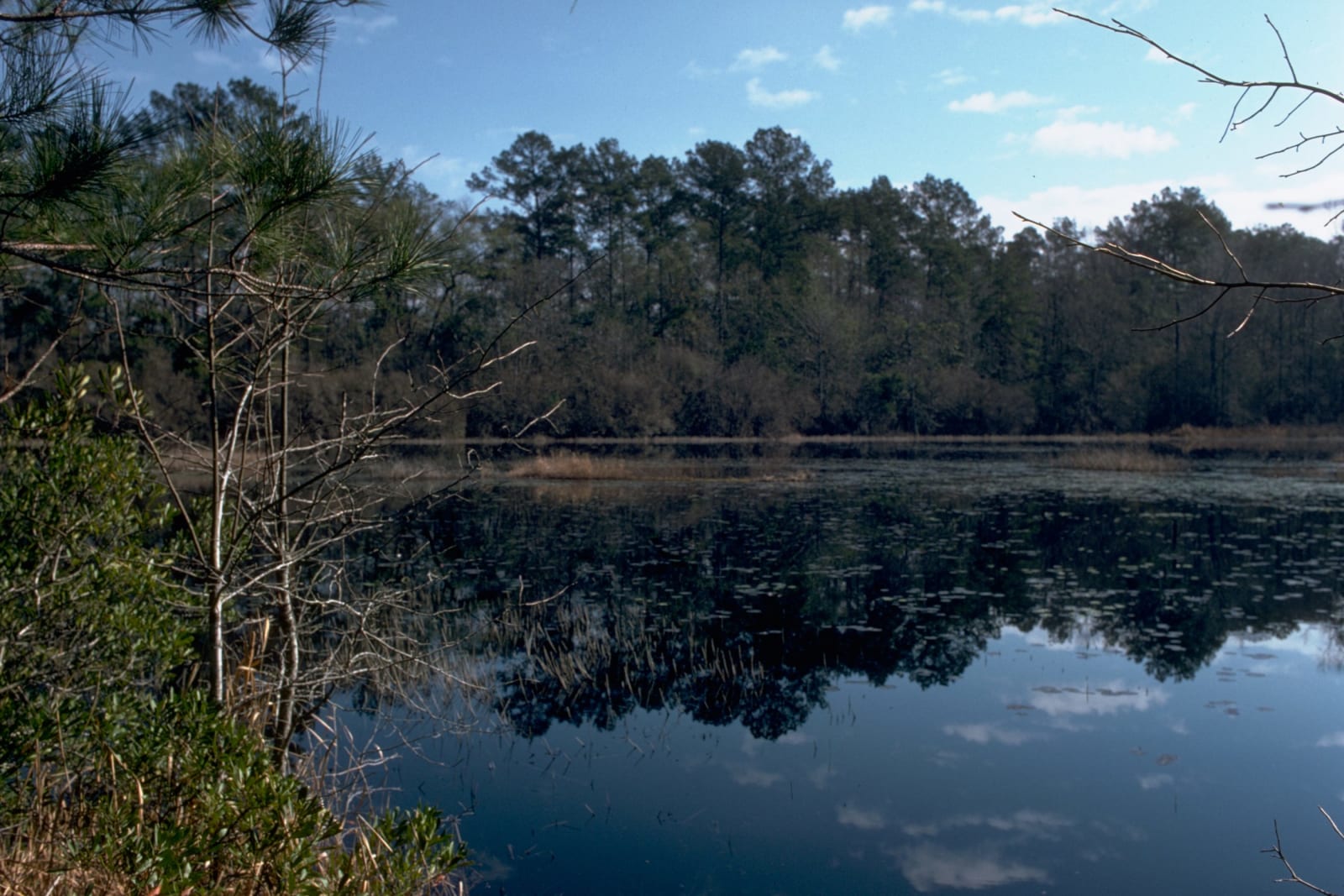
Big Thicket is not one park but a string of pearls: separate units of forest, bayou, pine savanna and swamp spread across southeast Texas, each protecting a different habitat. President Gerald Ford signed the act creating it on October 11, 1974, and it was the first national preserve in the country, at 84,550 acres. The National Park Service describes the thicket as a biological crossroads, where many eastern and midwestern plants reach the western or southern edge of their range.
The place to begin is the visitor center on FM 420 above Kountze, open daily 9 a.m. to 5 p.m. and closed only on Thanksgiving, December 25 and January 1. Staff orient you to the units, and a sixteen-minute film covers the preserve's cultural and natural history. The Discovery Room has hands-on exhibits, including a microscope and models of a river ecosystem and venomous snakes. No entrance pass is required. Park service guidance warns that many navigation systems send drivers to remote corners of the preserve, so check the official map or call the center before you set out.
Native peoples are part of the story the park tells. The Park Service names the Atakapa-Ishak on the coastal plain to the south and the Caddo in the hills to the north. The Alabama and Coushatta settled in the thicket in the 1780s and later became the Alabama-Coushatta Tribe of Texas. Senator Ralph Yarborough introduced the first Senate bill for a national park in 1966, and Congressman Charles Wilson pulled the competing bills into the compromise that passed.
Visitor Info
On the Map
Nearby
The closest stops worth working into your route
Historical markers nearby
Roadside plaques and monuments within a short detour