County guide · Tennessee
Maury County
3 places to stop and 28 historical markers in Maury County, Tennessee.
Towns: Columbia (18), Spring Hill (6), Mount Pleasant (2), Williamsport (1), Culleoka (1), Santa Fe (1), Ashwood (1), Leiper's Fork (1)
Places to stop
historical · Williamsport
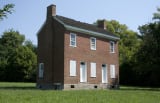
Gordon House and Ferry Site
A brick house of 1818 beside the Duck River at milepost 407.7 of the Natchez Trace Parkway, where a Chickasaw partner and a Tennessee captain ran a ferry and an inn.
historical · Columbia
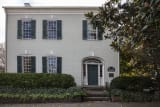
James K. Polk Home and Museum
The 1816 brick house in Columbia where Polk practiced law and campaigned for the legislature, now a museum that also tells of the people the Polk family enslaved.
historical · Columbia
The Mink Slide and East 8th Street
Columbia's Black business and church district south of the courthouse square, where on the night of February 25, 1946 a white mob gathered and Black veterans stood guard.
Historical markers
Spring Hill
Billy Direct
How old Billy Direct really was remains unsettled. His registration says he was foaled in 1934, yet when he paced 2:04 1/2 at Old Orchard, Maine, in 1936 as a supposed…
Columbia
Birthplace of James Percy Priest
J. Percy Priest taught school in Culleoka for six years, joined the Nashville Tennessean, and in 1940 won a seat in Congress as an independent by upsetting a one-term…
Columbia
Colonel Sidney Post and General John Bell Hood at Loftin Hill
The Union army got its warnings and sat on them. On November 29, 1864, Colonel Sidney Post watched Confederate columns head for Duck River and sent word to Schofield…
Columbia
Columbia Military Academy
Columbia Military Academy rose and fell on a national tide. When Depression enrollment sank below two hundred cadets, a new operating board led by C. A.
Columbia
Columbia State Community College Tennessee's First Community College
The college grew out of a 1955-57 legislative study that found the Columbia-Pulaski area, along with Chattanooga and Jackson, poorly served by any state campus.
Spring Hill
Confederate Attacks at Spring Hill
Cleburne's attack failed because of how it was laid out, not how hard it was pushed. At about 4 p.m. his 3,000 men advanced en echelon against Bradley's brigade.
Culleoka
Culleoka Institute
Culleoka's school became one of the best-known boarding schools in the South after it left town.
Columbia
Deberry Log House/Wisener-Church House Site
The house stands here because of a dam that was never finished. In the 1970s the Tennessee Valley Authority began the Columbia Dam on the Duck River, acquiring about…
Spring Hill
Ewell Farm
Richard Ewell came to Spring Hill as a paroled general and became a farmer. He had married his first cousin Lizinka Campbell Brown, a wealthy widow from the Nashville…
Columbia
Freedmen's Savings Bank and Trust Company
Most accounts at the Freedman's Bank held between five and fifty dollars, which is why its failure cut so deep.
Columbia
Hood & Schofield, November 24, 1864
For five days Columbia was a contest of nerves more than a battle. Schofield marched his army from Pulaski and dug in just hours ahead of the Confederates, then spent…
Spring Hill
Hood's Command Post
Oaklawn is where Hood's chain of command came apart. From the Absalom Thompson house he personally ordered Bate to sweep toward Columbia without telling Cheatham, who…
Columbia
Hood's Maneuver
Hood's gamble was to split his army and hope the Union side would not notice. On November 29, 1864, he sent two corps north across Duck River at Davis's Ford, riding…
Columbia
James K. Polk House
Samuel Polk built this house in 1816, and his son James lived here as a young man until 1824, when he left to read law in Nashville under Felix Grundy.
Columbia
Joseph Brown
The marker tells Joseph Brown's story from one side. He was captured on a river journey toward the Cumberland settlements in 1788 and held for a year at Nickajack, one…
Santa Fe
Maury Light Artillery
The ship the battery claimed was famous. Built at Philadelphia under Matthew C. Perry's own supervision and commissioned in 1841, the side-wheel steamer Mississippi…
Mount Pleasant
Rattle and Snap Plantation
The estate originally covered 5,648 acres, and enslaved people worked the land and built the mansion.
Spring Hill
Rippavilla Plantation
Rippavilla ran on enslaved labor. The Cheairs family held 46 enslaved people around 1840 and as many as 75 by 1860, according to the National Register nomination, on a…
Columbia
Road to Nashville
The general who held the Duck River's north bank came to the war from the Ohio Senate. Jacob D.
Columbia
Rose Hill Cemetery
A. O. P. Nicholson, buried here in 1876, moved for forty years between Democratic politics and the newspaper office.
Columbia
Sam Davis
The Boy Hero of the Confederacy was twenty-one. Sam Davis was captured near Minor Hill in November 1863 with drawings of Union fortifications and was hanged at Pulaski…
Columbia · Erected 2016
Side by Side
Rosemount Cemetery climbs a hillside against the fence of Rose Hill, which was segregated, and Columbia's Black community established it in 1873.
Ashwood
St. John's
Leonidas Polk, an Episcopal clergyman, conceived the idea of a plantation chapel, drew the plans and supervised the work on a corner where four Polk family plantations…
Mount Pleasant
The Bigby Greys
The men sworn in on this square in 1861 spent their first captivity in a Chicago camp built for Union recruits.
Columbia
The Reverend Edmund Kelly
What Edmund Kelly paid for freedom is not on the marker. Born in Columbia in 1818 to an Irish father and an enslaved mother, he saw his mother sold away when he was six.
Leiper's Fork
Thomas Hart Benton
For fifteen formative years Thomas Hart Benton was a Williamson County man. His widowed mother brought the family to a 2,500-acre tract on Leiper's Fork in 1800, and he…
Spring Hill
William Banks Caperton
William Banks Caperton's career ran from Spring Hill to the Caribbean, where modern historians judge it more harshly than the marker does.
Columbia
Zion
The congregation descends from Scots-Irish families who came from South Carolina in 1807 and bought five thousand acres of General Nathaniel Greene's land grant.