County guide · Oklahoma
McCurtain County
2 places to stop and 8 historical markers in McCurtain County, Oklahoma.
Towns: Broken Bow (1), Millerton (1)
Places to stop
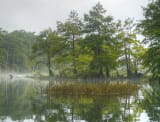
natural · Broken Bow
Beavers Bend State Park
Pine and hardwood Ouachita hills where the Mountain Fork leaves Broken Bow Lake, a 1930s CCC park named for a Choctaw citizen, with trout water, a 26-mile ridge trail and the Forest Heritage Center.
historical · Millerton
Wheelock Academy Historic Site
The Choctaw Nation's academy for girls, rebuilt in 1884 near Millerton and a boarding school until 1955, with its museum in the old teachers' dormitory.
Historical markers
Historical marker
Alikchi Court Ground
The Choctaw carried their political map west with them. Citizens of each of the three districts east of the Mississippi largely stayed together in the new country and…
Erected 1995
Clear Creek Water Mill
The stone's two singers were father and daughter, not husband and wife as scholars long assumed. R. B.
Erected 1995
Elliott Academy
The Choctaw Nation did not run schools for its freedmen directly. After the 1866 treaties required each of the Five Tribes to recognize its former slaves as members…
Erected 1995
Garland Cemetery
Sophia's son Peter Pitchlynn, schooled at the Choctaw Academy in Kentucky and the University of Nashville, was a farmer, stock raiser and slaveholder of the Choctaw…
Historical marker
Military Road
The Choctaw who came this way arrived in two waves. More than six thousand reached the new country in the fall and winter of 1831-32, settling mostly around Boggy Depot…
Erected 1995
Miller Courthouse
Miller County was big and short-lived. Created on April 1, 1820, from Hempstead County, it took in parts of present Arkansas, Oklahoma and Texas, and its 1820 census…
Historical marker
Shawneetown
The settlement left its name behind. When Miller County's commissioners chose a county seat in August 1821, Miller Court House was set up at the community previously…
Historical marker
Wheelock Mission
The Wrights came west with a removal party led by Thomas LeFlore and reached the new Choctaw country in December 1832.