County guide · North Carolina
New Hanover County
4 places to stop and 59 historical markers in New Hanover County, North Carolina.
Towns: Wilmington (56), Castle Hayne (3), Wrightsville Beach (3), Kure Beach (1)
Places to stop
historical · Wilmington
1898 Memorial Park
Six bronze paddles on North Third Street for the Black Wilmingtonians killed on November 10, 1898, in the coup that overthrew the city's elected government.
historical · Wilmington
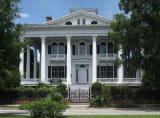
Bellamy Mansion Museum
A 1859-61 Market Street mansion built by enslaved and free Black craftsmen, with one of the best-preserved urban slave quarters in the country behind it.
historical · Kure Beach
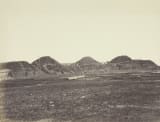
Fort Fisher State Historic Site
The surviving land face of the largest Confederate earthwork, built with Black labor and taken in January 1865 by an assault that included the 27th U.S. Colored Troops.
historical · Wilmington
Gregory Congregational Church
The church of a freedpeople's school at Third and Nun streets, where Wilmington's Black students gathered in 1971 and the Wilmington Ten case began.
Historical markers
Wilmington · Erected 2013
Abraham Galloway
Galloway left Wilmington in 1857 in the hold of a northbound schooner, hidden with another enslaved man, Richard Eden, among barrels of turpentine, tar and rosin.
Wilmington · Erected 1956
Adam Empie
Empie came south from Schenectady in November 1811 to take the pulpit at St. James, and under him the congregation grew from 21 to 102 members.
Wilmington · Erected 2007
Alex Manly
Manly was born near Raleigh, a grandson of Governor Charles Manly and of Corinne, a woman the governor enslaved, and studied at Hampton Institute.
Wilmington · Erected 2014
Atlantic Coast Line Railroad
Champion McDowell Davis went to work as a messenger boy for the Wilmington and Weldon Railroad on March 1, 1893, at thirteen, and rose through stenography, freight and…
Wilmington · Erected 2012
Babies Hospital
Doctors had long sent sick Wilmington infants on the Southport steamer for the sea air, and J.
Wilmington · Erected 2014
Battle of Forks Road
Hoke's line ran across what are now the grounds of the Cameron Art Museum. On February 20 the 5th USCT, advancing up Federal Point Road, met rifle and cannon fire at…
Wilmington · Erected 1959
Beery's Shipyard
Built of green timber for a Confederacy fighting to preserve slavery, the ironclad North Carolina was failing before she fired a shot.
Wilmington · Erected 2019
Captain Johnston Blakeley
Johnston Blakeley paid for his university years with rent from Wilmington warehouses his father left him, and when they burned uninsured in 1799 he left school for the…
Wilmington · Erected 1962
Cassidey Shipyard
Built for a Confederacy at war to preserve slavery, the ironclad Raleigh served one week.
Wilmington · Erected 2000
Cornelius Harnett
Cornelius Harnett was born in Chowan in 1723 and grew up at Brunswick, where his family moved after his father's part in an Edenton riot.
Wilmington · Erected 2001
David Walker
Walker got the Appeal into Southern ports through sailors, sewing copies into the clothing they carried.
Castle Hayne · Erected 1940
Early Drawbridge
Benjamin Heron came to the Cape Fear from Lymington, England, after sailing with the British fleet on the Cartagena expedition, and gathered colonial offices: deputy…
Wilmington · Erected 1995
Edward B. Dudley
Edward B. Dudley grew up in Onslow County, where his father held about 10,000 acres and 87 enslaved people in 1827.
Wilmington · Erected 2004
Edwin A. Alderman
Edwin Alderman learned his work as a teacher and then superintendent in Goldsboro, and from 1889 he and Charles D.
Wilmington · Erected 2017
Edwin A. Anderson
Raised on Masonboro Sound, Edwin Anderson entered the Naval Academy in 1878. In May 1898, off Cienfuegos, Cuba, he led open boats from the Marblehead under Spanish fire…
Wilmington · Erected 2019
George Davis
George Davis graduated first in his Chapel Hill class at eighteen and became counsel to the Wilmington and Weldon Railroad.
Wilmington · Erected 1987
Gregory Normal Institute
In 1865 eight teachers taught in four Wilmington churches, and in 1868 the classes moved into one building paid for by the missionaries and a Massachusetts donor named…
Wilmington · Erected 1952
Henry Bacon
Bacon's father came to the Cape Fear as an Army engineer and oversaw the dam that closed New Inlet, and the family lived in Smithville, now Southport, before moving to…
Wilmington · Erected 2023
Hubert Eaton Sr.
Eaton was born in Fayetteville and raised in Winston-Salem, the son of a physician who told him at fourteen never to be afraid of white people.
Wilmington · Erected 1991
James Benson Dudley
Dudley steered the Greensboro college toward work its students could get, adding carpentry, bricklaying, blacksmithing, tailoring, shoemaking, broom making, electrical…
Wilmington · Erected 1982
James F. Shober
James Francis Shober was born into slavery in or near Salem, the Moravian town, in 1853.
Wilmington · Erected 1950
James Gibbons
When James Gibbons arrived in October 1868, at thirty-four, his whole vicariate held fewer than 700 Catholics, so few that he was said to know every adult by name.
Wilmington · Erected 1968
James Hasell
Hasell came from Bristol, where he served an apprenticeship from 1714 to 1721, and by his death he held some 12,000 acres.
Castle Hayne · Erected 1989
James Innes
James Innes came from northern Scotland about 1733. Of the hundred men in his Cape Fear company at Cartagena, only twenty-five reached home, in January 1743.
Wilmington · Erected 1953
James Sprunt
James Sprunt came from Glasgow as a boy and at seventeen was purser on blockade runners, buying sugar at Nassau and turning it into cotton.
Wilmington · Erected 1950
John A. Winslow
Born in Wilmington in 1811 into a New England family and schooled in the North, John Winslow was an abolitionist when the war came and never doubted his side.
Wilmington · Erected 2018
John Burgwin
Born in Hereford, England, in 1731, a younger son with no inheritance, Burgwin went to Charleston as a merchant before moving to the Cape Fear.
Wilmington · Erected 1959
John N. Maffitt
Born at sea and raised by an uncle near Fayetteville, John Newland Maffitt joined the U.S.
Wilmington · Erected 1962
Johnson Jones Hooper
Hooper left for Alabama at twenty to practice law with his brother, and helping take the 1840 census there gave him his first story, Taking the Census in Alabama, about…
Wilmington · Erected 2019
Judah P. Benjamin
Judah Benjamin's parents brought him from the West Indies as a child, drawn by an uncle's letter about prospects for Jewish families on the Cape Fear, then followed the…
Wrightsville Beach · Erected 2019
Lumina
Hugh MacRae's trolley and power company built the pavilion in 1905 to give riders a reason to buy a ticket, and enlarged it twice, to 25,000 square feet.
Wrightsville Beach · Erected 1998
N.C. Building and Loan Association League
Delegates from Charlotte, Wilmington, Wadesboro, Winston-Salem, Tarboro, Wilson, Mooresville and other towns met at the Seashore Hotel on June 25, 1903, the same week…
Wilmington · Erected 1999
North Carolina Shipbuilding Co.
At its 1943 peak the yard employed 25,000 people, four of every five manufacturing jobs in the county, and could take a ship from keel to launch in 25 days.
Wilmington · Erected 1972
North Carolina Sorosis
Fifteen Wilmington women organized the club on December 4, 1895, borrowing the name of a New York club; the Greek word means a cluster of flowers on one stem.
Wilmington · Erected 2010
Oakdale Cemetery
Annie DeRosset, six, was the first burial, on February 5, 1855, daughter of the company president.
Wrightsville Beach · Erected 2015
Pioneer East Coast Surfing
Burke Haywood Bridgers, a Wilmington lawyer, read of Hawaiian wave riding from Alexander Hume Ford's August 1909 article in Collier's and wrote to Ford asking how to…
Castle Hayne · Erected 2018
Prisoner Exchange
The agreement to trade prisoners was settled on February 16, 1865, and six days later Union troops took Wilmington.
Wilmington · Erected 2006
Robert R. Taylor
Taylor's father, Henry Taylor, was born enslaved and freed in 1847 by his own father and owner, Angus Taylor, and became a Wilmington carpenter and businessman.
Wilmington · Erected 1955
Rose Greenhow
Greenhow, a planter's daughter shaped by John C. Calhoun, openly championed secession and slavery.
Wilmington · Erected 1936
St. James Church
The Ecce Homo that hangs here was found in the captain's cabin of the Fortuna, the Spanish privateer that blew up off Brunswick in 1748, and the painting was given to…
Wilmington · Erected 2004
St. John's Lodge
When the state's Masons reorganized after the Revolution, Wilmington and Halifax argued over which lodge came first, until the Halifax charter turned out to have been…
Wilmington · Erected 1976
St. Mark's Episcopal Church
The congregation began in late 1869, when the Reverend Charles Otis Brady was called to lead an Episcopal church for Black Wilmingtonians.
Wilmington · Erected 1976
St. Stephen A.M.E. Church
The congregation was born at a sunrise service. On the Sunday after Union troops took Wilmington in February 1865, the Black members of Front Street Methodist met, and…
Wilmington · Erected 1951
Temple of Israel
Jews had lived in Wilmington since about 1738, when David David settled in the port, and in 1855 they set aside a Hebrew section of Oakdale Cemetery.
Wilmington · Erected 1957
Thalian Hall
Wilmington built its hall large enough to seat about a tenth of the city. After the Civil War the same stage served opposite causes.
Wilmington · Erected 1987
Thomas Atkinson
Thomas Atkinson practiced law in Virginia for eight years before he was ordained. He had freed the people he enslaved years earlier, and his open opposition to slavery…
Wilmington · Erected 1948
Thomas F. Price
Price's mother had converted and been rejected by her family, and his father, founder of the Wilmington Journal, converted in 1866.
Wilmington · Erected 1978
Thomas F. Wood
Thomas Fanning Wood learned medicine in a Wilmington drugstore and as a Richmond hospital steward, then served as assistant surgeon of the Third North Carolina, in the…
Wilmington · Erected 2010
United States Colored Troops
Black soldiers who came up the Cape Fear knew what capture could mean. After Fort Fisher, Chaplain Henry M.
Wilmington · Erected 1993
University of North Carolina Wilmington
Most of the 238 students who opened Wilmington College on September 4, 1947, were veterans home from the Second World War.
Wilmington · Erected 1987
USS North Carolina
On September 15, 1942, a torpedo from the Japanese submarine I-19, fired at the carrier Wasp, tore a hole thirty-two feet long below the battleship's waterline and…
Wilmington · Erected 1940
Washington's Southern Tour
Washington rode into Wilmington about two o'clock on April 24, 1791, to a triple salute from four guns under Capt. John Huske.
Wilmington · Erected 1975
Whistler's Mother
Anna McNeill's family ties ran well beyond Wilmington. Her mother, Martha Kingsley, was the youngest sister of Zephaniah Kingsley, a slave trader and plantation owner…
Wilmington · Erected 2018
William B. Gould
On a rainy night in September 1862, Gould and seven other enslaved men, George W. Price among them, pushed off from the foot of Orange Street and rowed a small boat 28…
Wilmington · Erected 1951
William Hooper in Wilmington
William Hooper was the son of the rector of Boston's Trinity Church, went to Harvard and read law with James Otis before settling in Wilmington in 1764.
Wilmington
Williston High School
In 1923 Williston became the first accredited high school for Black students in North Carolina. Martin Luther King Jr.
Wilmington · Erected 1995
Wilmington and Weldon Railroad
Chartered to link Wilmington with Raleigh, the line turned toward Weldon on the Roanoke instead when Raleigh's citizens would not back it, and it kept the name…
Wilmington · Erected 2017
Wilmington Coup
The dead of November 10 were Black, in a city where Black residents outnumbered white ones, 11,324 to 8,731 in 1890, and held over thirty percent of the skilled trades…
Wilmington · Erected 1971
Wilmington Morning Star
William H. Bernard, a former Confederate major and a loyal Democrat, started the Star in a one-room office over a grocery on South Water Street in September 1867.