County guide · Georgia
Richmond County
6 places to stop and 40 historical markers in Richmond County, Georgia.
Towns: Augusta (45), Hephzibah (1)
Places to stop
industrial · Augusta
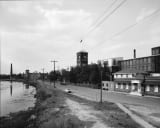
Augusta Canal National Heritage Area
The seven-mile 1845 power canal that turned Augusta into a mill town, still turning mill turbines, with boat tours from the Discovery Center in the 1877 Enterprise Mill.
cultural · Augusta
Augusta Museum of History
Augusta's history museum near the Riverwalk, from the Stallings Island potters of 4,500 years ago to a permanent exhibit on James Brown, who grew up blocks away.
historical · Augusta
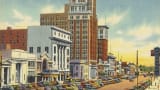
Broad Street Historic District
Augusta's wide main street of cotton warehouses and storefronts, where the Lower Market stood and where the May 1970 uprising against police violence began.
cultural · Augusta
Lucy Craft Laney Museum of Black History
The Phillips Street home of the educator who founded Augusta's Haines Institute in 1883, now a museum of Black Augusta and the starting point for the Golden Blocks.
natural · Augusta
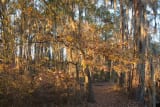
Phinizy Swamp Nature Park
An 1,100-acre swamp park on Butler Creek below Augusta, where boardwalks cross cypress floodplain and constructed wetlands clean the city's treated wastewater.
historical · Augusta
Springfield Baptist Church
A Black Baptist congregation with roots in 1773 at Silver Bluff, worshipping since 1844 in a chapel built in 1801, where the school that became Morehouse College began.
Historical markers
Augusta · Erected 2021
Amanda America Dickson Toomer
Her sons tied the family to the leading households of Black Augusta: Julian married Eva Walton, and Charles married Kate Holsey, a daughter of Bishop Lucius Holsey.
Augusta · Erected 1961
Bellevue
The estate was Belle Vue before it was Freeman Walker's. His brother George and George's wife, Eliza Talbot Walker, established it, and their granddaughter Octavia…
Augusta · Erected 1957
Birthplace of Augusta Chronicle
Through much of its life the paper argued about race and mob violence. Editor A. H. Pemberton attacked the abolitionist movement and by 1831 urged secession, and in the…
Augusta · Erected 1999
Bobby Jones and the Beginning of the Grand Slam
Jones was twenty-eight when he quit competitive golf after the Grand Slam, choosing his family and the Atlanta law practice he had joined after three semesters at Emory.
Augusta · Erected 1955
Boyhood Home of Woodrow Wilson
The war reached this manse early. Wilson's first memory, from November 1860, was hearing a passerby at the gate say Lincoln had been elected and war was coming.
Augusta · Erected 1956
Confederate Powder Works
The chimney survived on purpose. When the works were dismantled after the war, Rains asked in 1872 that the obelisk be spared, having designed it to stand as a monument…
Augusta · Erected 1990
De Soto In Georgia
On the way to the Savannah the army crossed Georgia's interior chiefdoms. On an island in the Ocmulgee the Spaniards found meat roasting on a barbacoa frame, the first…
Augusta · Erected 1994
Emily Harvie Thomas Tubman (1794-1885)
The freedom she is credited with granting began in her husband's will. Richard Tubman left $10,000 to free the people he enslaved, half to go to the University of…
Augusta · Erected 2011
Explosion At The Confederate Powder Works
The works were laid out so that a blast like this one would stay local. George W. Rains, a West Point chemistry teacher, worked from a British officer's pamphlet on the…
Augusta · Erected 2005
First Christian Church (Disciples of Christ)
The congregation first met in a building on Reynolds Street behind Emily Tubman's Broad Street home. She had attended St.
Augusta · Erected 1956
Fort Augusta-Fort Cornwallis: St. Paul's Church
The British commander who surrendered here in 1781 had a reason to hold out. Thomas Brown came to Georgia in 1774 with about seventy indentured servants to settle the…
Augusta · Erected 2023
Frank Garvin Yerby: King of the Costume Novel
Before the best sellers, Yerby taught English briefly at Florida A&M and at Southern University in Baton Rouge, then moved north to work as a technician at Ford in…
Augusta · Erected 1954
Georgia R.R. & Banking Co.
The company that ran Georgia's first train out of Augusta was built partly by people it held in slavery: at least 162 enslaved workers laid its line between 1836 and…
Augusta · Erected 2004
Georgia's State Capital
Augusta's years as capital had a ragged start. After Savannah fell to the British in December 1778, the revolutionary government tried to meet here in January 1779, but…
Augusta · Erected 1954
Home of Governor Telfair
Telfair's fortune rested on trade and on land worked by enslaved people. A Scottish merchant who reached Savannah in 1766, he became a planter with large holdings near…
Augusta · Erected 1956
Home of John Forsyth
As governor from 1827 to 1829, Forsyth extended Georgia's laws over the Cherokee Nation.
Augusta · Erected 1955
Home of Nicholas Ware
The nickname Ware's Folly came from what the house cost to build. Since 1937 it has been an art school. That year Olivia A.
Augusta · Erected 2008
John McClinton Tutt
The house stands on Phillips Street at the edge of the Laney-Walker neighborhood, the Black district north of Laney-Walker Boulevard whose churches founded many of its…
Augusta · Erected 2004
Joseph R. Lamar, Associate Justice Supreme Court of the United States
Lamar's road to the Supreme Court ran across a golf course. An avid golfer, he met William Howard Taft in 1908 over a round in Augusta, just after Taft's election.
Augusta · Erected 1962
LaFayette Visits Augusta
Lafayette came at Congress's invitation to tour all twenty-four states, and Governor George Troup planned his Georgia route.
Hephzibah · Erected 1971
Liberty Methodist Church
The plain frame church is one of the oldest rural antebellum churches still standing in Georgia.
Augusta · Erected 1954
Medical College Building
The anatomy lessons in this building depended on Grandison Harris, an enslaved man the seven members of the faculty bought jointly at a Charleston slave market in 1852.
Augusta · Erected 1959
Montrose Home of Col. Charles Colcock Jones, Jr.
Jones came from a family whose rice and cotton plantations in Liberty County were worked by enslaved people; he helped manage them and ran a plantation of his own in…
Augusta · Erected 1954
Old Richmond Academy Building
For years this academy was the only working part of a state university that existed mostly on paper.
Augusta · Erected 1967
Paine College
Paine students carried the school's founding experiment in racial cooperation into open protest.
Augusta · Erected 1956
Richmond County
Richmond County's military presence outlasted its early wars. The federal arsenal set up at Harrisburg in 1819 moved to Summerville in 1826 and in 1957 became the campus…
Augusta · Erected 2018
Shiloh Orphanage
The Fifteenth Street land came with a history of its own. Franciscan sisters had tried to open an orphanage on it and gave up in 1890; Hattie Strong bought it from them…
Augusta · Erected 2000
Spirit Creek Baptist Church
The plantation where the church began was John Twiggs's reward and his business. After the Revolution the general settled at New Savannah, on the river just south of…
Augusta · Erected 1957
Summerville Cemetery
Two governors buried here ended careers in controversies of their own making. George W.
Augusta · Erected 1956
The Augusta Arsenal
The arsenal grounds now hold a university. After the Army left in 1955, the federal government transferred the property to the Richmond County school board in 1957, and…
Augusta · Erected 1956
The First Baptist Church
The serious friction behind the split was slavery. To test northern Baptists' claimed neutrality, Georgia Baptists put forward James E.
Augusta · Erected 1957
The First Presbyterian Church, Richmond County
Georgia's Presbyterians had never explicitly condemned slavery, and in the 1830s the issue helped split them into Old School and New School churches.
Augusta · Erected 1959
The Home of Charles Jones Jenkins, Jr., LL.D.
Jenkins was fighting the terms of Reconstruction itself. As governor he advised the legislature not to ratify the Fourteenth Amendment, which guaranteed rights to…
Augusta · Erected 1956
The Mayham Tower
Inside Fort Cornwallis about 300 Loyalists held out, helped by some 200 Black Americans who worked on its defenses.
Augusta · Erected 2020
The Riot of May 11-12, 1970
Charles Oatman was sixteen, intellectually disabled and without a record when he was jailed on a murder charge after a gun accident killed his five-year-old niece in…
Augusta · Erected 1956
Twiggs Cemetery
The son's career ended in Texas. In 1861 David Emanuel Twiggs commanded the Army's Department of Texas, about a fifth of the whole army, and he surrendered his entire…
Augusta · Erected 2008
U.S. Marshal Robert Forsyth (1754 - 1794)
His killer, Beverly Allen, had been an admired Methodist preacher until a falling-out with Bishop Francis Asbury; he then went into trade with his brother William in…
Augusta · Erected 1999
Washington's Southern Tour IV
Washington's Augusta visit included business about slavery. On May 20 he dined privately with Governor Edward Telfair and handed James Seagrove dispatches for the…
Augusta · Erected 1978
White House Tract
Who hanged the prisoners taken here in September 1780 is less certain than tradition holds.
Augusta · Erected 1954
William Bartram Visited Augusta, 1773
Bartram came back to Augusta in May 1773 for a reason the quotation leaves out: an Indian congress.