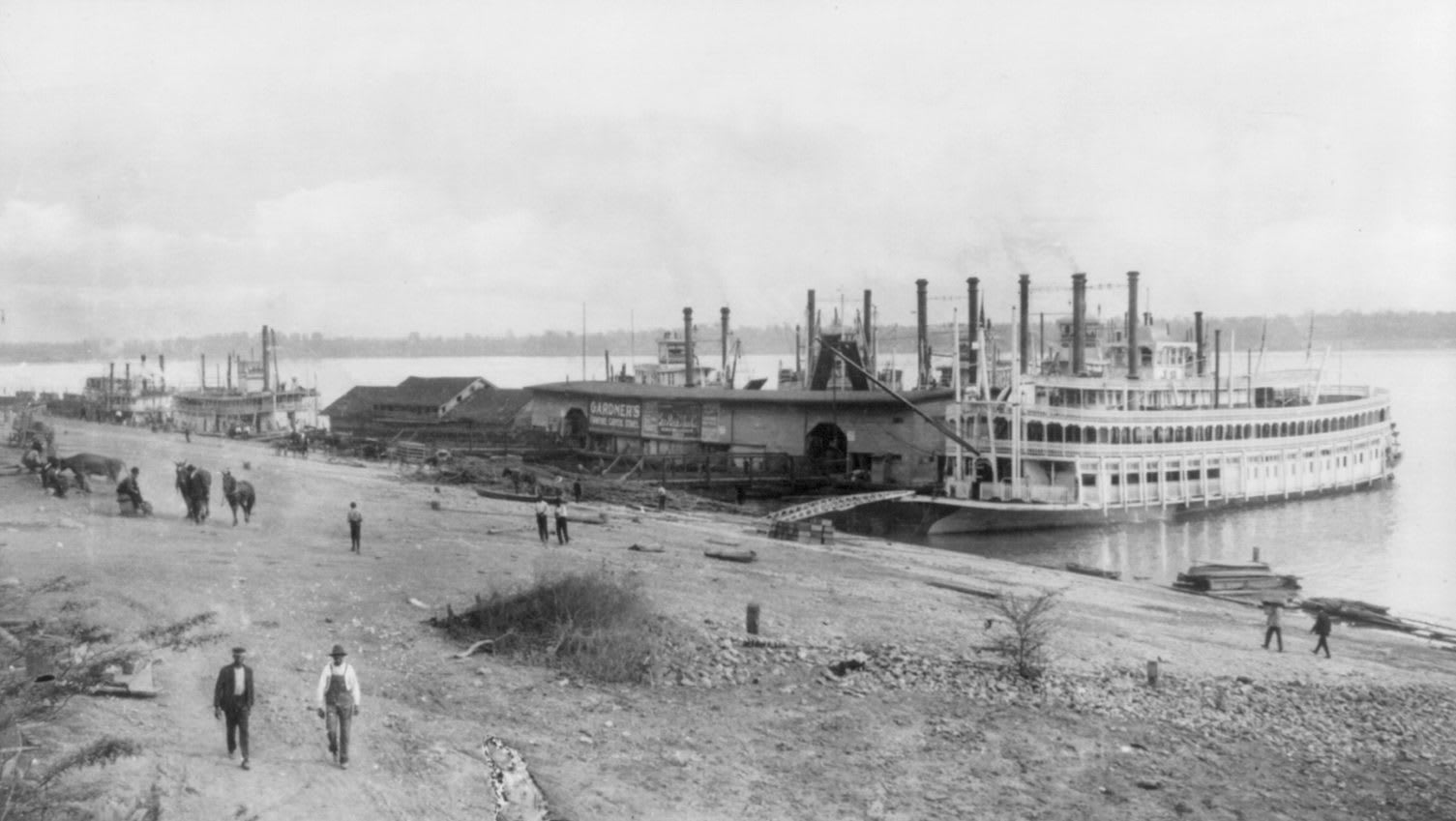
Morris and Abraham Uri, D. Lowenstein and Leopold Klaw opened stores on Paducah's Front Street in the 1840s, its first Jewish merchants on record. By 1859 eleven of the town's businesses were Jewish-owned, including six of its eight clothing stores, and that year twenty Jewish men founded the Chevra Yeshurun burial society and bought land for a cemetery. Cesar Kaskel, born in Rawicz, Prussia, in 1833, arrived in 1858 and went into business with Solomon Greenbaum. When the war came he sided with the Union and became vice-president of Paducah's Union League Club.
The order from Holly Springs
On December 17, 1862, at his headquarters in Holly Springs, Mississippi, General Ulysses S. Grant issued General Orders No. 11. It expelled Jews "as a class" from his Department of the Tennessee, which took in western Kentucky, within twenty-four hours. The trigger was the illegal cotton trade across the lines. Grant had already written that the black market was run mostly by Jews and other unprincipled traders, though historians count only a handful of Jews among them, and his own father had been seeking trading licenses for Cincinnati merchants, some of them Jewish.
Within days Confederate raiders cut Grant's headquarters off, which historians say is why few posts enforced the order. Paducah did. On December 28 the provost marshal, Captain L. J. Waddell, gave Kaskel twenty-four hours to leave. About thirty Jewish families lived in the town, settled residents rather than speculators, and at least two of the men were Union veterans. Most went to Cincinnati. Kaskel took the steamboat Charley Bowen up the Ohio by way of Cairo.
To the White House
Kaskel and three brothers, Daniel, Marcus and Alexander Wolff, wired President Lincoln in protest. No reply came, so Kaskel went on to Washington, reaching it on January 3, 1863, two days after the Emancipation Proclamation took effect. Congressman John A. Gurley of Ohio took him to Lincoln. Lincoln, by the accounts that survive, had not heard of the order, and he had General Henry Halleck telegraph Grant on January 4. Grant's headquarters announced the revocation on January 6. When Rabbi Isaac M. Wise led a delegation to thank him, Lincoln said that "to condemn a class is, to say the least, to wrong the good with the bad."
Historians still weigh how much harm the order did. Jonathan Sarna, its leading historian, found no family accounts from those expelled and only a handful of affidavits. Grant later said he had sent the order by telegraph without reflection. In 1868 he carried most Jewish voters, and as president he appointed Jews to high office.
Coming back
Most of Paducah's families returned. The burial society was chartered in 1864; in 1868 services began on the third floor of Mangold Livingston's store, and in 1871 the congregation dedicated its first synagogue on South Fifth Street. Meyer Weil, who had come to town in 1863, served four terms as mayor in the 1870s. Kaskel moved to New York, and the Wolff brothers went back to Germany. The congregation, Temple Israel since 1893, worships today in a 1963 temple on Joe Clifton Drive.
The old riverfront where Kaskel boarded the Charley Bowen is now lined by Paducah's floodwall murals.